
By: Daiyu Tang, Editor-in-Chief
Carter Ellis had died before. Or, more accurately, Hathian had been told that Carter Ellis had died before.
The first time, somebody sent me photographs of his badly tortured body. They included a purported confession that Carter had written and covered an auction for what might shortly become his corpse. It was Hathian, it was bloody and it was in everyone’s faces. There was even a death certificate which, amongst its more traditional medical observations, listed ‘Low Testosterone‘ as an underlying cause of death and his occupation as ‘Philanderer‘.
Of course there was no body. The certificate was obviously taking the piss. HPD wouldn’t confirm it and the people holding him claimed his corpse had been sold and was already being shipped to the winning bidder under a “no takesies-backsies” policy which, even by Hathian standards, did not strike me as rigorous mortuary procedure or serious gang related activities. Clearly he was injured, clearly he was in trouble, but dead… probably not at that time.
What did we in Hathian take away from this episode? Well… many things, but one which struck with me was that as time wore on, Carter had already survived things that should probably have killed him. People that should have killed him. He, like some before him, both those in uniform, or those out of it, were the Hathian version of a time-bomb. Tick… Tick… Tick…
Anyway, as we know from that article and those that followed Carter came back. Of course he did. But then…
This Time The Hospital Called It
At 10:47am on June 13th, 2026, according to the people who loved him and the information supplied to this newspaper, Lieutenant Carter Luca Ellis finally died. No auction. No bunker. No terrorist demands. No suspicious certificate that took the piss. No elaborate disappearing act like Koh.
After kidnappings, torture, mutilation, shootings, reconstruction, the loss of an arm, damage to his face and at least one previous occasion on which this newspaper had to seriously consider whether Carter Ellis was dead, the thing which finally killed him was a failing pacemaker.
I have spent more time than I expected staring at that sentence.
Partly because it feels wrong. Not factually wrong, but narratively wrong. Carter Ellis was not a man Hathian ever permitted to have an ordinary narrative. He created his narrative. He took our invisible narrator, shook them until their pockets were empty and they ran away in fear. He was… the story. And what a story it was… He was accused of monstrous things. He was subjected to monstrous things. He became part man and part machine(ish). Bethari got the hots for him and claimed he had a metal dick. He disappeared, returned, fought, was injured, was rebuilt, disappeared again and returned again.
Then his heart stopped.
The Temptation When Somebody Dies to ‘Tidy Them’
There is a temptation when somebody dies to tidy them. Death encourages adjectives like ‘beloved‘, ‘dedicated‘, perhaps even ‘controversial‘ and ‘complicated‘, because those are wonderfully efficient words for closing drawers we would rather not reopen at the funeral, or in front of Liz or friends. At a funeral people speak about the person they loved. Colleagues salute. Flowers are laid. The things which hurt from the past are set aside because there is a widow standing beside a coffin and there are children who will grow up without their father. While not every Hathian citizen would stop, some would.
I understand that instinct to coat things in a way that its easy.
I don’t think a newspaper should indulge it. The Observer’s archive on Carter Ellis is not kind enough to permit a conventional obituary. You knew that right? In a way that’s maybe why you’re reading.
This newspaper has reported allegations that Carter had raped a woman in HPD custody twice and and we reported our obtaining of medical documentation placing his DNA on the alleged victim. We reported his name appearing in public protests over police brutality. We reported allegations of violence inside Isolation. Later, another former HPD detective made further grave allegations against him and other officers.
Those things do not cease to exist because Carter does but neither does what happened to him.
No Country For Old Men
When Carter was abducted and tortured in 2024, I condemned it. I offered what money I could find for his safe return. When Hathian Against Corruption (‘HAC’) subsequently challenged me to choose a side, to accept that because HPD had brutalised people, terror against HPD was therefore justice, I refused. At the time I wrote something I find myself returning to now: blood and murder should not be done in my name or your name, or the name of Hathian, however sympathetic anyone might be to the need for reform. But I also wrote the next part… I said I understood. That has irritated me for almost two years. It still does.
Because Carter Ellis sits inside almost every contradiction this city produces.
A man may have victims and still become a victim.
A person can deserve investigation without deserving torture.
Suffering does not absolve what came before it.
Being loved does not prove innocence.
Being hated does not prove guilt.
A widow remembering her husband holding their newborn children does not erase somebody else’s memory of the terror of him in her HPD cell.
And somebody else’s horror does not make that widow’s grief less real.
Perhaps that is why Carter’s funeral was always going to be difficult.
A Funeral ‘Of Sorts’
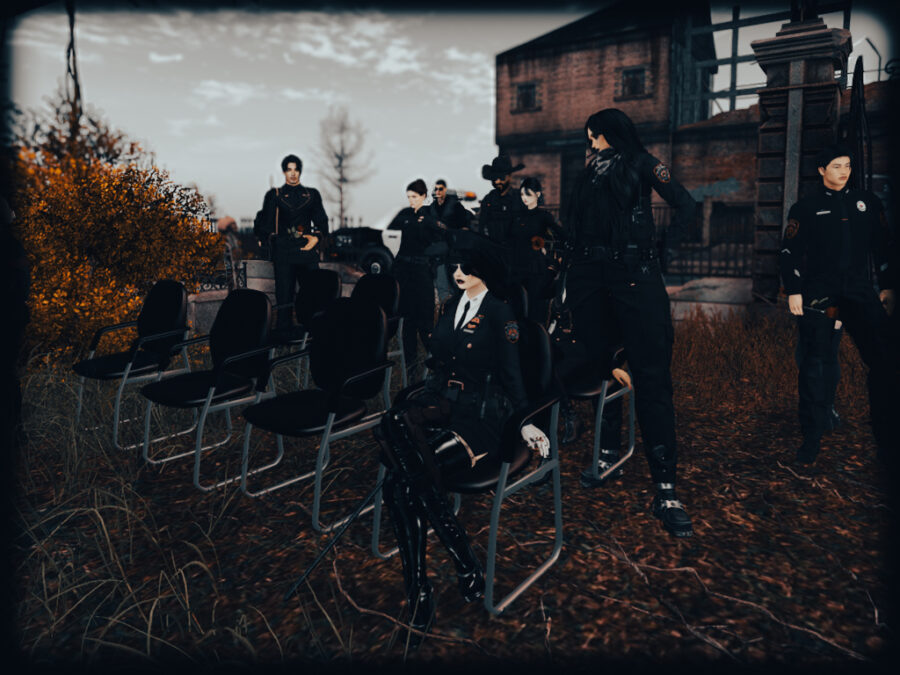
His wife, Lizette, stood before a gathering of officers and mourners and deliberately introduced them to somebody almost entirely absent from the Observer’s files: the Carter who disliked yard work, loved pasta, tolerated an alarming collection of plushies, watched Disney films over pizza, played with Hot Wheels and building blocks on the floor, and took children who were not biologically his own into his family without qualification. She said their daughter still settles when wrapped in one of his shirts.
That is Carter Ellis too.
So is the officer Vanora described as troubled, flawed, violent and nevertheless her friend, the man who kept returning to work after Hathian took pieces of him, sometimes literally.
So is the Carter remembered rather differently by those who arrived at the cemetery not to mourn him, but apparently to make absolutely certain the ‘bastard’ was dead.
And because this is Hathian, those competing versions of one dead man were eventually resolved through the Hathian civic process of insults, a kazoo (ok, that isn’t that normal), punches, knives and sustained gunfire.
It’s poetic… and a tragic reflection of Hathian… The last radio call for Carter Ellis began with silence. By the end of his funeral, the radios were calling ambulances. I could write an obituary from that but I don’t want to. Instead, I want to open the file. So before we decide what Carter Ellis deserves from history, we are going to look at what we actually wrote while he was alive. The allegations. The evidence we said we had. The protests. The torture. The first ‘death‘. The resurrection. The metal. The injuries. The accusations that followed. The second abduction. The return to duty. And finally, the hospital room from which he did not return.
Then we will go back to that cemetery.
We will hear what his wife said about the man behind the badge. We will hear what his colleagues believed they had lost. We will also acknowledge those who came carrying a very different memory of Carter Ellis, because pretending they did not exist would be as dishonest as pretending his family did not. And then, at the end of all of it, I suppose I owe the title an answer.
Don’t look back in anger?
At Carter?
At HPD?
At the people who tortured him?
At the people he was accused of hurting?
At Hathian for turning pain into retaliation so efficiently that nobody can remember which injury was supposed to settle which score?
Perhaps by choosing Oasis I gave myself an unfairly difficult editorial assignment.
But Carter Ellis is dead.
This time I don’t have a question mark to hide behind.
So we may as well look back properly. In Anger or in Compassion.
The Carter Ellis File
There is a problem with memory in Hathian. We remember the spectacular parts and misplace the paperwork.
Carter makes that particularly dangerous. Depending on where you entered his story, he was a rapist, a cop, a victim, a cyborg, a husband, a punchline, a monster, a colleague or the stubborn bastard who apparently regarded catastrophic injury as annual leave.
So here are the receipts. These are not every occasion on which Carter Ellis wandered through the Observer’s pages. They are the files I think matter if we are going to answer the question at the top of this article honestly. Some contain allegations. Some contain things this newspaper witnessed. Some show what was done to Carter; others concern what Carter was accused of doing to somebody else.
Read them in order and resist the temptation to make the man simpler than the file allows.
Behind Bars: Tales of Horror
This is where the Carter file becomes difficult.
As part of a wider investigation into brutality and sexual violence alleged inside HPD custody, the Observer reported that a former female inmate accused Officer Carter Ellis of raping her twice. More significantly, the newspaper stated that it had obtained medical documentation showing Ellis’s DNA had been found on the alleged victim.
That is not the same thing as reporting a conviction; the article records no such adjudication. But nor, two years later, am I going to dilute what this newspaper actually reported merely because the subject is now dead.
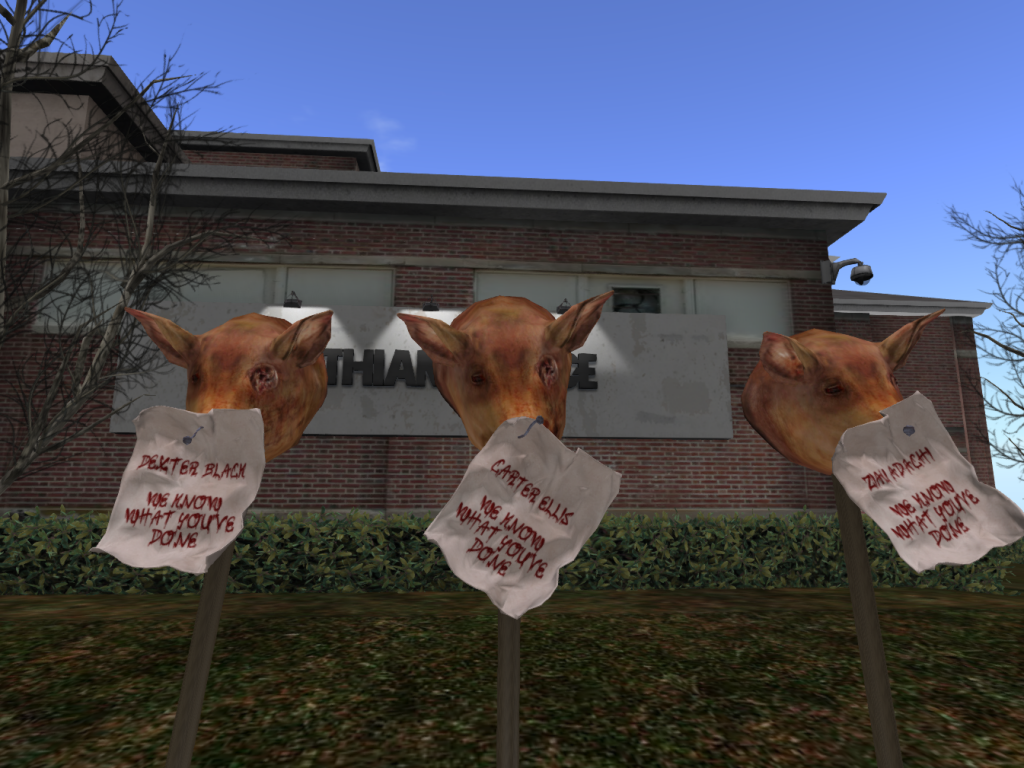
Three Little Piggies / A Parade of Pigs
Within days, Carter’s name was no longer confined to allegations in a newspaper.
A severed pig’s head appeared outside HPD carrying the message “Carter Ellis – We know what you’ve done.” Days later, Circus Maximus took the accusation mobile, parading through Hathian on pigs named after officers including Carter.
Neither stunt proved anything. They did demonstrate something important: Carter Ellis was becoming more than one policeman with a file. His name was turning into public shorthand for what parts of Hathian believed HPD had become.

Missing: HPD Officer Carter Ellis
Then the direction of the violence reversed.
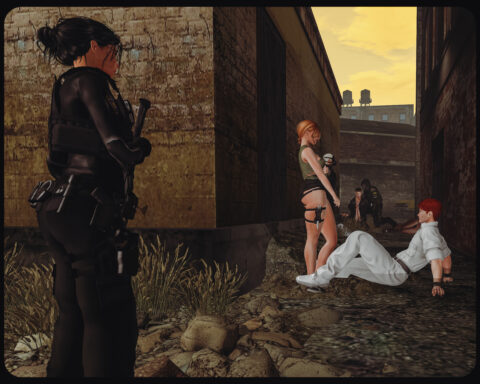
Carter was abducted. A dark-web bidding process encouraged strangers to pay for injuries to be inflicted upon him, and the photographs reaching the Observer showed damage serious enough to threaten his life.
This newspaper had reported grave accusations against Carter. I still condemned what was being done to him and offered $2,000 for his safe return.
At the time I wrote that monsters may fight monsters and remain monsters. Nothing I have learned since makes that sentence easier.
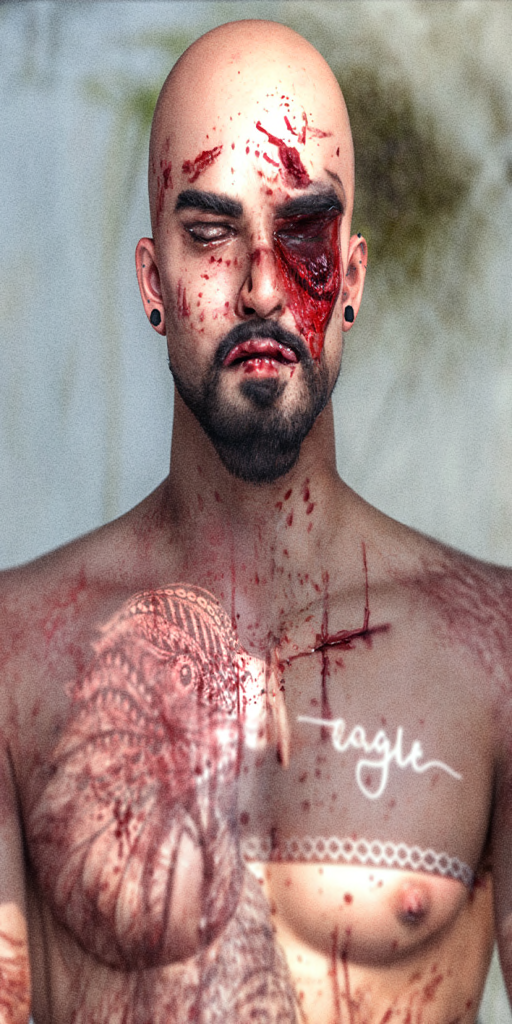
“I Am a Testosterone Fuelled Rapist” – and Also “RIP”
Two days later came the package.
Graphic photographs. A supposed confession attributed to Carter. A death certificate containing enough jokes to make its medical authority somewhat questionable. A note claiming his corpse had been auctioned and was already travelling to its buyer under a “no takesies-backsies” policy.
The injuries looked real. The death did not look proven. So the Observer left a question mark beside it.

Masked in Anonymity – Gossip Column
The question mark survived better than Carter’s original body parts.
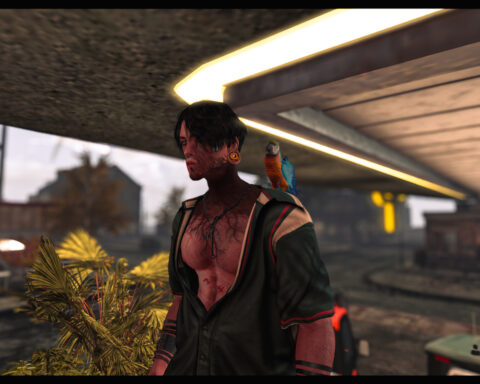
By September he was back on Hathian’s streets with replacement work to his arm and face, leaving Maja to conduct the investigation absolutely nobody had requested into whether reconstruction had extended somewhat further south.
Behind the jokes was something remarkable: a man recently photographed apparently tortured to death was walking around town again.
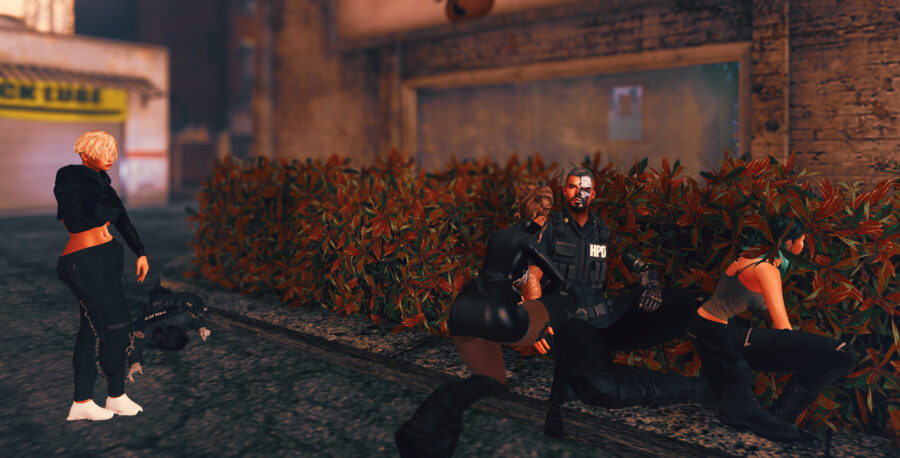
Not So Great Heights / Service and Protection
Two stories several weeks apart produced a Carter quite different from the symbol.
First came an injured officer after a rooftop fight, unable to complete an arrest and suddenly dependent on others for protection. Then a new Observer reporter met the reconstructed Carter without most of his historical baggage and found a strange, funny and spectacularly inappropriate mechanical policeman.
Reading that encounter beside the archive was instructive. Meeting Carter Ellis and knowing the Carter Ellis file were not remotely the same experience.
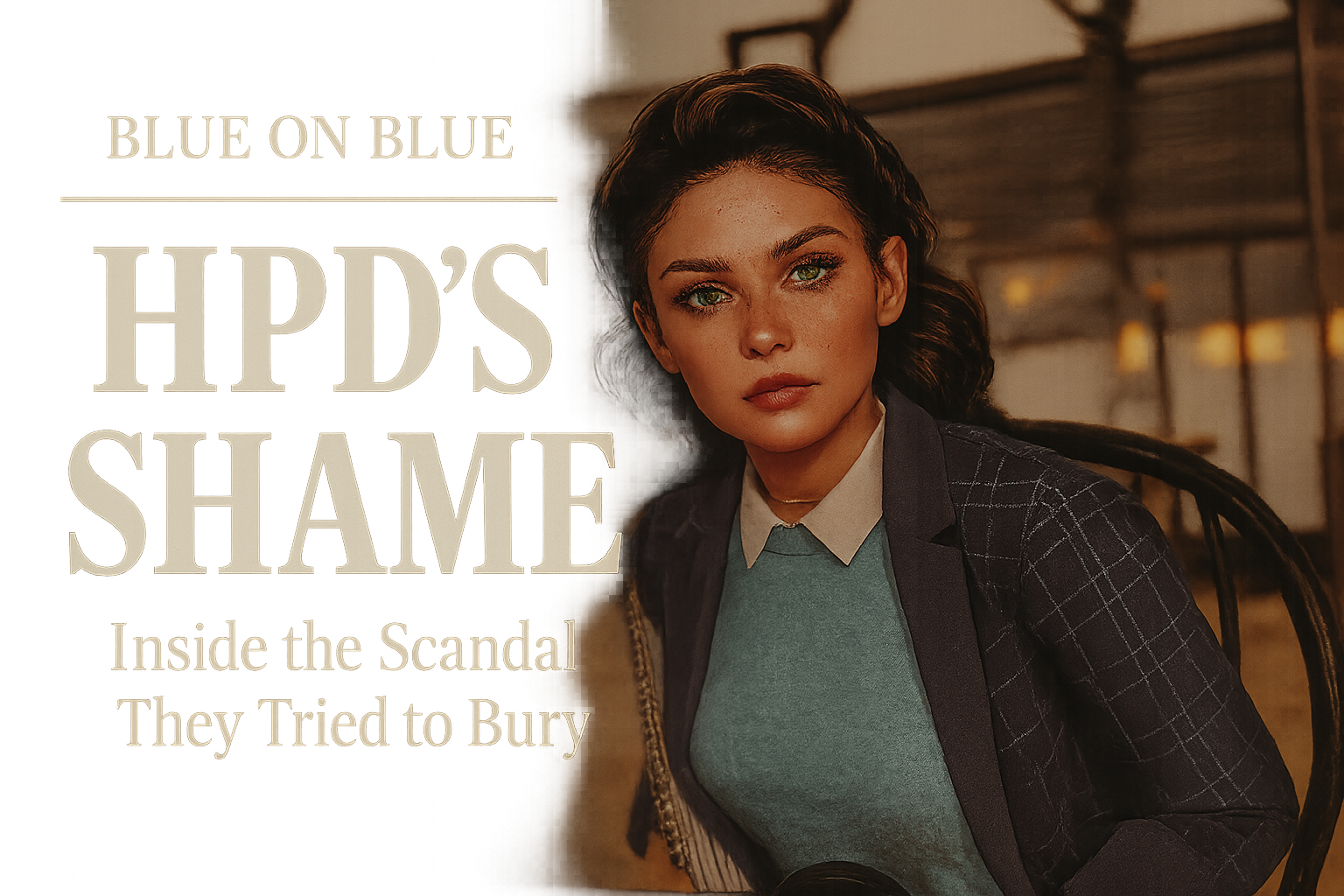
Blue on Blue
The file became ugly again.
Former HPD Detective Hope Ripley publicly accused Carter Ellis and Koh Gausman of involvement in kidnapping, sexual assault and battery. She separately alleged seeing Carter drive a scalpel through another woman’s cheek inside Isolation.
The Observer obtained records corroborating a $100,000 transfer connected with Ripley’s account. We were explicit then and remain explicit now: the financial evidence did not prove the alleged assault.
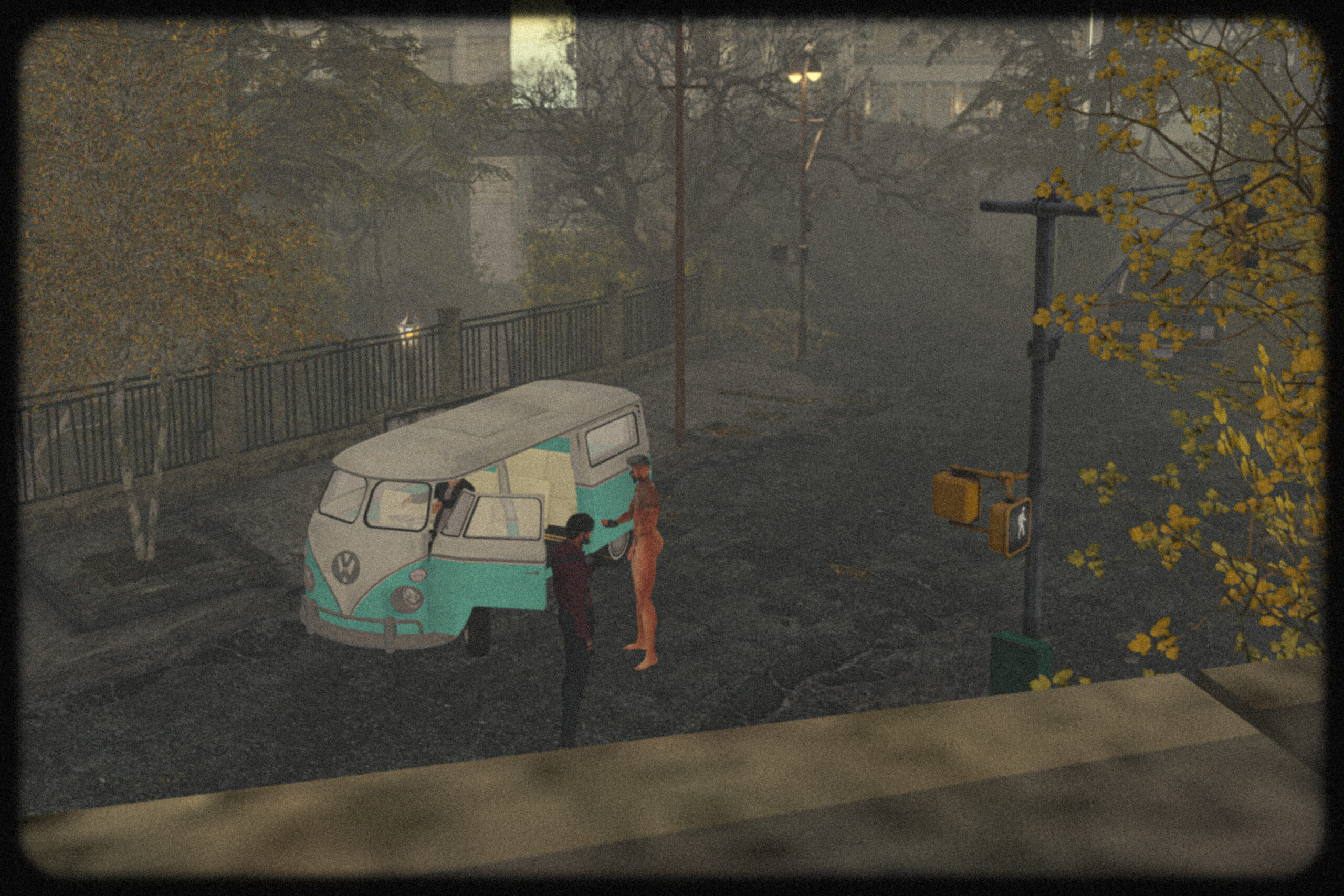
HPD Veteran Carter – Returned Alive
Carter disappeared again.
This time his return was even harder to look at: naked, bloodied, his mechanical arm removed and a grotesque replacement attached to the stump. Whatever had happened, he appeared profoundly unwell and violently out of control, seriously injuring Lieutenant Vanora Blackheart before officers subdued him.
Both survived. So did Carter. Again.
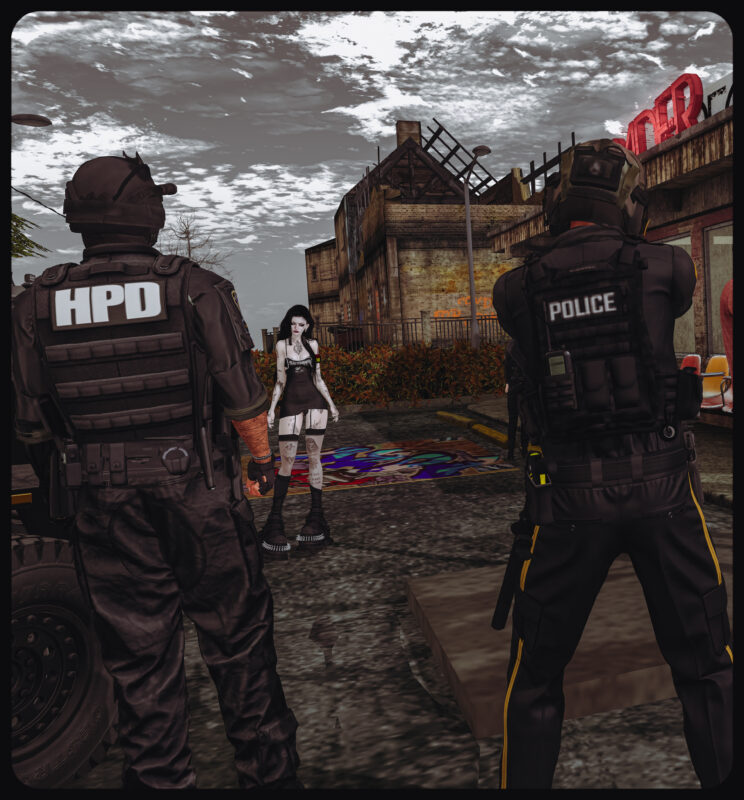
HPD Raid on Rader Records
Three months after being dumped mutilated into the city, Carter was back in armour.
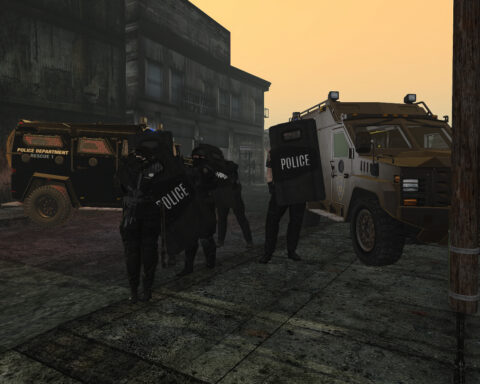
During HPD’s raid on Rader Records I photographed him on the front line as a blade-carrying woman advanced toward him. Around him were shields, batons, knives, blood and all the ordinary indicators that Hathian had decided everyone was having too peaceful an afternoon.
This entry matters less for what happened than for the fact Carter was there at all. After everything, he had returned to work.
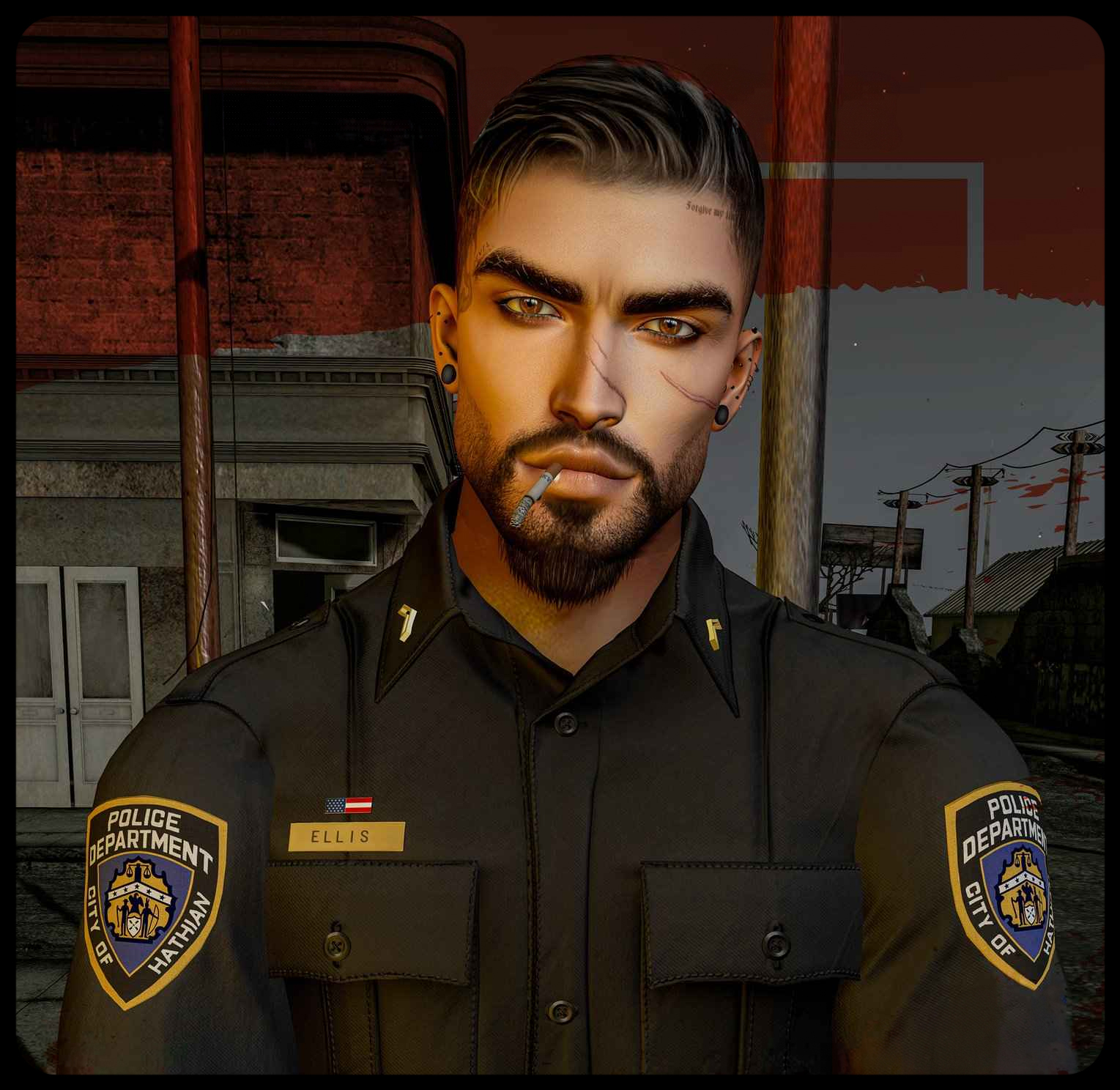
Breaking News: HPD’s Carter Ellis Reported Dead
And then there was no attacker.
Carter became unwell inside HPD and collapsed. Officers attempted CPR. He was taken urgently to HGH, where further resuscitation and emergency treatment failed. Information supplied to the Observer gave his time of death as 10:47am.
The first report cautiously called it an apparent major cardiac event. At his funeral, Lizette would later identify the cause with painful simplicity: a failing pacemaker.
For once, Carter Ellis did not come back.
Ten files, and I am no closer to giving you one clean Carter Ellis.
Good.
I would be more worried if I were.
The archive gives us an accused abuser who was himself horrifically abused; a police officer who became a symbol of police brutality and then repeatedly became the target of vigilante brutality; a man whose body was progressively rebuilt while his reputation became harder to repair; someone capable of being frightening, ridiculous, loyal, wounded, obscene and apparently very loved.
Paperwork can tell us what happened around a person. It is less good at telling us what they meant to somebody.
For that, we have to leave the archive.
We have to go to the funeral.
The Last Call
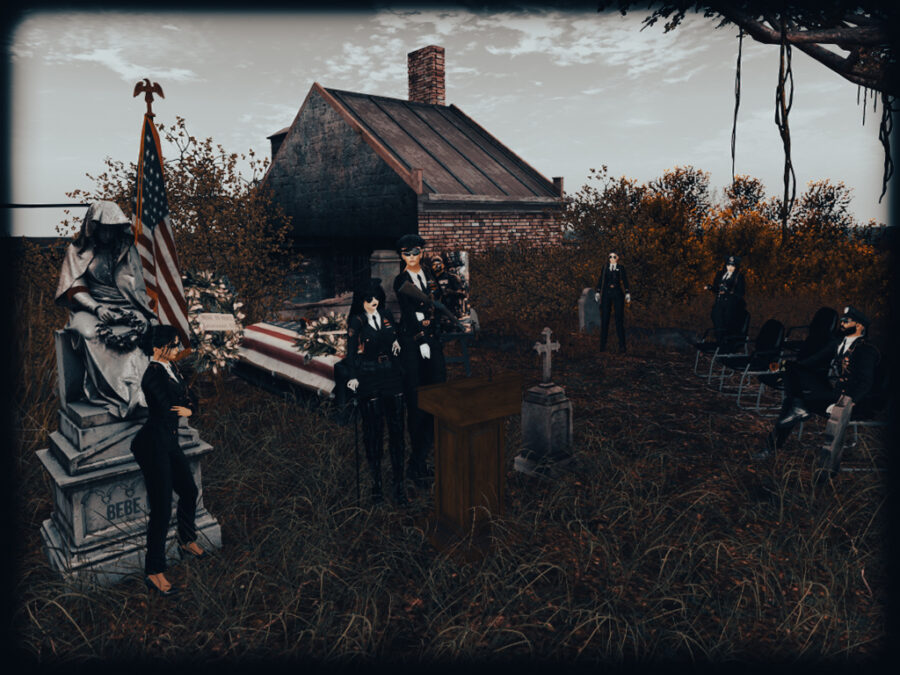
There is something particularly cruel about a police radio calling for somebody everybody already knows is not going to answer. I've seen it before at other funerals the HPD holds and as usual the sombre task fell to Detective Inspector Krystal O'Neil who stood before the gathering and asked for the channel to be cleared before making the traditional final call for Lieutenant Carter Ellis, shield number 57398, call sign Charles-28699. She called once, waited, and received nothing. Then she called again. The same silence followed before, finally, she tried one last time.
"No response from Charles-28699. Call sign Charles-28699 is out of service. Gone, but not forgotten. May you rest in peace."
For all the noise that had followed Carter Ellis through Hathian, his funeral began with ten seconds of absolutely nothing. No answer, no bad joke coming back over the radio, no unlikely interruption announcing that Carter had once again survived something which ought to have finished him. Just the Inspector's voice, the waiting officers and the formal acknowledgement that this time nobody was coming back on the other end.
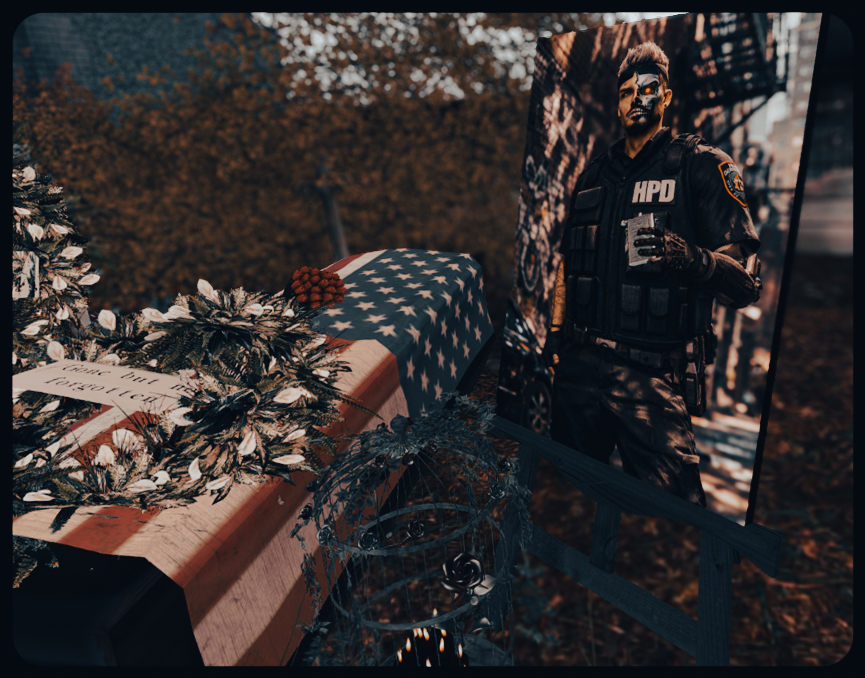
There were uniforms everywhere, flowers arranged around the memorial and officers trying, with varying degrees of success, to keep themselves composed while also watching the edge of the cemetery. That last part may sound unnecessary at a funeral, but this is Hathian and even grief apparently requires perimeter security.
The radio call made everything feel rather more final than the coffin did.
The Man Behind the Badge
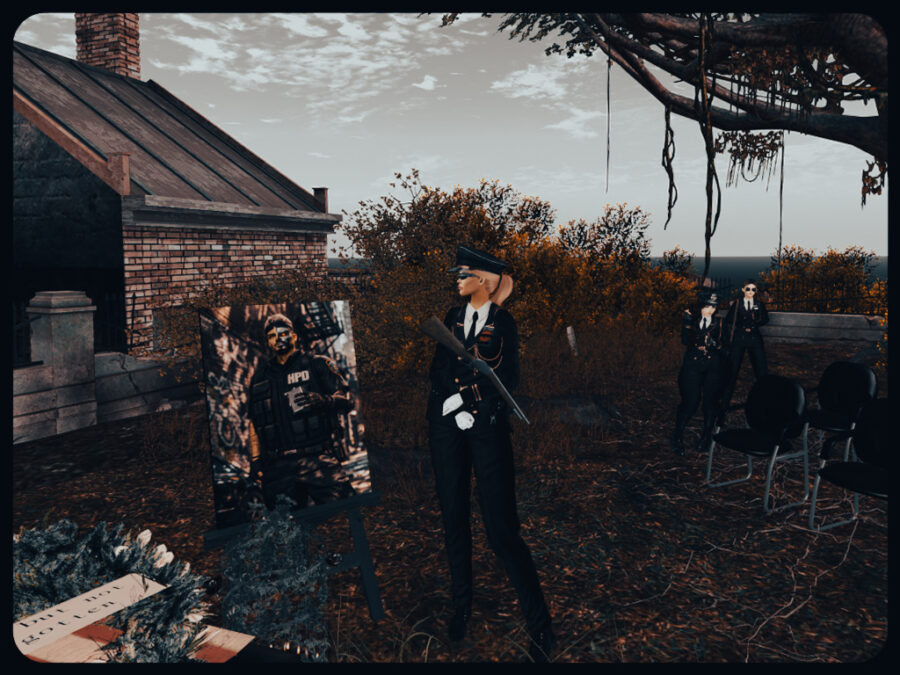
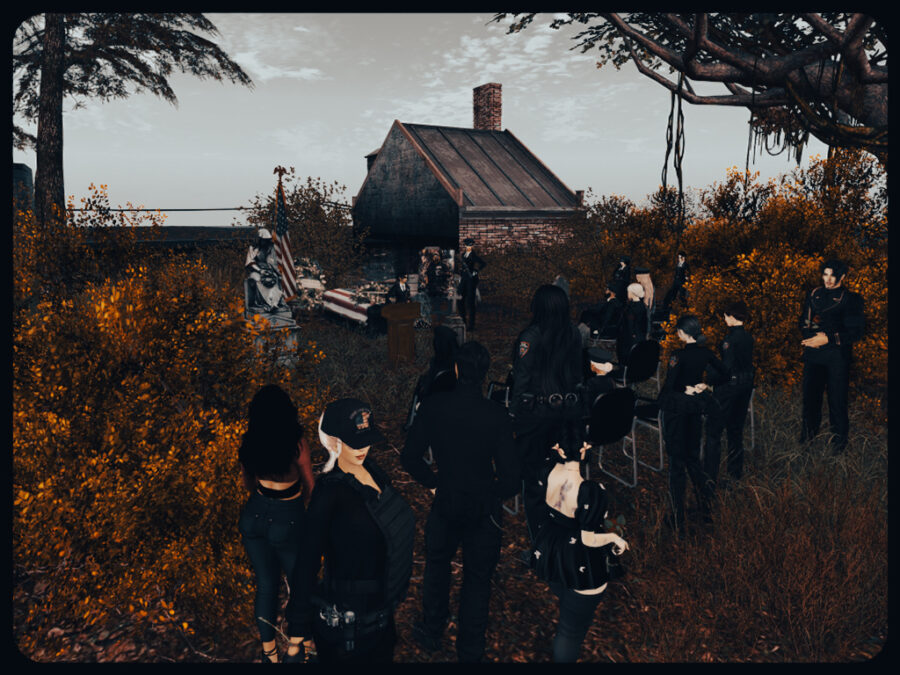
Lizette Calhern-Ellis followed and did something considerably harder than simply telling a crowd that Carter had been a good police officer. She told them about the man who went home after the shift ended.
"Most everyone will talk about what an exceptional police officer he was," she told the gathering. "But what I'd like to tell you about is the man behind the badge."
The Carter she described bore very little resemblance to the one filling the Observer archive. Her Carter panicked when their triplets were born. He loved pasta, apparently disliked yard work while still maintaining a respectable lawn, tolerated Lizette's ever-growing collection of plushies and participated in the ordinary domestic chaos of children, food and family life. There were bedtime stories, Disney films with pizza and snacks, building blocks and Hot Wheels scattered across the floor. She spoke about watching him hold their newborn children for the first time and told those listening, "I've never seen him look so beautiful as he did in those moments."
She also made a point of saying that Carter had taken her other children into the family as his own.
That doesn't cancel anything in the file we have just opened, nor should it. It simply makes Carter more difficult to reduce to whichever version of him is most convenient for our readers who hated him. The man accused of terrible things inside HPD cells and the man sitting on the floor playing with toy cars do not somehow invalidate one another.
Lizette's composure finally gave way when she spoke about their daughter Lisa, whom she described as a "daddy's girl". Since Carter's death, she said, one of the few things capable of settling her was being wrapped in one of her father's shirts. Then she explained, with a simplicity that somehow made it worse, what had actually killed him.
"At 10:47 am June the 13th, our world crashed down around us. Not by a bullet, not by a stabbing, and not by an ambush. But by a failing pacemaker."
Of all the possible endings Carter Ellis had spent years avoiding, that one still feels almost absurdly ordinary. After everything Hathian threw at him, it was his heart that finally stopped the story.
Angelique de Vaucluse followed Lizette with a quieter religious tribute and one line which probably deserves to survive beyond the ceremony.
"In the end, we all stand equal before God. Not as officers, not as lieutenants, not as heroes or failures. Simply as people."
The badge remained, she said. The department remained and so did the work. Carter did not.
Then Vanora Blackheart took the microphone and presented yet another version of the dead man.
"Carter was a troubled man. But a good man. He had his flaws. Like we all did."
Vanora did not pretend he had been gentle. Her defence was instead that Hathian had helped make him violent. She spoke about the kidnappings, torture, drugs, mutilation and the steady physical dismantling of somebody who nevertheless kept returning to HPD. His arm had been taken. His face had been damaged. His family and health had suffered. In Vanora's telling, Carter absorbed all of that and continued turning up for duty anyway. There are parts of her argument which sit uncomfortably beside the Observer's own reporting. Some things she dismissed as rumour or slander were allegations this newspaper had investigated seriously and, in places, supported with evidence. A funeral does not require us to pretend otherwise. But it also doesn't require us to pretend Vanora didn't love her friend.
"No matter what. He always was there. And now... he isn't."
When she eventually turned toward the casket, the argument fell away almost completely. She spoke about missing the banter, Carter teasing Lizette, the certainty that his voice might come over the radio when somebody was bleeding and needed help, and even the apparently regular experience of smacking him with her cane when he was being an idiot.
"I will miss ya Carter."
Whatever anybody else thought of him, she meant it. Knowing Vanora as I do, the contradictions that she has within her were always going to be on show and while her comments won't likely endear her to many, they come from a better place than most.
And Then Hathian Arrived
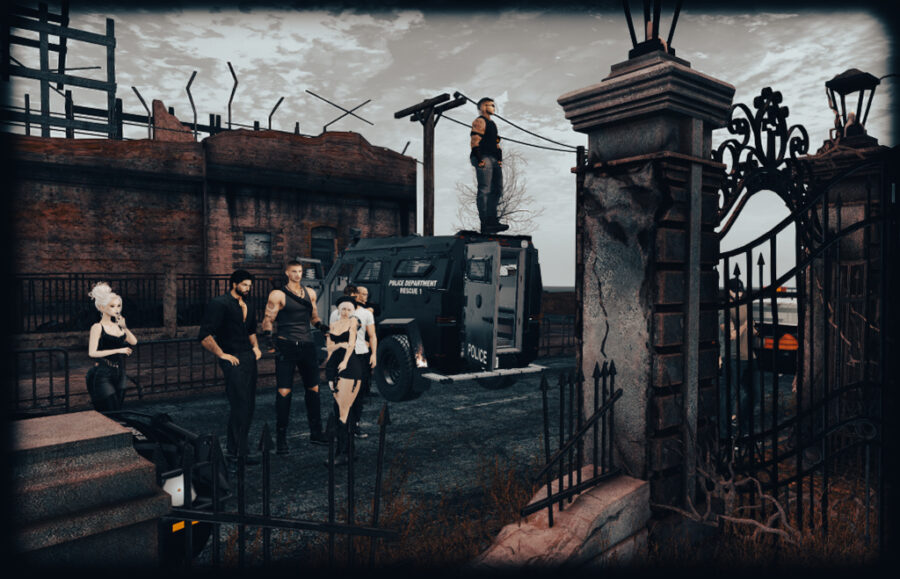
Not everybody at the cemetery had come to mourn. A growing group gathered around the outside of the ceremony, some there simply to watch and others making their opinion of Carter rather harder to miss. Among them was Seven of the Rejects, who repeatedly insisted that his group had donated $30,000 toward Carter's memorial and that this entitled him to say a few words.
He called Carter "the Boogeyman of the HPD" and "the nightmare of most women in lockup", along with several less printable things which added enthusiasm rather than nuance. Yet even in the middle of a speech designed largely to insult the dead man, Seven managed one moment of something approaching sympathy.
"I am sorry for the loss to his children," he said. "No child deserves to be fatherless." For a few seconds, that was about as close as the two versions of Carter Ellis present at the cemetery came to meeting each other. Then Seven wished him an eternity in Hell and the moment passed.
Nearby, Bryce Canden from the Rejects had climbed onto an HPD vehicle and produced a kazoo.
I have covered murders, riots, kidnappings, cult ceremonies, gang wars and a burning wicker man. I will admit the kazoo was a new one in terms of the annals of Criminal Gang leadership crimes (against the ears).
Bryce began playing it while Lizette, already balancing grief with an increasingly hostile crowd, finally reached the point where restraint ceased to appeal to her and she led the response with words and action... "Smile you son of a bitch."
Yes dear reader, then she fired. The round struck Bryce high in the chest toward the shoulder and knocked him backwards onto the vehicle. He remained conscious long enough to complain that Carter might at least have left him a bulletproof vest and to conclude, with some justification, that music critics were the worst.
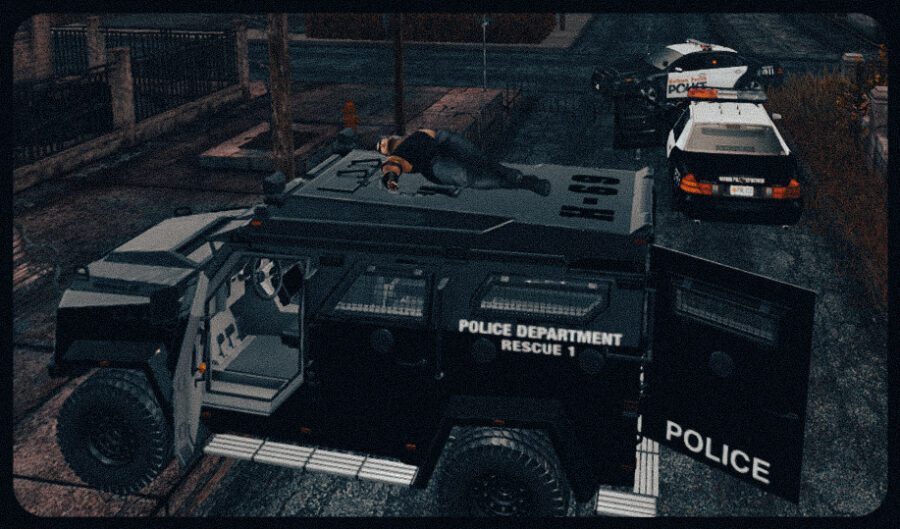
From there, the ceremony came apart very quickly. Lizette fired again, this time hitting Dalia Collins in the shoulder. Seven, who had already been confronted over his speech, was pursued into the bushes and became involved in a violent struggle with officers. He was beaten, eventually produced a handgun and fired during the melee, leaving Tessa Redfeather shot in the thigh and Ash Xavier wounded in the arm.
Elsewhere, Foxy emerged from the bushes with a knife and drove it into Officer Asuka Reed-Bellic's leg. Gunfire followed and Foxy went down with multiple wounds. At the cemetery entrance another confrontation ended with Dastan Finchfield being shot after he used a baseball bat against an officer's rifle.
It is possible to catalogue every punch, bullet and bad decision from there, but doing so rather misses what the scene had become. People who had arrived to mourn were ducking for cover. Weapons intended for ceremony were being reloaded. Officers were shouting over one another, the dead man's widow had to be separated from her rifle and FDH began arriving to find not a funeral gathering but a rapidly expanding collection of people requiring medical treatment.
And, rather wonderfully (in this reporter's opinion) and terribly (fact), people were still bringing roses to Carter's casket. The funeral did not really stop when the shooting began. It simply continued in fragments around it.
One of the quieter comments came later from Olivia Russo, who approached the casket after much of the violence had burned itself out.
"You were an arsehole, C3-PO," she told him. "You didn't deserve this."
I am not sure anybody produced a more honest epitaph all morning.
Out of Service
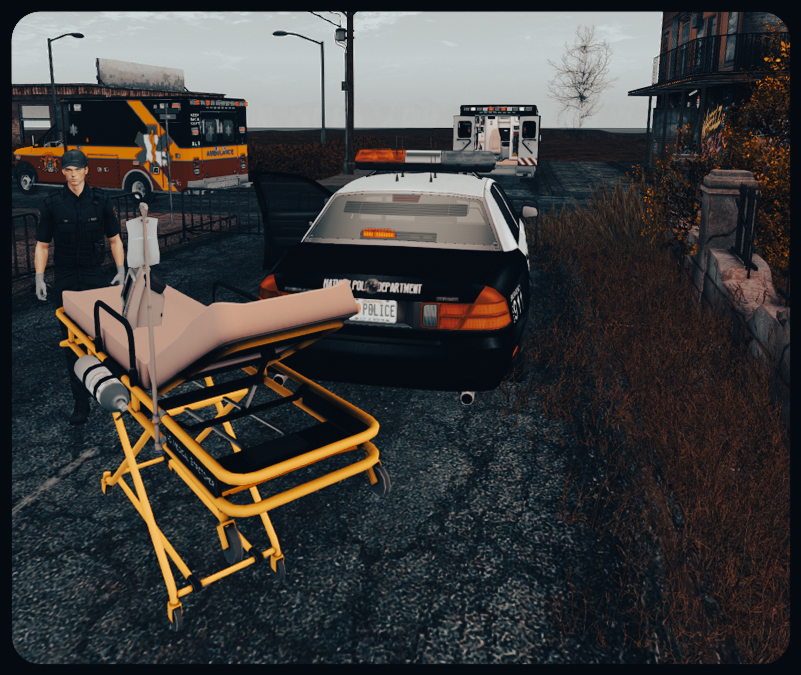
Eventually the ambulances began leaving and the cemetery started to empty. The shouting thinned, wounded people disappeared toward HGH and officers began packing away what remained of a funeral which had started with a radio call and ended with paramedics deciding who needed to leave first.
Through all of it, Carter Ellis remained dead. That should not be a remarkable observation, except that with Carter it genuinely is. The first time somebody told this newspaper that he had died, we received photographs, reports of torture, an auction, a ridiculous certificate and absolutely nothing resembling convincing proof of a corpse. Carter later walked back into the story missing more pieces than when he left it and apparently expected everybody else to adjust.
He disappeared again. He came back again. Parts of him were replaced, other parts were taken, and the city developed a strange habit of treating each Carter Ellis catastrophe as though it might finally be the last one. People shot him, tortured him, accused him, defended him, loved him and hated him, while Carter repeatedly demonstrated that conclusions were something which happened mostly to other people.
There won't be another return from this one.
There was a hospital, a recorded time of death and, finally, a funeral attended by his widow, his colleagues, his friends and some of the people who despised him enough to turn up and make sure everybody knew it. Lizette now has children who will know parts of their father through photographs, stories, memories and shirts which still carry enough of him to provide comfort. Other people will remember Carter through entirely different scars, and neither group is obliged to give up its version of him merely because the other exists.
But one part of the argument is finally settled. The next anonymous message will not tell me Carter has been dumped beneath a bridge. There will be no reconstructed arm, no impossible reappearance at HPD and no irritated correction to another premature obituary.
Krystal made the call and nobody answered.
Charles-28699 is out of service, and this time there is no question mark after it.
Carter Ellis is really dead.
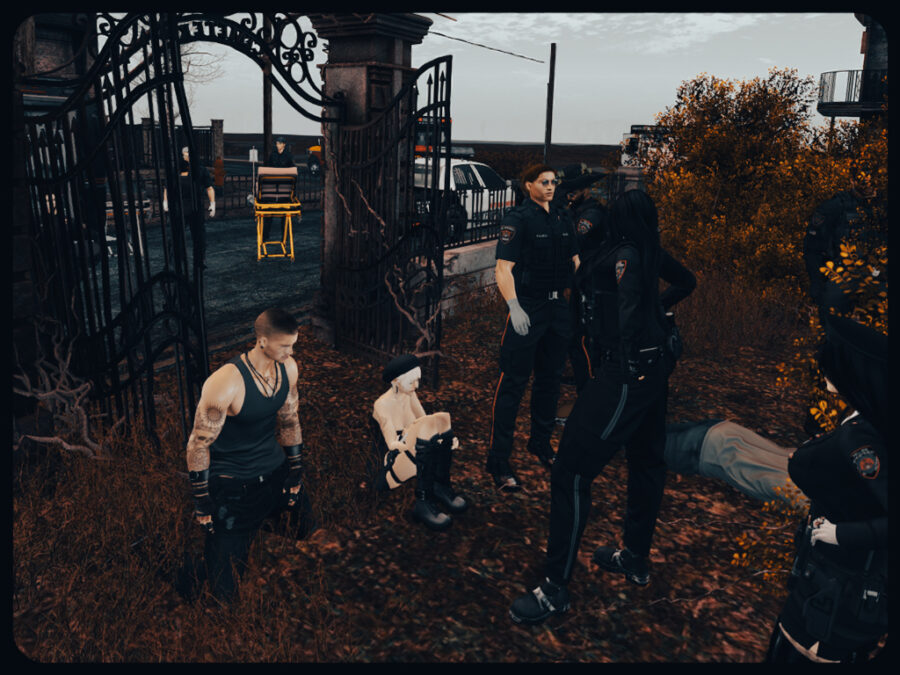
And this reporter? She's looking back in anger and forward in frustration at Hathian...
((With much love and thanks to Carter, Vanora, Krystal and others who helped provide material over the years. AI Disclosure: HTML support to achieve the desired visual layout)).