By: Jizzabelle Lovejoy, CU Columnist and ΣΘΝ Sorority President
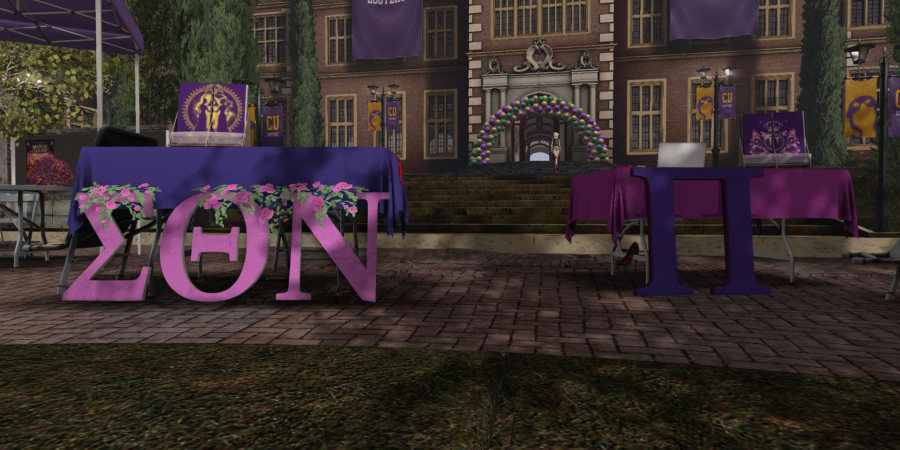
Folks around campus might be familiar with my pledge interviews. Up on the Sigma house balcony, flanked by those lovely columns, the chandelier, Greek letters, and roses, I’ll sit down for a discussion with pledge hopefuls.

Lately, in those interviews, I’ve asked pledges about their social media presence and aspirations. Next to sexual expression, that is arguably the most crucial difference at the center of our well-documented sorority schism.
There’s a good reason for that. I surmised some time ago that influencer culture is due for a decline, and I wasn’t wrong. Research into the subject paints a grim picture of economic and cultural headwinds that will likely shut off many a ring light in the coming few years.
To be clear, social media isn’t going anywhere. It remains a wonderful way to keep in touch with friends and loved ones and connect with friends and strangers alike over one’s interests. Activists do well promoting their causes there. And small business owners find in it a logical and effective means of promotion. For all of the purposes it was originally conceived, it still excels…albeit with loads more ads and other enshittification.
But as we’re seeing, the era of the influencer has peaked, and the downturn has begun.
In Defense of Influencers
To be clear, I’m not without sympathy. After all, one of the central appeals of becoming an influencer is a way out of the soul-sucking, nine-to-five corporate grind, which is completely understandable. Furthermore, it was seen that the growth of the influencer marked a democratization of celebrity status, selling the idea that anyone can make it big through branding themselves.
It’s arguably a modern version–a manifesting destiny, if you will–of the American Dream. Unfortunately, once one does make it, the psychological toll of constantly measuring oneself by unstable, fickle follower counts and engagement is very real.
What’s worse, to monetize their presence towards anything approaching a livable income, influencers always have to toe a line between begging for money, exploiting their followers, or selling out, as creator Tiffany Ferg details in this fairly balanced take on the topic. And none of those choices are ideal for one’s sense of self.
While hardly representative, this EO Nutrition video reporting on influencer cardiac conditions and deaths reminds me of something that medical professionals have long known: that mental and physical health are inextricably linked. In neuroscience, I’ve learned some of the nitty gritty behind this, in that emotional and physical pain share some neural pathways.
National Institutes of Health – Social Pain and Physical Pain: Shared Paths to Resilience
Psychology Today – Emotional and Physical Pain Activate Similar Brain Regions
My own speculation on the trend EO Nutrition points out is this: from terrorist attacks and fears, to economic and social upheaval, an entire generation has grown up in a miasma of anxiety. It’s the background noise of our lives.
Then, for influencers, add to that the intense pressure to constantly roll out content or face irrelevance. Next, factor in the need to keep impressing people one might not even like. Faking it till you make it takes its emotional toll. For many who try to do so, especially by using debt and other shenanigans to keep up an online veneer of wealth, the bodily toll is often not far behind.
As a student of the mental health fields, I do my best to understand these difficulties. When it comes to influencer life as the newest manifestation of the American Dream, well…one should keep in mind that prevailing ideas don’t always reflect the truth. Seldom has that been more the case than in our time, which some journalists and scholars have dubbed our Second Gilded Age.
Attention Rollercoaster
The appeal of influencers from the outset hinged on two main factors traditional advertising lacked: relatability and authenticity. In stark contrast to a celebrity endorsement, influencer culture began with ordinary people living ordinary lives. Social media thus enabled the latest form of the tried-and-true, populist “plain folks” approach to advertising, in which the message being sold is presented as being “of the people.”
Propaganda Critic – Plain Folks
Undermining Their Own Relevance
In time, we saw these “plain folks” unboxing designer hauls. During good economic times, that was often seen as aspirational. But right now, we are firmly outside of good economic times.
With the AI bubble set to burst, any improvement in that situation is likely to be very temporary. So, with larger influencers showing off lavish lifestyles while their followers struggle to pay rent, that aspirational view of said lifestyles gives way to feelings that these influencers are instead, utterly tone deaf.
This is the factor that so many video essays have focused on, many of which highlighted beauty influencer Jaclyn Hill as she begins to crash out and wonder why. At least she’s crashing in luxury, right? It’s luxury that her audience outgrew and she failed to, even as she won’t be able to afford it much longer. Hence, she undermines one pillar of her relevance: relatability.
To her credit, at the end of the vid, Hill attempts to re-establish her relatability, but one can’t help but feel it’s too little, too late. Some might be able to reinvent themselves. Others, not so much.
Regarding authenticity, the advertising dollars themselves kicked this out from under creators’ collective feet. When a creator shills more ads for products than can possibly be used in a given time span, viewers catch wise. Trust erodes. And with it, that authenticity is gone. The money and luxury they seek for their climb ends up trapping them in place as their audience moves on.
Your Brain on Obscurity, Fame, and Back Again
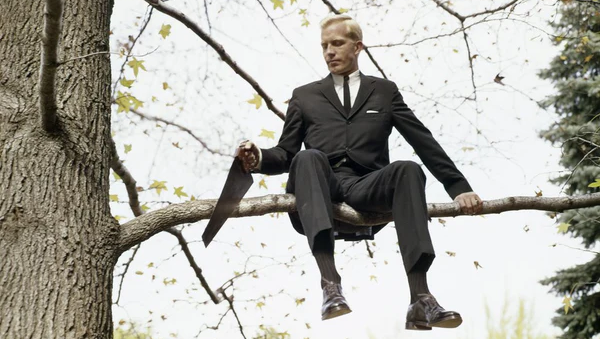
But as it so happens, once the advertising dollars pour in and the plain folks doing the shilling find themselves in higher tax brackets and quitting their day jobs, things start to change…most of all their own brains.
It’s well known that all the attention can get to one’s head. Clinically, this has been looked at. While the sample sizes are hardly representative, neither is the population being studied. Regardless, a picture emerges, and it seems that very few human brains are well-equipped to handle fame. Perhaps that’s the unspoken toll of “manifesting” one’s way there — nobody budgets for what the trip costs one’s psyche and soul, at individual or collective levels.
Also, while hardly peer reviewed, Learning Machine posts an interesting Substack essay which, at the very least, poses fascinating research questions. The science is pretty raw on this and we might need to (metaphorically) pick apart some influencer brains to get a better idea of the specific psychopathology of fame. As the downturn picks up speed, there will be no shortage of said influencer brains experiencing pathologies.
Journal of Phenomenological Psychology – Being a Celebrity: The Phenomenology of Fame
University of British Columbia – The Psychological Consequences of Fame: Three Tests of the Self-Consciousness Hypothesis
Learning Machine – Your Mind on Fame
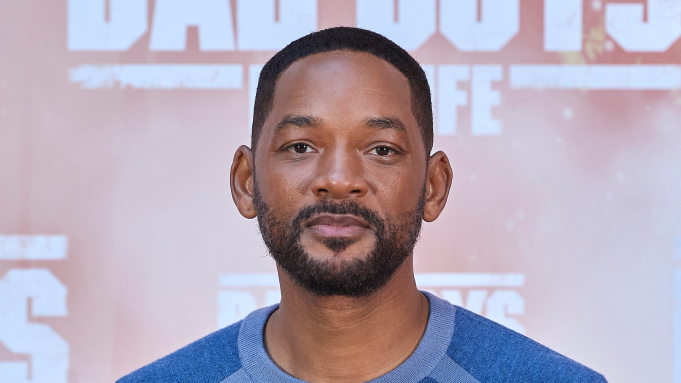
The Learning Machine article is particularly fascinating. With all that dopamine flowing from so much attention, it’s easy to get drunk on one’s own hype. This readily explains how influencers fail to read the room of their followers and become utterly tone deaf. Then, just as one gets settled into place at the top of the arc, many will experience the fall. I dug up a quote which frames the arc succinctly:
“Becoming famous is amazing. Being famous is a mixed bag. Losing any amount of fame is miserable.”
–Will Smith
Reputable News Reports Influencer Decline
Even trusted news outlets have reported on the downward trend. Reading their output has left me hoping a lot of these influencers out there haven’t taken out mortgages or car notes, especially not with long terms, and more so while this inflated economy charges ridiculous prices for both, with economic bubble bursts on the horizon…
The Washington Post – Why You May Be Just Renting Your Car Even If You Have a Loan
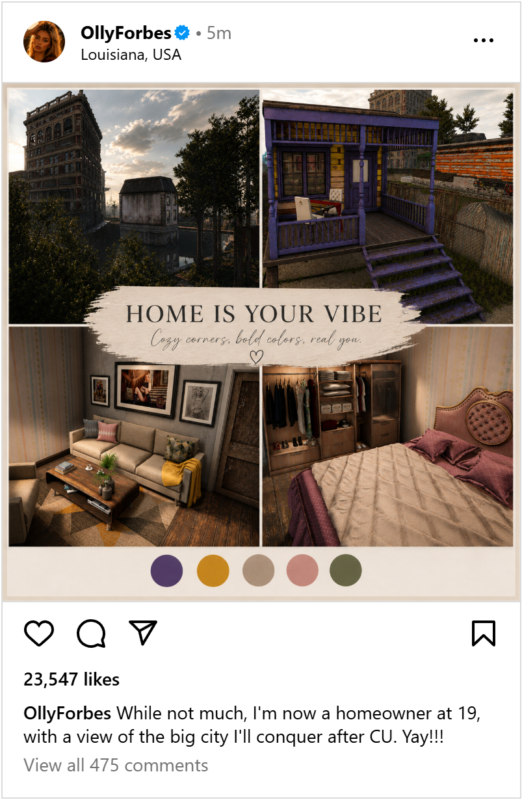
Well, hopefully, all those folks…and there’s a LOT of them, as we’ll see…won’t end up with those loans underwater like our own Hathian area circa 2005, right? *awkward pause* Anyway, on to the news! Let’s start with the BBC, shall we?
BBC and AP Document the Counter
In January of 2025, the BBC highlighted a few “de-influencers” who are conspicuously moving their following away from overconsumption. Frankly, this trend is overdue.
British Broadcasting Corporation – Maybe You’ll Realize What You Have is Good Enough: Why Influencers are Facing a Pushback
Along with hashtags like “underconsumption core” and “conscious consumer”, they share key messages, such as “fast fashion won’t make you stylish” and “underconsumption is normal consumption”.
–BBC writer Megan Lawton, “Maybe You’ll Realize What You Have is Good Enough”
The AP, by the way, was two years ahead of the BBC in reporting on de-influencers, with a column on them dating back to 2023.
Associated Press – TikTok De-Influencers Want Gen Z to Buy Less, and More
NPR and WSJ Bring the Numbers
More damningly, as of this month (July 16) NPR reported of recession woes resulting in dwindling follower counts and how some larger influencers can weather the storm. Smaller ones might adapt. Tucked in the middle of all that, however, is a telling statistic.
National Public Radio – The Economy is Turbulent for Influencers, Too: Here’s How You Might See It Online
“Nearly 12 million people in the U.S. consider themselves full-time influencers, according to one study, earning an average of $178,000 a year, a number boosted by the earnings of mega-influencers like Addison Rae and MrBeast.”
–NPR writer Kristian Monroe, “The Economy is Turbulent for Influencers, Too”
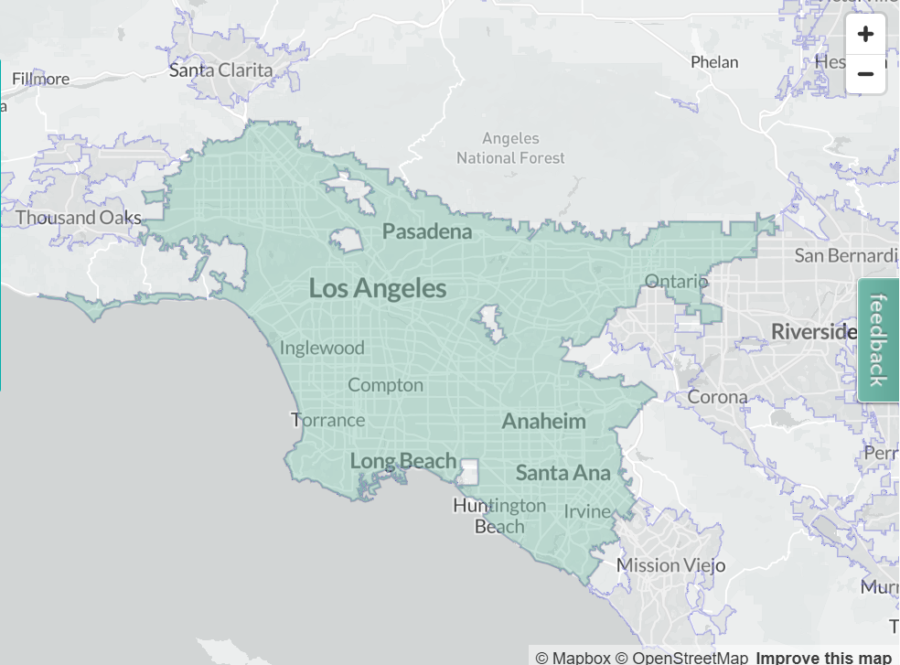
For perspective, 12 million is roughly the population of the entire Los Angeles/Anaheim metro area as of 2025 US Census data. Something tells me that a Venn diagram between the two groups would entail significant overlap. Doubtless, even more overlap would follow if one surveyed these populations for narcissistic traits.
If that number doesn’t indicate a bloated, oversaturated market, I don’t know what does. It’s a big task for budding influencers to make inroads and establish their personal brands when attention and advertiser dollars are spread so thinly. Then add to that a society that’s trending towards seeing them less as aspirational and more as the butt of jokes. So, to all you influencer hopefuls out there, I’d like to offer an encouraging quote:
“May the odds be ever in your favor!”
–Effie Trinket, from “The Hunger Games”

As for that income average of $178K annually, it led me to question what the median of that sample comes out to. I wonder for the same reason that statisticians refer to median home values and household incomes instead of average ones. In both, the top end skews the average, and with it, perception of the rest of the spread. With the mean statistic so removed from more typical values, the figure at the middle of the dataset becomes more indicative of the norm. In this case, I dug up a median figure from Franklin University, which cites median influencer income at $48K annually. Even worse, in 2024, the WSJ reported that half of all influencers’ incomes top out at $15K annually.
Wall Street Journal – Social-Media Influencers Aren’t Getting Rich—They’re Barely Getting By
While it would certainly beef up one’s savings, that’s hardly the kind of income to show off a lifestyle on, especially in the middle of a downturn in one’s own industry and the economy as a whole. I get it, the nine-to-five sucks. But all those 12 million influencers out there trying to “manifest” a living from their content might not want to burn those bridges just yet.
For those wondering, OnlyFans suffers from the same problems. There are too many content creators there competing for too little attention, yielding insufficient income. Hence, despite Sigma Theta Noir’s stated support of sex work, my early inclinations towards a streaming setup for the house have been set to the far back burner.
Advertisers Think Twice
Speaking of the Wall Street Journal, they’re not the only business-leaning publication reporting on this downward trajectory. A second I found would go on to conduct a survey. And a third…well, they’re a household name, recognizable everywhere from boardrooms to rap lyrics…and in our very own campus gossip columns.
A Not-so-Clutch Sample
Billing itself as “The Leading Marketplace for finding Business Services,” Clutch is clearly written by and for the business community. The findings they reported to that audience and their advertising funds was less than encouraging.
Clutch – Why Trust in Influencers is Declining: Trends & What’s Next
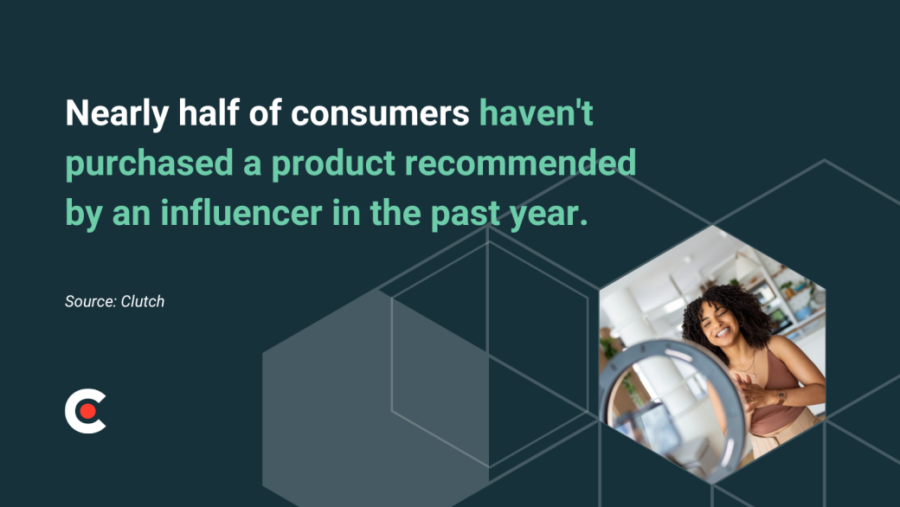
And yes, my scientific inclinations immediately recognize that the sample size of 277 is hardly enough to call representative. Still, if influencer culture has taught us anything, it’s that it doesn’t take a big slice of the population to sway the prevailing narrative. It’s more important that businesses are paying attention.
So, to bring this home, much of the money Olly and the Pi’s look to build their lifestyle on and curate their images for is already looking for a new home with a better return on investment.
The Other Forbes. Yes, THAT One.
An outlet even more impactful than Clutch in shaping narratives among businesses has reported on this. That outlet is none other than the business magazine bearing the most famous family name on our CU campus. Yes, Forbes, that magazine of the same name the most notable Pi sister hails from, has reported on the topic no less than FOUR times. In fact, their writers first read the tea leaves way back in 2020.
Forbes – Is Influencer Marketing on the Decline?
Then in 2024, Forbes stopped asking. Here they not only sounded the alarm again, they offered business leaders an alternative, suggesting that spending their ad money on experts instead of narcissists is a better way forward.
Forbes – Shoppers Have Lost Faith in Influencers. Are Experts the Answer?
Finally, we’re a little over halfway through 2026, and they’ve already released two more articles. In the first, Forbes Councils Member Cory Hodkinson argues that simple follower count is less important than two factors that the advertisers themselves have undermined: trust and alignment. The second article, released not even two weeks after, reports on the wasted advertising potential of blindly pursuing follower numbers, and recommends advertising based on the less tangible metric of follower engagement.
Forbes – Influencer Marketing is Entering its Accountability Phase
Forbes – The Cost of Flying Blind in Influencer Marketing
“…inside executive meetings, one question remains: what is influencer marketing actually delivering? As investment increases, leaders are being asked to make larger budget decisions without clear visibility into performance.”
–Forbes writer Jennifer Quigley-Jones, “The Cost of Flying Blind in Influencer Marketing”
Eventually, all those sponsors that influencers look to for their lifestyle aspirations will demand results. And when they don’t get them, the market correction will follow.
AI and the End of an Age
Through these Forbes articles, we see the downward arc of how businesses see content creator marketing. And then there’s the AI factor to consider. As it improves, there’ll no doubt be fully-digital influencers pitching products, which could intensify the next few years’ influencer ad downturn. I don’t expect it to take off nearly as well as paying humans did, for the same reasons that the ad money itself begat failure: a lack of relatability and authenticity. The audience is already suspicious and ad-weary. Still, if it cuts enough costs, there is potential for AI to bring return on investment back in line, so it’ll likely remain in some capacity.
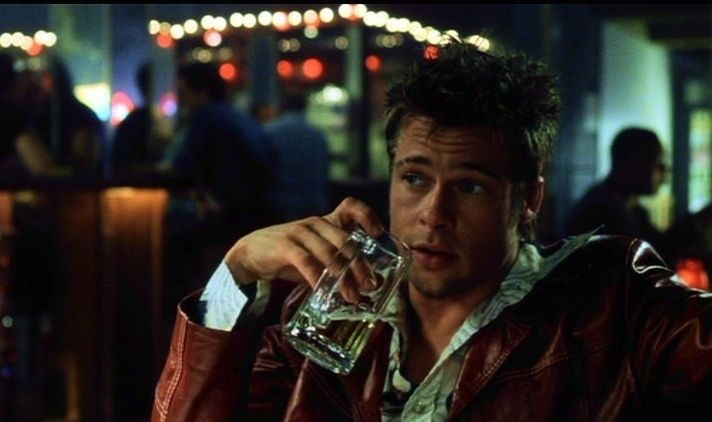
In light of all of this, when I heard of the formation of a Social Media Club on campus, a certain Tyler Durden quote came to mind.
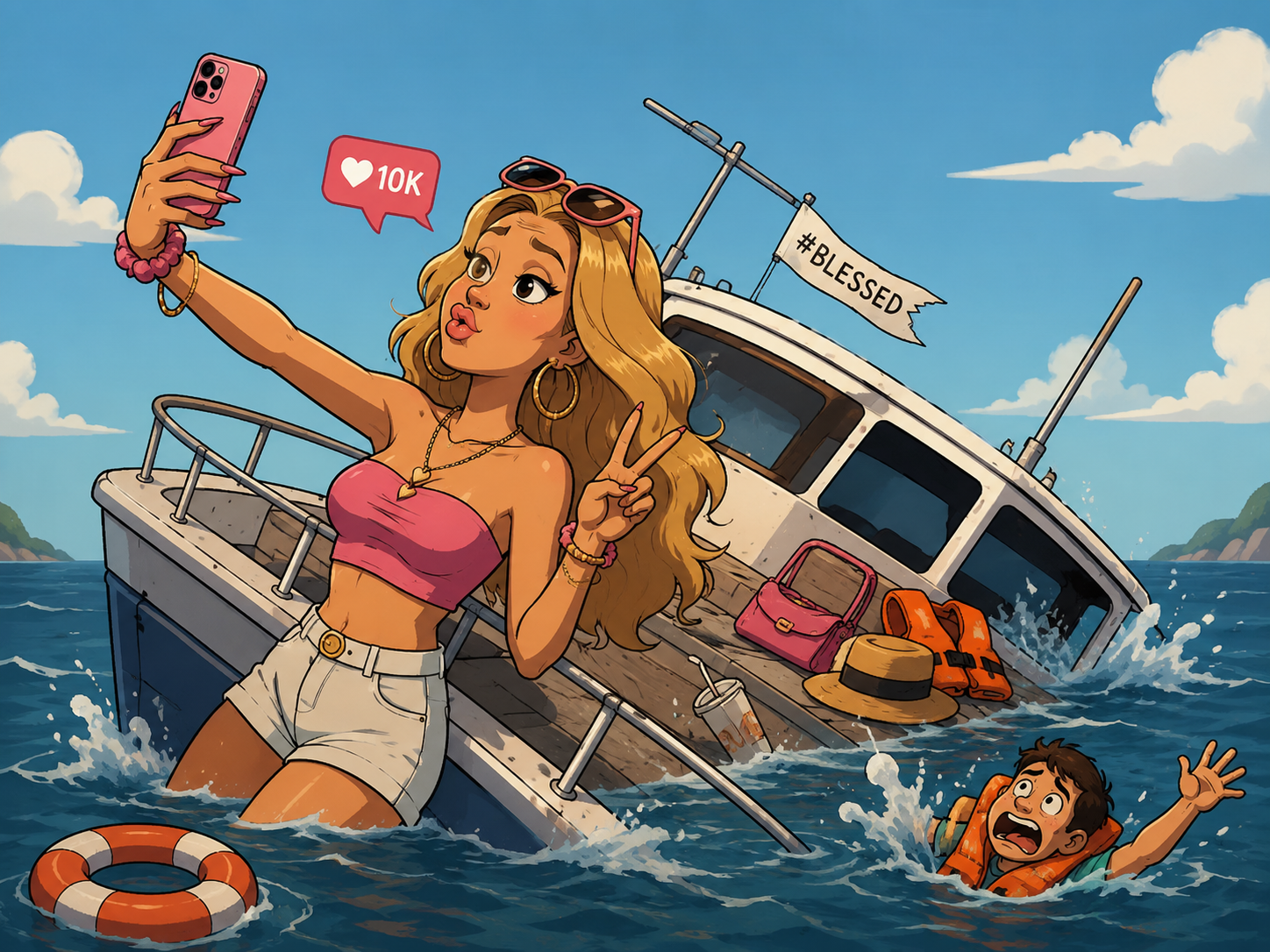
“…polishing the brass on the Titanic. It’s all going down…”
–Tyler Durden, Fight Club
Now, before Olly dismisses my assertions as jealousy like she always does, let’s clear the air: I bear zero envy towards her and her life, for reasons that should now be abundantly clear.
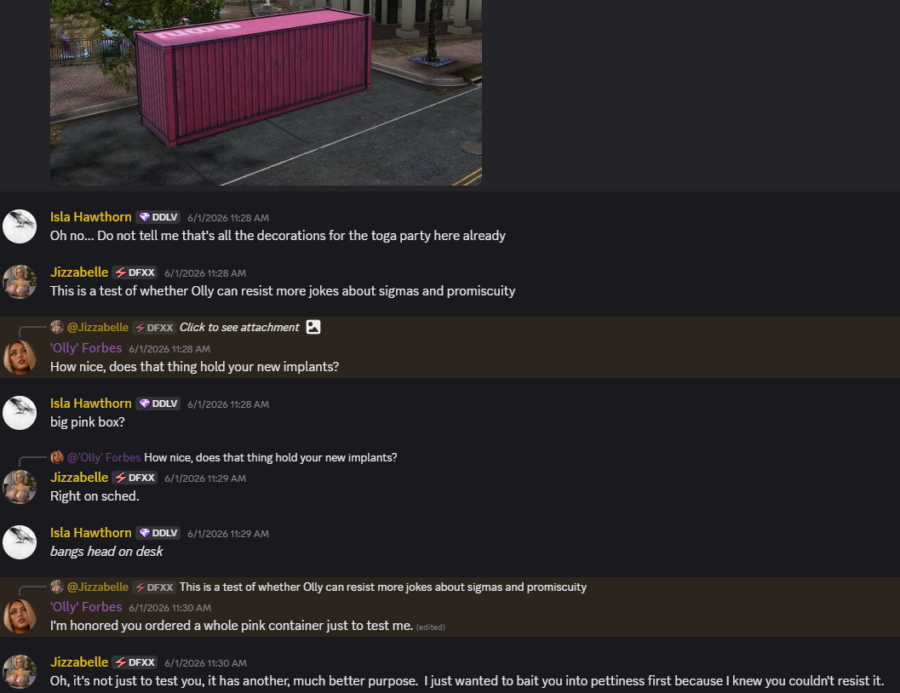
Some might think to ask if not envy, then whether I’m approaching this with some disdain. In light of everything that’s gone on between us, how could I not? After all, I’ve openly admitted to schadenfreude and baiting Olly into crass, unseemly jokes about the Food Bank container before having it painted.
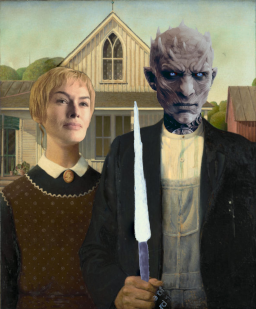
But the coming economic downturn for influencers is set to go well beyond our petty exchange to another level of hurt entirely. I’m already playing the disliked antagonist…at least in Olly’s narrative perspective. Hopefully, I’ve also added some dramatic tension by shedding light on the Forbes articles. Doing so probably casts me in a few more roles too — lesser-scope villain, maybe even red herring.
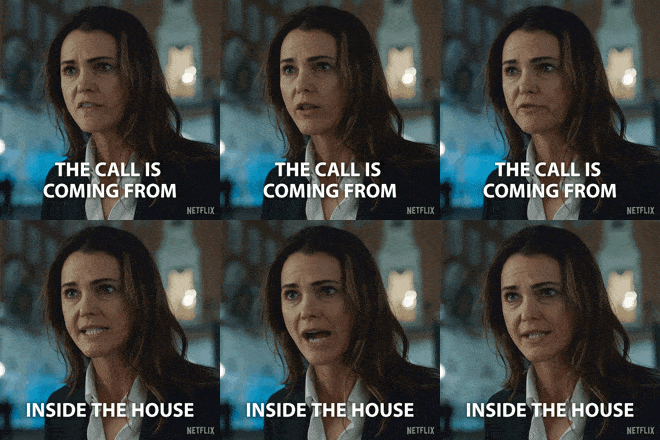
However, I’d rather think of myself as the police dispatcher…you know, the one who warns the main character and her syndrome that the call is coming from inside the house.
Finally, where do we go from here? To the Social Media Club, I recommend this: instead of looking to show off a soft life built on crushing debt, turn those burgeoning marketing and image management skills towards more constructive uses…even politics would be better. Better still, raise awareness for nonprofits and activist causes. Creating art is also a worthy way forward. If that’s already been discussed, then good on you all. I know some are already on these tracks. Thankfully Olly has her music, which has its merits but could do with some broader subject matter. Rich Girl Problems is genuinely interesting with its juxtaposition of wealth and want. Designer Dividends? Not so much.
Then there’s the expertise approach, which we are all poised to develop here in college. It allows content creators to provide genuine and credible insight into something of value for their followings. Thus, we would go on to enrich lives, instead of just stoking pointless envy for the same tired beige interiors, matcha tea, Pilates, makeup, fashion labels, and unboxing hauls.
Social media will remain a place to hone skills in putting forth such activism, art and expertise. However, gone are the days when one could rely on these mercurial platforms, algorithms, and audience tastes for a livable income…if most ever really could. Mostly smoke and mirrors, the influencer dream was our “manifesting” destiny. Feeding our narcissistic impulses, it made many of us into the worst versions of ourselves. Thus, for many more, it will not be missed. In the coming years, it’ll be interesting to see who adapts and who crashes out.
Until then, stay safe out there, and try to temper your giggles at influencers in the wild with a little sympathy.