By: Contributor Jizzabelle
Before I get into my opinion column, I have a few housekeeping announcements:
First off, a little rumor control. The House letters on those behinds in the leaked pics are NOT brands. We’re not marking anyone with red-hot irons here (even though we almost did a week ago, but that’s a whole ‘nother story). They’re just spank marks.
Now, just in time for Valentine’s Day, I promised to discuss the SPARK™ last month, and here we are. I’ll get there, dear reader, I promise. Without further ado…
Dopamine & Fantasy
I returned from captivity at a time when men take a lot of criticism. Some of it is deserved, some overblown. Between sorority house chatter and TikTok, I hear the flak. There are few good men left. Too many boys are ruined by video games and porn.
The former is their dopamine fix, the latter their problematic fantasy.
But we girls would do well to look inward at how modern life has affected many of us. For many women, social media is our dopamine fix, and romance fictions are our fantasy. And they’ve hooked many of us in much the same way that gaming and smut hooked men.
Social Pretty Privilege
First, I get the need for the good feels, I really do. Entire industries of cosmetics, clothiers, surgeons, and more rake in untold billions from making us women feel miserable about our looks and selling a solution.
I’m not immune. Yes, my captors gave me boob jobs and lip fillers as part of how they sought to mold me…and they succeeded. Against occasional suggestions to remove them, I’ve kept my implants. That’s partly because such procedures require money I don’t have. But mostly it’s because I’ve accepted them as a part of me, in the same way I’ve accepted other ways that captivity has shaped me. Prevailing beauty standards affect us all to varying extents.
Hence, after considering all the reasons we women have to feel down about our looks, the appeal of social media is obvious. Especially for those blessed with some natural good looks (or makeup and filters) it’s so easy. Learn some angles and lighting, get makeup tips, take some cute pictures, apply some filters, and post them. Then, watch the likes roll in, fend off the boys in your DM’s, and a girl can feel miles better about herself.
Tinted Lenses
It’s all as immediate and rewarding for us as leveling up or slaying a tough boss is for the boys. And if it goes far enough, it becomes easy for a girl to develop a sense of entitlement and get drunk on her own hype. Hence, for gents dating, I ask this: if a girl can’t get enough attention, validation, and dopamine from the whole internet, will she ever get enough from you or any one romantic partner? That might be a research question, ripe for psychological and sociological inquiry.
This skewing of many women’s perceived self-worth towards superficiality is incredibly ironic. After decades of feminism rightfully criticizing men’s excessive focus on women’s looks, we’ve enshrined that as the yardstick ourselves through socials. That’s just one way they’ve led us to build ourselves up to unjustified levels of entitlement.
Choosiness as a Social Metric
Consider how our choosy feminine tendencies come into play. Of course, we bear the pregnancy risk. Well, full disclosure, I don’t. My tubes were tied in captivity. But most of us do, and that’s no joke. Then add the risk of violence, which falls mostly on us.
On top of that, being choosy is a sign of status, a marker of how far we’ve climbed the social ladder. That was necessary when status meant survival more than it does now. But combine that with social media, and you get TikTok videos of girls shaming men’s advances for the whole internet to see, and women getting offended because some ‘scrub’ thought he was on her level.
Both reflect entitled mindsets and are needlessly cruel. In the year I’ve been free, more of those same accounts turned around to post videos asking why men don’t approach them anymore. Pretty privilege blinded them to the fact that a lot of men listened, and they did what was asked of them.
Girls, if you’re not feeling a man’s polite advance, decline with equal politeness and don’t brag about it. Our choosiness is largely a risk/reward calculation. But men can also calculate that the risks of public shaming, getting blasted on socials, and the reputational/legal/professional fallout of false accusations are not worth the potential rewards of approaching.
A woman’s lack of attraction to a man does not make him a creep; his behavior does. Me Too was about exposing bad behavior and abuses of power, not shaming polite advances.
Dodging a Bullet in the Worst Way
My own relative lack of social media use is a silver lining of my captivity. My mom lived off her looks as a waitress, and later, a stripper. Naturally, she dove headlong into Myspace, then Facebook, and finally Instagram as each began to take off. If not for the crimes against my family, I likely would have done the same.
Instead, I have a TikTok account with nothing posted, and I still haven’t bothered with Instagram. Lastly, there’s thirteen-year-old Jessica Hansen’s Facebook page, frozen in time with memorial posts from loved ones responding to the murders and kidnapping. Probably best to keep it that way.

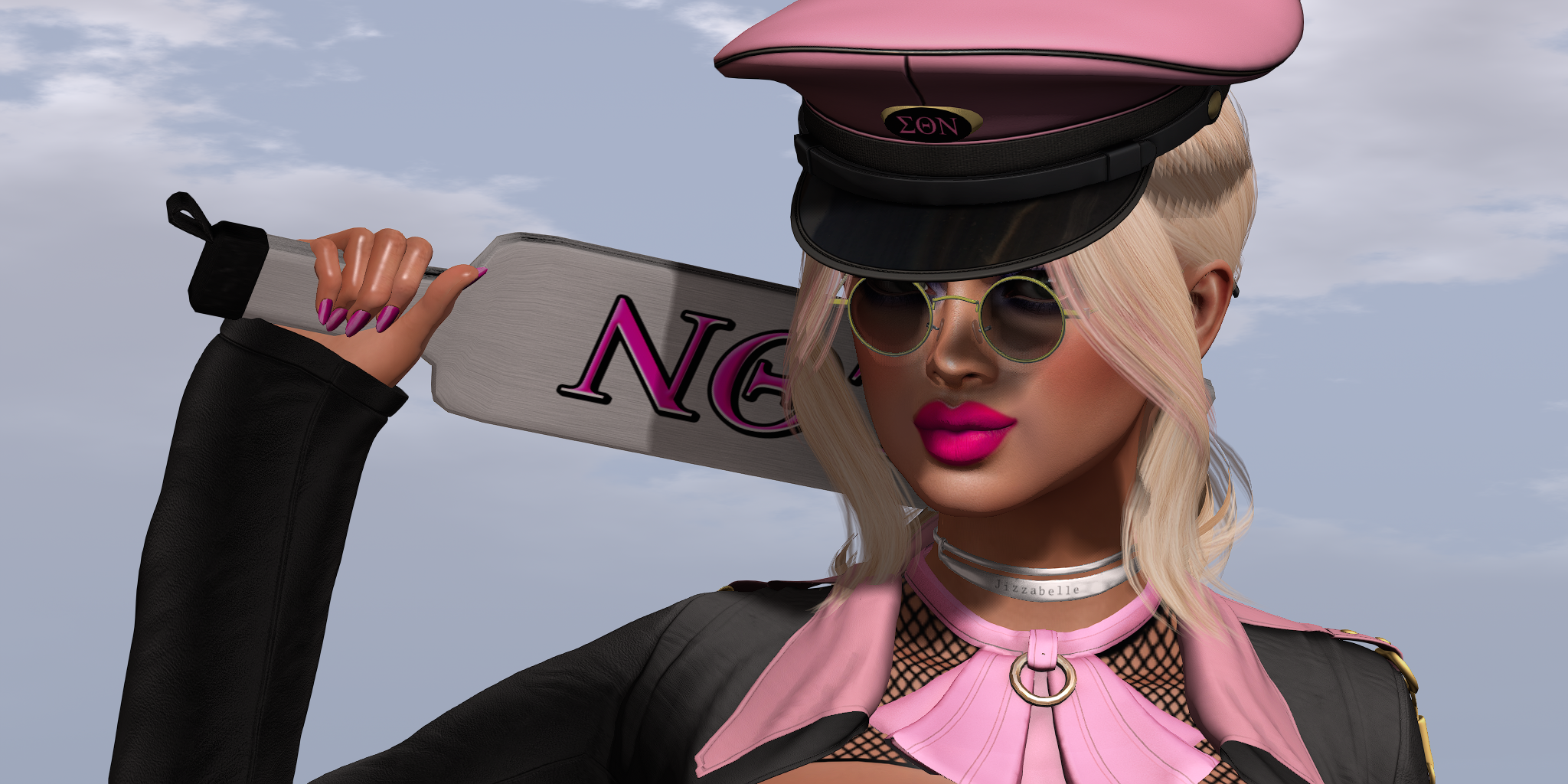
So, while many women farmed likes with their looks, I was enslaved for mine. But even a woman who suffers for her beauty still wants to be beautiful. I just dodged much of the pretty privilege that comes from that. What’s more, I feel incredibly thankful to Sigma Theta Noir for taking me in when I had nothing but the rags on my back, a makeshift spear from the crash site, and a diary about my captivity. I shudder to think of how my life could have gone otherwise.
Our Fantasies, Ourselves
Much has been written about pornography’s effects on men, plenty of it justified. We’ve come to a point where if a good parent catches their teenage son watching smut, they’ll likely pull the boy aside and inform him that real sex won’t be like that. Thus, they look to prevent his expectations of sex from being skewed by his fantasy.
For girls, however, our exposure to romance fiction starts well before the age of reason. Like so many of us, I sat down in diapers to watch Disney princesses and princes meet. This continued through life to novels, film, and TV. But unlike the case of teenage boys, do any parents pull their preschool daughters aside to say that maybe, just maybe, real relationships won’t be like that? And I know we’re all smart girlbosses who can discern fantasy from reality, but to compare common dating expectations with current socioeconomic reality…are we really?
Thus, when they happen, pornified male sex expectations lead to worse outcomes, such as sexual assault. But with scant parental oversight, women’s problematic relationship expectations are probably more widespread.
Spark™ Struck
So, as promised, dear reader, here we are. Girl meets boy. Meet-cute. The SPARK™.
We all know magical moment of attraction when our heroine gets smitten to be arguably THE most crucial trope in romance fiction. At this point, I suspect that the SPARK™ trope gained traction over centuries of fiction, at least in part, due to narrative expediency. We simply don’t always have time to sit through watching or reading about love between protagonists growing as it might in the real world.
It’s problematic because narcissists, psychopaths, and other toxic personalities are incredibly adept at making women feel The SPARK™. This bypasses our choosy risk/reward calculations, often to disastrous ends. It’s self-defeating and shortsighted for the women who gripe about “all men” on TikTok to do so if these are the sorts of men they select.
Hence, we should recognize that The SPARK™ did not evolve to help us pick the best partners to live our best lives with. If by happenstance, The SPARK™ should lead to that partner and life, great. But it’s not likely. Rather, it evolved so that we might mate and reproduce in pre-civilized hunter-gatherer groups where women would be lucky to survive childbirth and live to age 35. Today, The SPARK™ helps sell fiction and move stories along.
Then there’s the worst-case scenario…the “Loverboy” trafficking method. It’s the most common way girls get trafficked, and in its earliest stage, depends entirely on the perpetrator manipulating the SPARK™. They’ll identify a vulnerable woman with self-esteem or financial issues and then pose as the perfect boyfriend for a while. By the time the isolation, coercion, and manipulation start to creep in, it’s too late.
West Side Tropey
But why would women select such toxic men in the first place? This brings us to another key romance trope: fights. Whether it’s enemies-to-lovers, rival houses, warring states, or just worked-up couples like in The Notebook and oh-so-many Mexican telenovelas my grandma was into, we’ve been led to conflate fights with passion.
But fighting isn’t passion; it’s a breakdown in communication. When receiving a heated verbal attack, few of us respond with reason. Instead, we get defensive and return fire. Should we lionize that? No. Thinking back to the telenovelas, I wonder what role they play in furthering the “spicy Latina” stereotype.
Hence, steadiness and healthy communication are too often labeled as boring. After all, if every couple in print and on screen had to sit down at the kitchen table, use reason, big girl/boy words, and their inside voices, entertainment value would tank. The genre would be as dead as the propeller guy in “Titanic.” So here we are.
Then there’s cheating. Romance fictions speak to our choosiness by presenting us with relatable female leads caught deciding between two handsome male ones. Often, her infidelity gets framed as justifiable, while infidelity on his is grave treachery. And then we wonder why there’s women on TikTok justifying women’s cheating while demonizing men’s in the same clip.
Dear reader, if you read my last column, you know my take on monogamy as the bog-standard, blanket expectation for relationships. A third party does not a cheater make; deception does. The longer monogamy remains the prevailing assumption when entering relationships, the more deception there will be.
Wherefore Art Thou Tropeo?

And the final crucial romance trope is the man himself. Romeo. Prince Charming. Tall, dark, and handsome.
And often, loaded. Imagine if Christian Grey had been written as a hardworking, middle-income craftsman making sumptuous bondage furniture with his hands instead of buying it with his billions. 50 Shades of Grey wouldn’t have been such a phenomenon. This is where the dreams these fictions instilled in us collide with the brick wall of reality.
First, there aren’t enough men in that income strata to go around for every woman that wants one. So as choosy as we can be towards average guys, those desired men can be equally choosy towards all of US. Just because a guy will sleep with a gal doesn’t mean he’ll want anything serious with her. We have guys in friend zones; they have girls in sex zones. Er, sorry, I mean situationships.
Second, captivity has thoroughly debunked the Prince Charming illusion for me. I served the richest men on Earth for eleven crucially formative years. And I learned that our economy does not select its elites based on their wonderful human qualities. Rather, if islands of trafficked women have proven anything, it’s that as one moves up the socioeconomic ladder, human decency increasingly becomes the exception as opposed to the rule.
These men had the world at their feet, and nothing left to prove. But STILL they bragged and puffed themselves up to no end. Screw that. The one thing those men I served will never have is ENOUGH. Instead, we should learn to appreciate the men in the middle; the ones sufficiently comfortable to not obsess over what they lack, but not so rich that they end up in an endless status chase.
The First Step is Perspective
Please recognize that we can’t entirely blame women for all this. Most of us are just following the social scripts life presents to us. Go to college, live your Sex and the City Dream, meet Prince Charming, become an influencer, all of it. It took life throwing me irreparably far off script for me to see the issues therein.
The social media problem is what happens when a generation is raised on a thing for twenty years before its damaging effects become a sociological research question. Romance fiction falls in between, having taken off in the 1800’s. It’s due for the same scrutiny, especially as upward mobility becomes increasingly illusory. Still, after comparing both to the thousands of years in which humanity smoked tobacco before its link to cancer was proven in the nineties…I’d say things moved along rather quickly.
Neither is going away. There’ll always be romance fiction, and there will always be pretty girls on socials the same way there’s still people smoking, and the same way there’s boys gaming and watching porn. But now we have researchers sounding the alarm about premature social media use, and hopefully parents can let their daughters know to temper their expectations.
One thing that gives me solace with regards to socials is the scientific concept of a representative sample. See, when scientists draw their conclusions about a given population, they’ll try and make sure that the sample they draw from accurately represents the whole that they want to test. By contrast, their quest for attention makes influencers and their wannabes a self-selecting group. Hence, I remind myself that however noisy they might be, these folks probably don’t reflect the majority, even if they can still skew the prevailing narrative to some extent.
Girls, keep in mind that socials media isn’t the real world. You’re a model on Instagram the same way a guy is a Navy SEAL on Call of Duty. And don’t trust the SPARK™. Instead, question it, and take your time to form your opinions of people. They might pleasantly surprise you. Learn to appreciate the decent men in the middle, the ones that aren’t flashy or loaded, but content.
And ultimately, gratitude is at the core of what we need to re-learn. As I already told one Sigma sister: entitlement detracts from your beauty, while genuine gratitude adds to it.