THE HATHIAN OBSERVER / COMMUNITY & REMEMBRANCE
The Man Who Came Back to Listen
Former Observer Contributor Dies
By Daiyu Tang
FEATURE REPORT
There are many ways to die in Hathian, and over the years the Observer has probably documented more than its fair share of them. Gunshots, stabbings, explosions, fires, unfortunate encounters with local wildlife and even the occasional incident where the distinction between accident and murder has blurred to the extent that whatever I say, someone else would say the opposite. I have seen enough of these things that I sometimes wonder whether this city has managed to make death feel almost ordinary. I mean you could argue it is, but aren’t those meant to be the ‘in your bed’ deaths? The old age ones? The ones where people go… it was ‘their time’?
This one wasn’t ordinary, at least not to me. There was no gunshot, no screaming and no dramatic final confrontation, or rogue Gator. There was just an old colleague, a little music, some conversation and a man who apparently slipped out of this world while I was playing Bach for him.
His name was Hirohito Tanaka, although I knew him simply as Hiro, and he once worked for this newspaper.
A Little Music on the Street
As some of you will know, the Observer has been experiencing technical and financial problems recently. Maintaining a newspaper costs money, keeping its website functioning costs rather more than I would like, and apparently my considerable charm is insufficient to persuade the people responsible for our bills to accept my delightful charm / sarcasm as a recognised currency.
So I decided to do something about it.
With a target of raising $200 toward repairs and running costs, I dragged a spotlight outside the office, brought along my cello and violin and set myself up for an evening of busking. I am a better pianist than cellist, but getting a grand piano onto the pavement presents certain logistical difficulties, particularly when you are five feet tall and unwilling to ask anyone whether they could steal a forklift (and the piano).
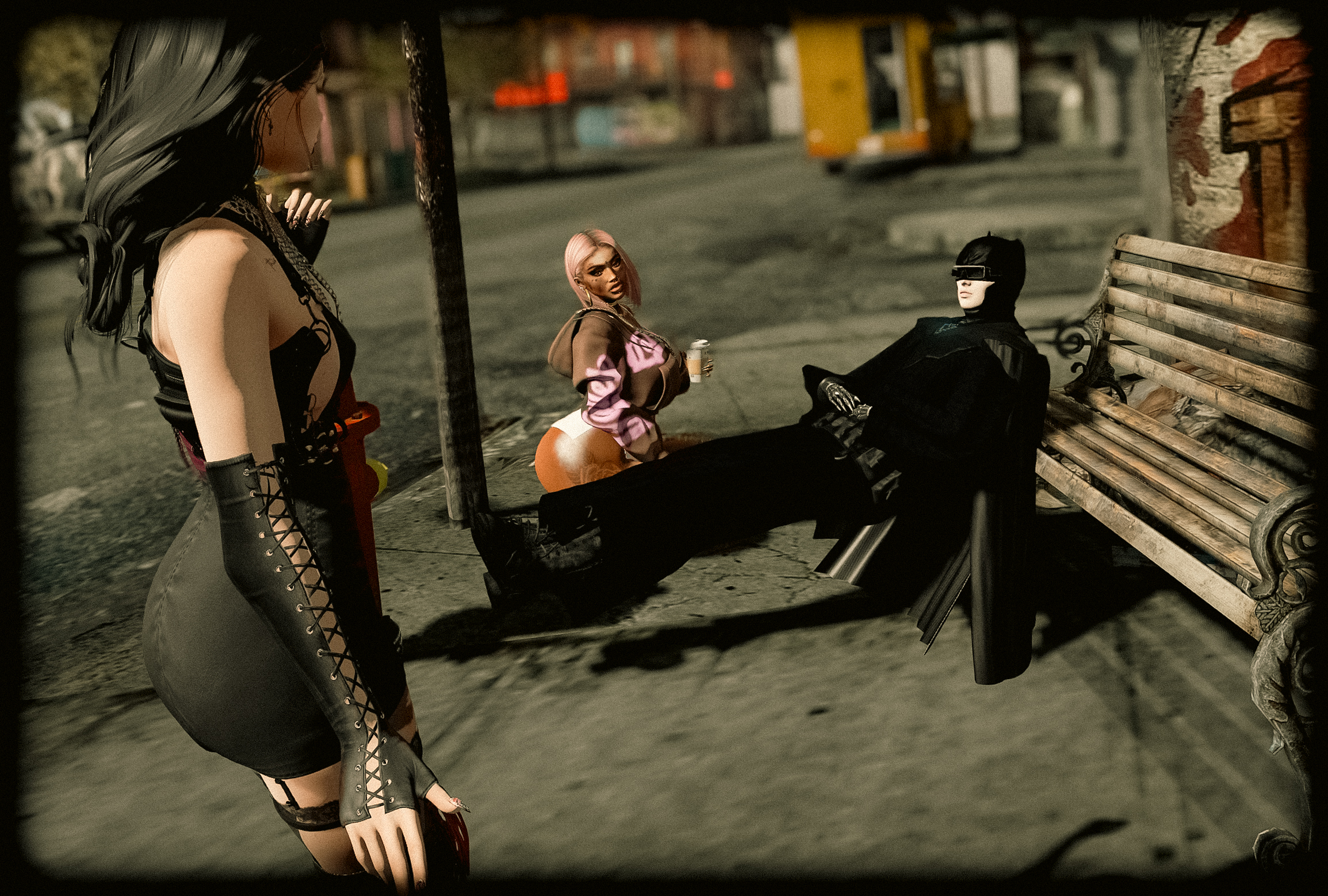
I was playing different compositions by Bach when a couple of people stopped to listen. One woman, who I later learned was Elania, kindly contributed five dollars and complimented the performance. Another figure approached, dressed in black with a long cloak and something resembling a familiar superhero’s headgear.
I recognised him, although it took me a few moments to place him.
He recognised me too.
“Yes, you are … ohh, that one reporter at the Observer!!”
Hiro had apparently not forgotten either the newspaper or its financial arrangements, immediately wondering whether boss Stanley had managed to drink away the revenue. I explained that I was now the editor and, yes, had apparently been reduced to playing instruments on the pavement to keep the lights on.
As we spoke, he seemed genuinely interested in my music, asking about my education and complimenting the playing. He contributed ten dollars to the newspaper’s collection and even offered to help repair our computers without charge.
It was a kind offer, particularly from somebody I hadn’t seen properly in years and after some more chat he eventually settled onto a nearby bench and asked if I would play something on the violin instead.
Naturally, I obliged.
The Last Performance
I changed instruments, tuned the violin and began playing, moving between pieces as the music drifted out along the street. Hathian isn’t generally known for its appreciation of classical performance, and I was rather enjoying the novelty of having somebody who understood what I was playing rather than asking whether I could perform something by Taylor Swift or DEATH-METAL-SCREAMGASM.
At some point I asked Hiro whether he might consider writing for us again.
“Maybe some day,” he replied. He seemed uncertain whether he still had the concentration for journalism, explaining that his mind was often too busy and that he wasn’t sure he could manage the demands of a newsroom. I suggested that he might visit the performing arts centre sometime, where he could hear me play the piano properly.
Hiro didn’t answer.
I continued playing for a while, assuming he was simply enjoying the music. When I finally finished and turned towards him, he remained completely still on the bench.
I tried to joke about sleeping through my performance.
Nothing.
His fan slipped to the ground. His hand was limp, his head resting awkwardly, and he did not respond when I tried to wake him.
I remember the sudden unpleasant feeling that something was very wrong. There was no visible blood, no obvious injury and nothing to suggest the sort of violence I have become accustomed to reporting. His skin was cold and clammy, his breathing absent, and whatever had happened appeared to have happened almost silently.
I called 911 and began chest compressions, trying to remember enough emergency training to be useful while desperately hoping somebody considerably more qualified would arrive.
“Come on man… I was fucking playing for you…. you can’t die like that!”
I don’t know why I said that. Perhaps because it seemed so profoundly unfair, or perhaps because until that moment I had never really considered that somebody might die while listening to me perform.
But he didn’t respond.
When Help Isn’t Enough
Sati St. Diaz happened upon the scene while I was attempting to revive him, recognising me and then looking down at the black-clad figure on the pavement.
“Is that a ma’fuckin’ Batman?”
Under other circumstances, I might have laughed. Hiro’s unusual appearance had attracted similar comments before, and I tried to explain that he had always dressed somewhat like this. It was simply Hiro, not necessarily a costume or an attempt to impersonate Gotham’s least cheerful resident.
Sati quickly understood that something much more serious was happening.
Between us, we tried what we could, although I am reasonably certain that neither of us would qualify as emergency medical personnel. At one point, with my strength failing after repeated chest compressions, Sati produced a Taser and attempted an improvised electrical shock, apparently hoping it might do something resembling the defibrillators she had seen used by doctors.
It didn’t help.
I could find no breathing and no sign that Hiro was recovering. The emergency call had been made, help was expected, but there was increasingly little we could do except wait.
Hathian has taught me to expect violence. I have watched people shot, stabbed, beaten and dragged away from scenes that would be considered extraordinary almost anywhere else. But I had been talking to Hiro only minutes earlier. We had discussed music, old colleagues, newspaper finances and the possibility of meeting again.
Then he simply wasn’t there anymore.
An Old Face in the Archives
I didn’t know Hiro especially well, and I don’t intend to pretend otherwise now that he has died.
We worked together briefly during my earlier years at the Observer, when I was still establishing myself as the Girl Behind the Lens. He was friendly, somewhat eccentric and generally kind to me, which is perhaps not a particularly impressive qualification anywhere else but can make somebody rather memorable in Hathian.
Looking back through our archives, there are traces of him scattered across several years.
He appeared in the newspaper long before we worked together, caught up in the memorable 2020 article One Rub N Tug Too Many Leads to Baby Daddy Whodunit. In May 2022 he appeared among our photographs from the community barbecue, an event I covered involving Cade Morgan, Camden Fabers and one of the more disturbing wedding-related surprises I have ever witnessed.
Then there was his own contribution, See You Later Alligator, published in August 2022. It is still there, a little record of somebody who spent part of his life helping us document this peculiar city.
And in June 2023, he was still contributing photographs, this time for our coverage of the opening night at Cupid’s Arrow.
It is a peculiar thing, looking through old newspaper archives after somebody has died. Photographs freeze people at moments when nobody knew what would eventually happen to them. Articles preserve arguments, jokes, parties, friendships and sometimes the most ridiculous aspects of somebody’s life, long after those involved have moved on.
Hiro was part of that history, even if only briefly.
Like so many people in Hathian, he eventually disappeared from my everyday life. People leave, return, change names, change jobs and occasionally reappear years later looking considerably different from how you remember them.
I had assumed Hiro was simply another person who had moved on.
Until he came back to listen.
Drugs Found, Questions Remain
There is, unfortunately, another aspect to Hiro’s death which cannot be ignored.
While we waited for emergency assistance, Sati examined some of his belongings, initially looking for identification or anything which might help explain what had happened.
What she found was concerning. Among his possessions were quantities of substances appearing to include cocaine and heroin, together with injecting equipment, prescription medication and another bottle carrying Japanese writing.
Sati, who spoke about her own family’s experiences with addiction, immediately suspected that drugs might have played a role.
“Damn, chica, that’s a lotta drugs. I think I know what happened to our boy here.”
I was beginning to wonder the same thing.
Hiro had appeared unusually thin and physically unwell, although I hadn’t understood the possible significance of that while we were talking. The discovery of these substances, particularly the apparent heroin and injecting equipment, raises obvious concerns about whether he suffered an overdose or another drug-related medical emergency.
There is also the uncomfortable reality that people struggling with addiction often spend considerable effort concealing their difficulties. I cannot tell you whether Hiro was doing that, whether he knew how unwell he was or whether he expected anything to happen that evening.
I can only tell you that something was clearly wrong, and that by the time I understood it, he was beyond my ability to help.
A Friendly Face
Hiro gave the Observer ten dollars that evening.
It wasn’t a fortune. It wasn’t enough to repair our website or pay the bills, and I suspect he knew that perfectly well. But he stopped, recognised somebody he had once worked with, listened to the music and offered to help.
That kindness matters to me rather more than the money.
I don’t know what troubles Hiro was carrying, and I certainly won’t claim to understand everything that happened to him. I wish I had recognised that something was wrong. I wish I had stopped playing sooner, asked him more questions or persuaded him to seek help.
Perhaps none of those things would have changed anything.
There is a particular cruelty in remembering that one of the last things I said to him was that it would be nice to have a friendly face around.
And now, of course, he won’t be coming back.
((AI: Layout / HTML))
((Photo: Daiyu / Lightroom))