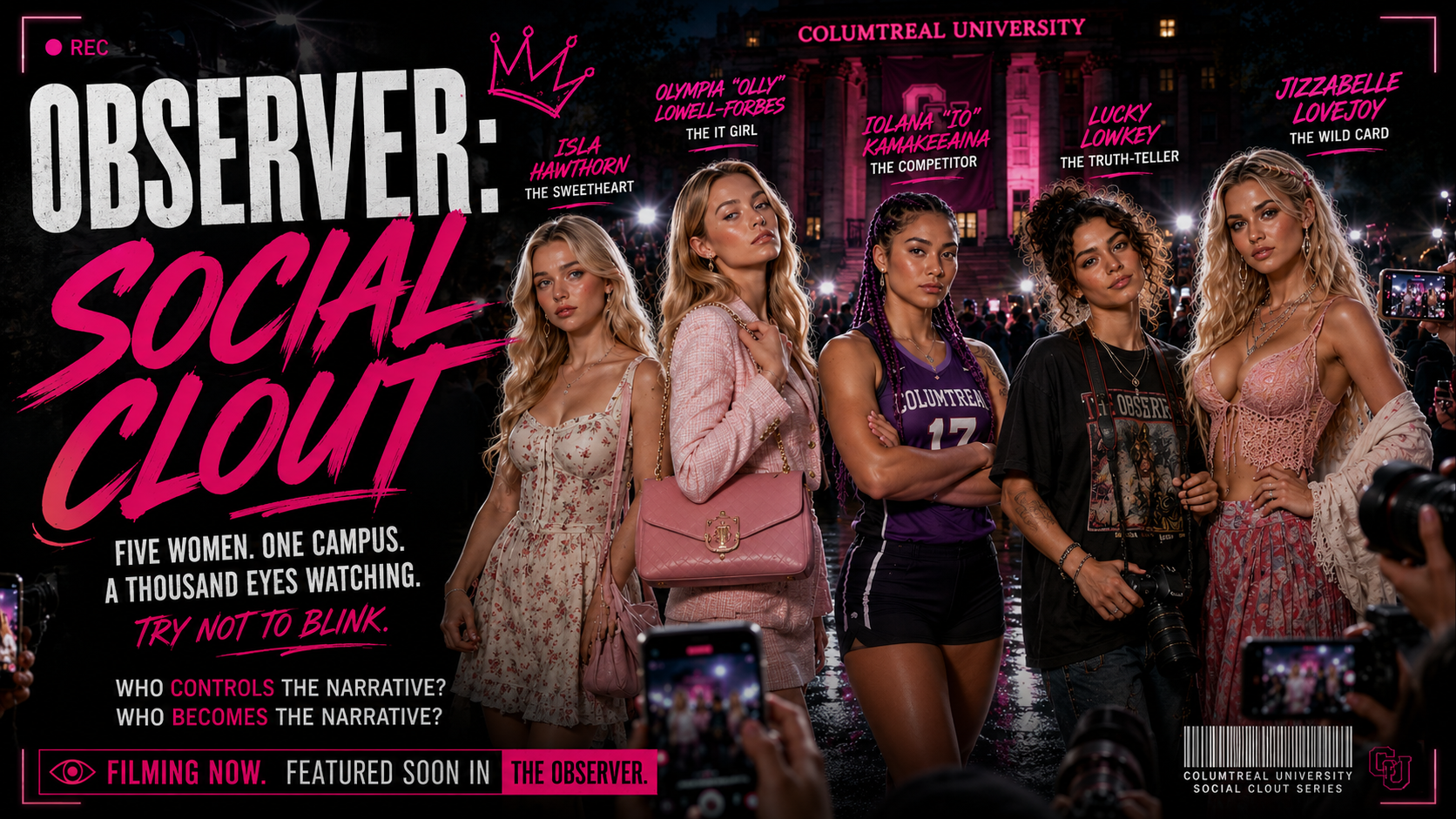
The Hathian Observer presents: Social Clout – Month One
Five women entered the Observer’s experiment in influence, rivalry, branding and being watched. The first votes are now counted. The cameras, regrettably for several participants, have also kept their receipts.
When I proposed following five women around campus to see who really controlled the narrative over at CU, I assumed the cameras would reveal the truth.
This was naive. I should have known better considering I myself had been a student for years there.
Briefly, as I really should have grasped… A camera does not reveal the truth. It makes people decide which version of themselves deserves good lighting.
Some of our participants learned to speak through the lens. Some tried to make the lens blink first. Some got really pornographic in front of the lens and tried to make it blush… At least one participant forgot that a camera operator can hide behind a tree, which is a useful lesson for journalism, romance and anyone discussing the dimensions of a Texan (intimately).
This competition remains neither science nor democracy, despite the presence of numbers like popular votes (that I know some of you tried to fix). It is an Observer experiment in visibility, narrative control, campus impact, style and branding, and surviving the consequences of being visible in Hathian.
Nobody is being voted off. Yet.
Stanley suggested if there hadn’t been nudity from someone there should be. He was disappointed when I defended the right of people to have privacy. Sometimes. But just not from behind trees…
The Public Vote
One hundred and twenty votes separated a clear public favourite from a very close fight for second. The percentages total 101 because they were rounded, and popularity has never shown much respect for arithmetic.
Who has your vote?
Jizzabelle Lovejoy won the opening ballot by seven votes. She was not merely one name ahead in a crowded result; she emerged as the clear public favourite of the first reporting period.
Lucky Lowkey and Olympia “Olly” Lowell-Forbes were separated by one vote, which is less a comfortable ranking than a warning not to refresh the page too slowly.
Iolana “Io” Kamakeeaina attracted nineteen votes during a comparatively quiet month. That suggests an existing base of support which does not require her to set fire to the furniture, fight with a classmate or confess anything from within microphone range.
Isla Hawthorn finished fifth.
The cameras, however, recorded a considerably stronger month than that number suggests.
The vote measures who people noticed. The article decides whether they were noticed for the right reasons.
This distinction matters.
Popularity is part of clout, but it is not the whole of it. Visibility can be earned, inherited, staged, provoked or accidentally recorded by a camera operator hiding in nearby shrubbery.
The Observer is also looking at who controlled her own story, who changed something on campus, who built a recognisable identity and who remained standing when attention produced consequences.
The footage that follows is therefore grouped by participant rather than chronology.
Chronology implies order.
Campus has made no such promise.
One Month Under Observation
The public vote told us who attracted support. The footage showed us what each participant did once attention found her. Swipe or scroll through the stories below, grouped by member.
Olympia “Olly” Lowell-Forbes
Olly did not merely appear on camera. She treated the camera as another participant: sometimes an audience, sometimes a publicist and occasionally an accomplice.
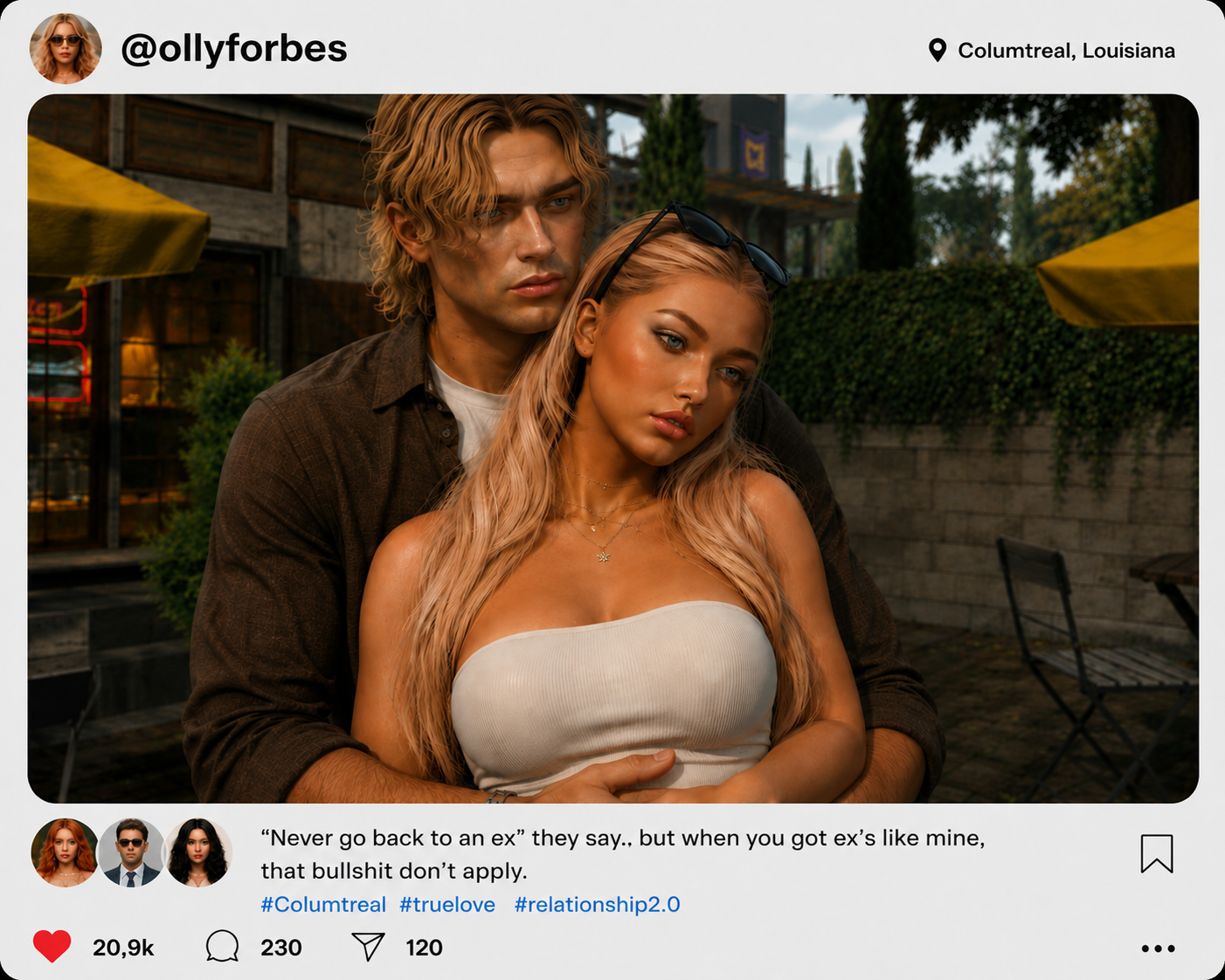
Relationship 2.0 Goes Public
Olly met Jameson Rook for coffee, kissed him before he had much time to process the presence of a camera and informed him that her new reality-show role meant he was now appearing “by extension.”
She encouraged him to vote for her, began discussing how to improve his social-media presence and posed for a couple selfie to make their renewed relationship official.
The scene also revealed that, after her attempt to reconcile with her parents failed, Olly had invested in her own brand to finance her tuition independently. Romance, financial survival and content strategy were compressed into one coffee meeting.
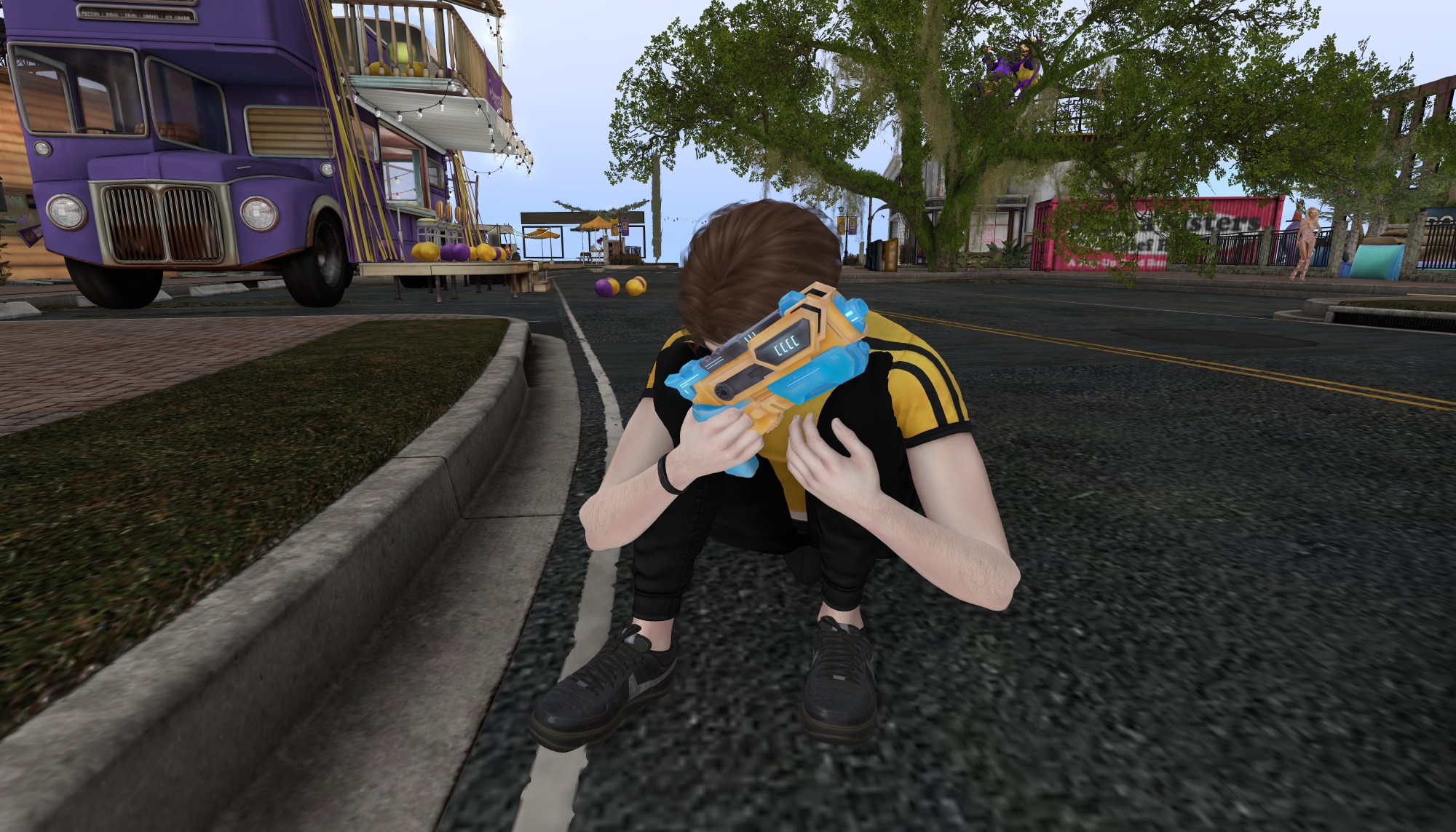
Arthur Tries to Break the Brand
Arthur Vine approached Olly on campus, blocked her path and challenged the character she presented online. He accused her of performing victimhood for exposure and claimed that her influence was falling.
Olly repeatedly asked him to provide evidence. When none arrived, she reframed the confrontation itself as free material for the programme.
Arthur had intended to expose the performance. Instead, he became part of it. Olly left the encounter having made the larger point: criticism is still attention when the subject understands how to use it.
Isla Hawthorn
The readers placed Isla fifth. The footage found institution-building, musical credibility and one romantic confession she would probably prefer returned to the editing room.
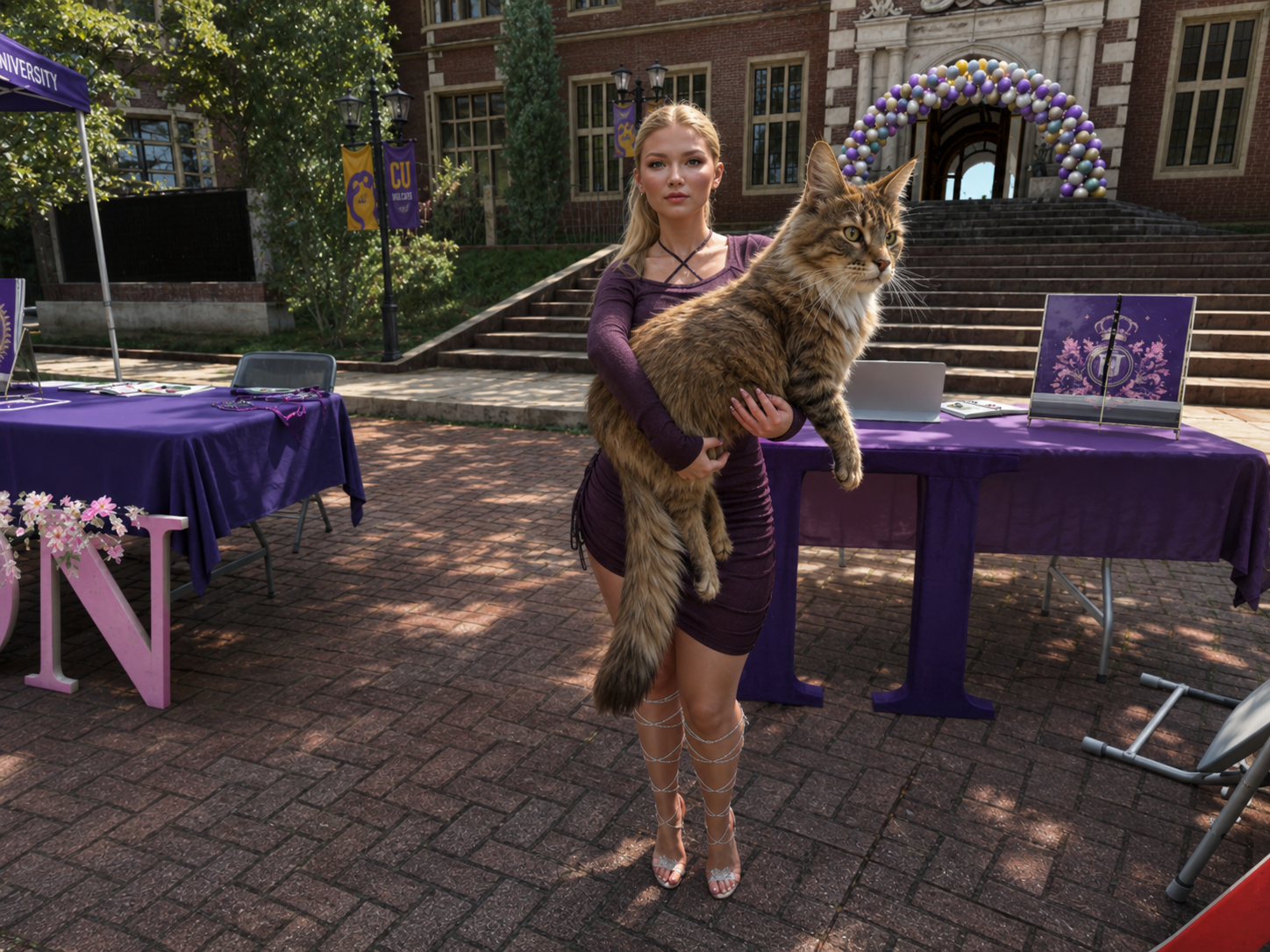
Not a Dove: Isla Makes the Case for Pi
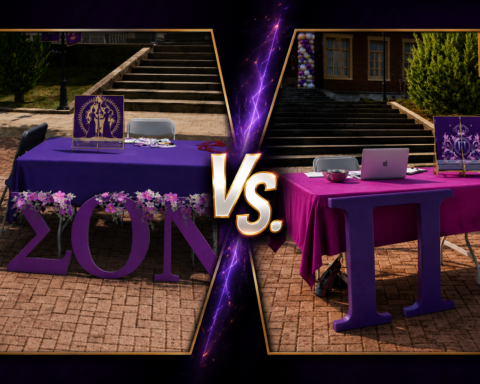
Acting as Pi’s social chair, Isla explained the sorority as a home for networking, sisterhood and women focused on their futures.
She distinguished it from Sigma without attacking Sigma or Jizzabelle, presenting the difference as one of priorities and privacy rather than morality. Juniper Sinclair then signed the roster.
Isla did not merely describe her brand. She converted it into a new member. When Arthur reduced Pi to a refuge for “good girls,” she corrected both his assumptions and his wildlife classification.

Daytona and the Cardboard Box
A conversation about work, music, philanthropy and stolen underwear drifted toward Daytona after Xiamara noticed Isla calling him “Day.”
Isla defended his honesty, admitted that she had asked whether they might become a couple and confessed that she would abandon almost everything if he simply said yes.
She believed the camera operator had become bored and left. He had not. He had moved into the trees, where the confession remained well within range.
Lucky Lowkey
Lucky offered the broadest range of the month: serious art, instinctive camera ethics, fake law enforcement and a private encounter that became public the moment she supplied the review herself.
The Artist Behind the Antics
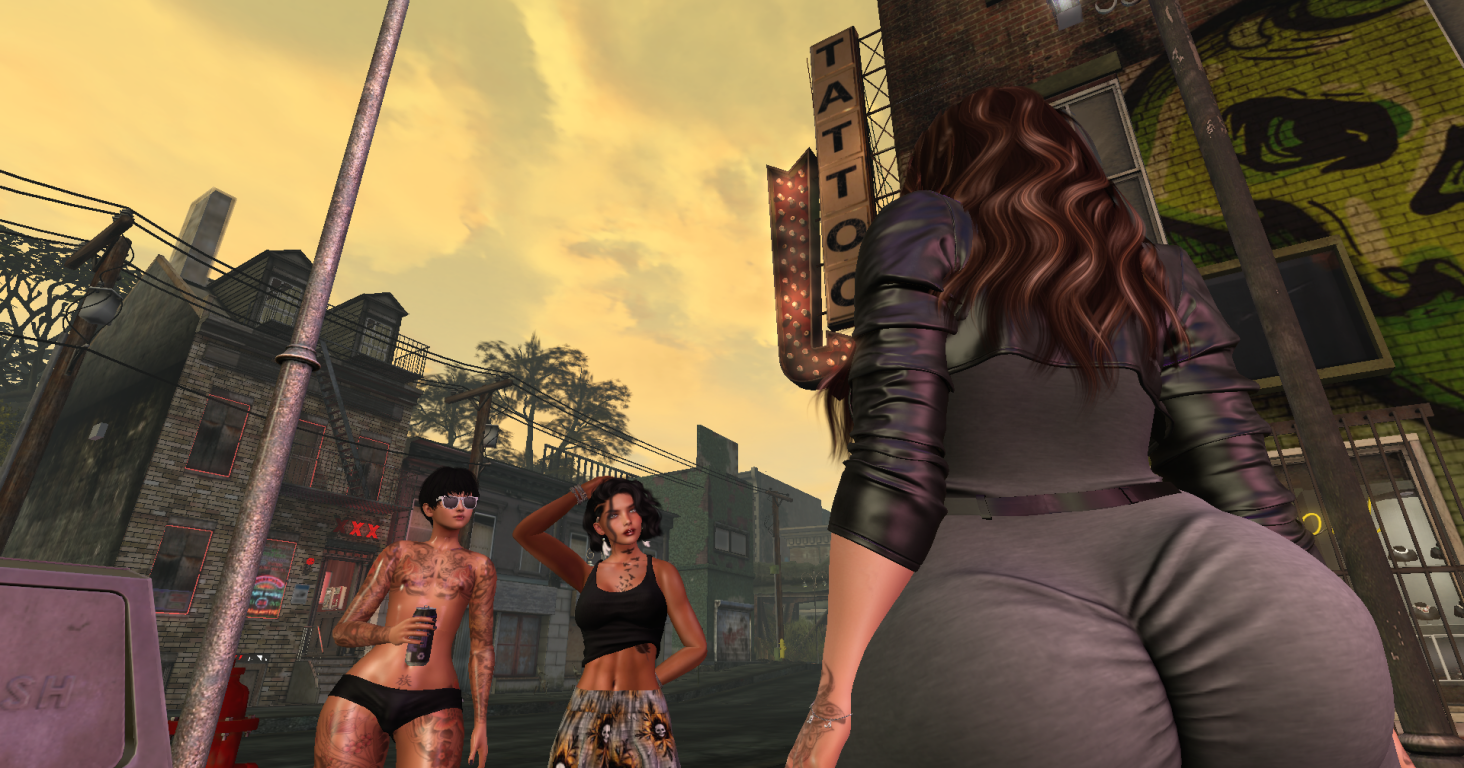
Lucky submitted a raw portrait of a crying woman to Rub N Tug’s competition asking artists to capture something recognisably Hathian.
Lila Hunter called the work stunning, emotionally raw and difficult for other entrants to beat. Lucky encouraged an uncertain passer-by to react honestly, rather than simply offer praise.
She also instinctively positioned herself between the camera and a visibly bruised Lila. Understanding a lens does not only mean knowing how to enter its frame. Sometimes it means recognising who may not wish to be placed there.
Sergeant Spank Meets Actual CUPD
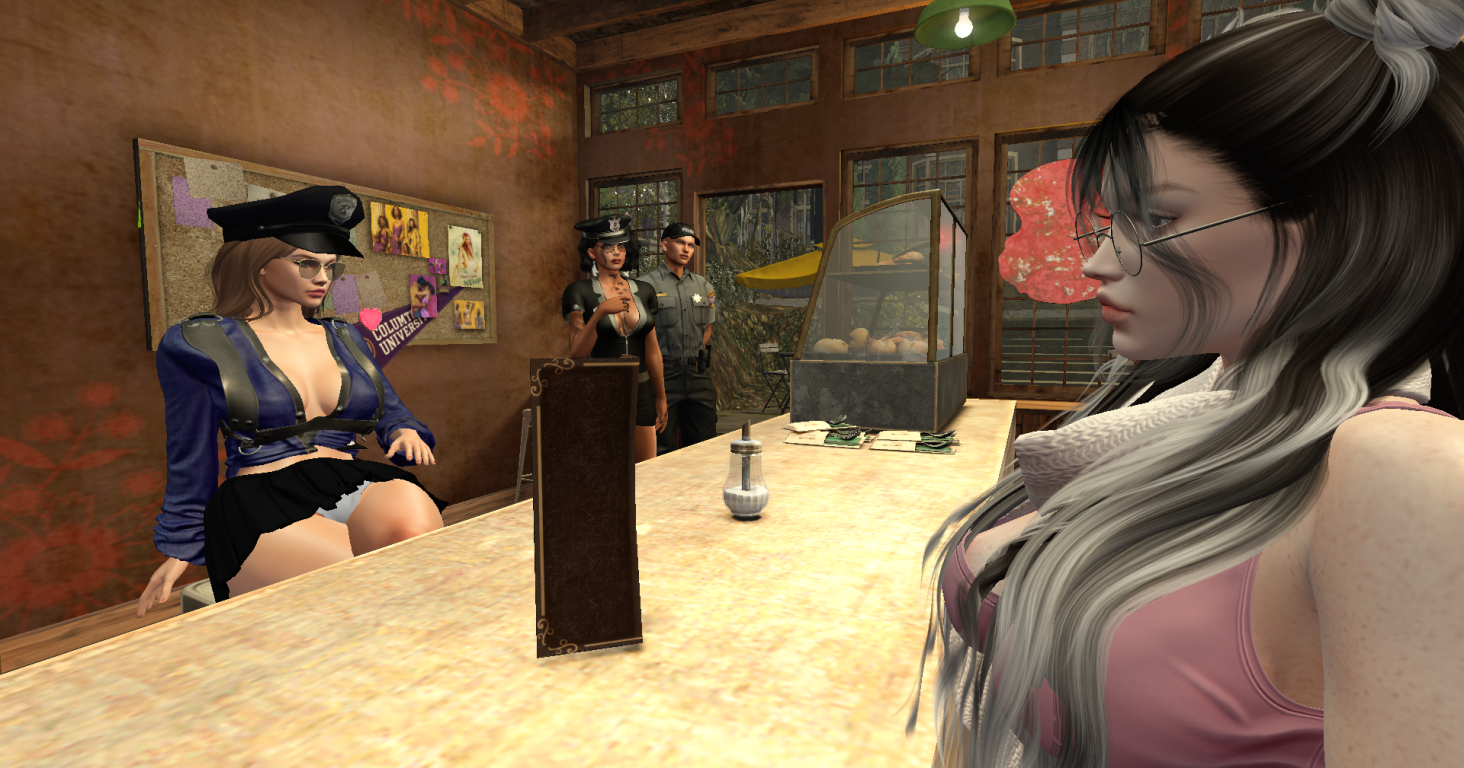
Lucky and Camila Cielo entered Get Woke dressed as deeply unconvincing police officers. Their identities became Officer Tease and Officer Pester, although the genuine CUPD officer present suggested “Sergeant Spank” as a stronger alternative.
Fake badges led to identity checks. Identity checks led to dispatch reading Lucky’s extensive history aloud. Public nudity produced citations, and joking about carrying the officer away eventually produced a call for backup.
Lucky took a costume, a cup of coffee and one real police officer and transformed them into a complete campus incident without surrendering the performance.

The Camera Was Asked to Wait Outside
Lucky encountered Liam Exley outside Get Woke, teased him in full view of the camera and repeatedly tested his ability to remain professional.
She then steered the conversation toward somewhere the production crew could not follow. Liam mentioned a patrol of the changing rooms. Lucky developed an immediate interest in antisocial behaviour near lockers and dismissed the camera operator.
The missing footage preserved her privacy. Lucky later supplied a blunt account of the encounter herself, removing much of the mystery the camera cut might otherwise have created.
Jizzabelle Lovejoy
Jizzabelle’s winning month was not built around one explosion. It was built around people gathering near her while she supplied the drinks, the questions and, where necessary, SPF 100.

SPF 100 and the Dark Triad
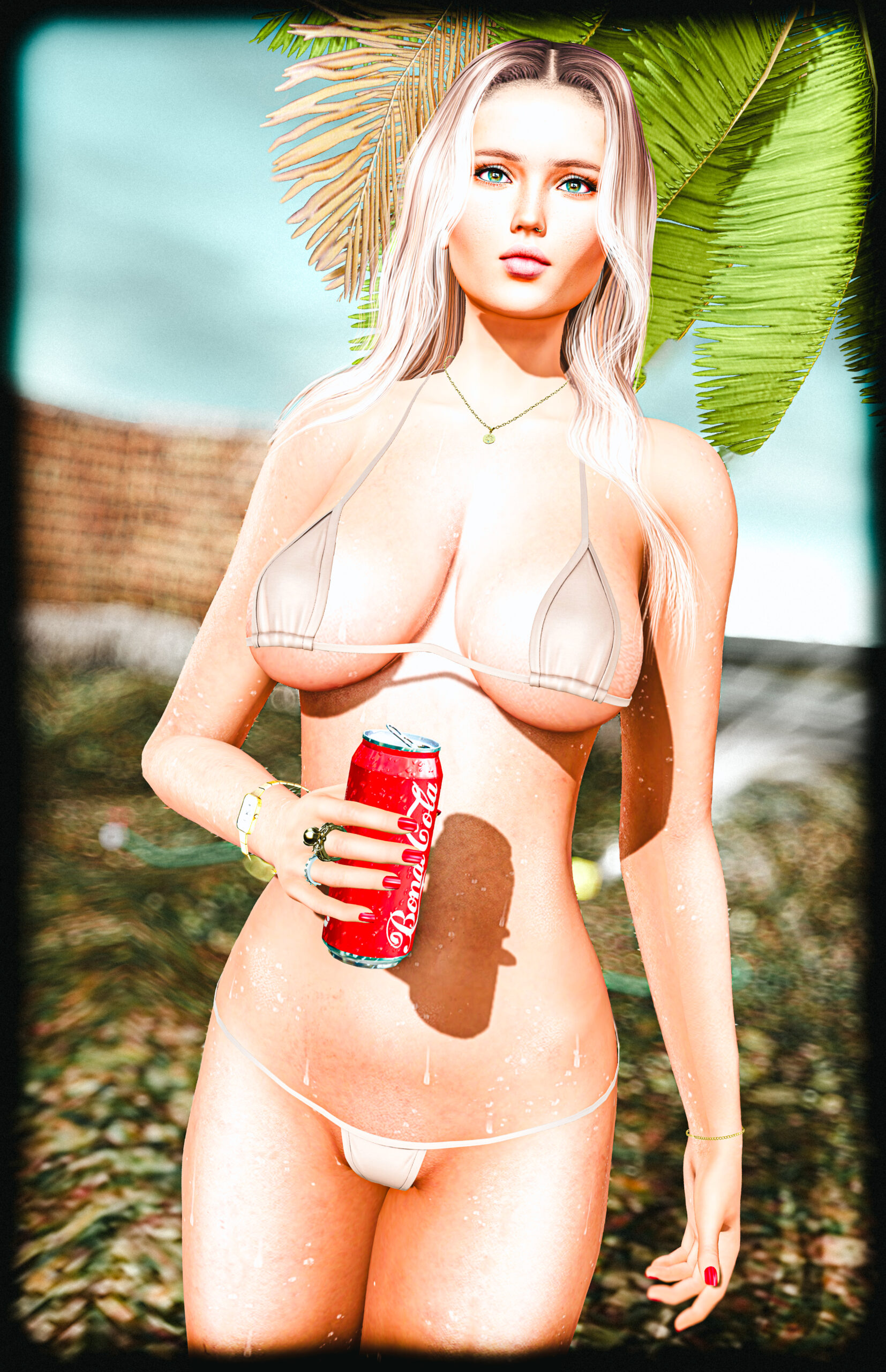
Jizzabelle organised drinks and sun protection at the pool, welcomed new arrivals and drew quieter students into the conversation.
At the same time, she discussed her writing on slut-shaming, wealthy family dysfunction and the Dark Triad of narcissism, psychopathy and Machiavellianism.
She promoted her newly published work and began collecting responses for future articles. The public favourite behaved less like the loudest person in the scene than the person around whom the scene organised itself.
Iolana “Io” Kamakeeaina
Io had the quietest reporting period. That is a limitation of the available footage, not permission to invent a scandal on her behalf. She did also travel… and date… 🙂

Io Keeps Her Own Counsel
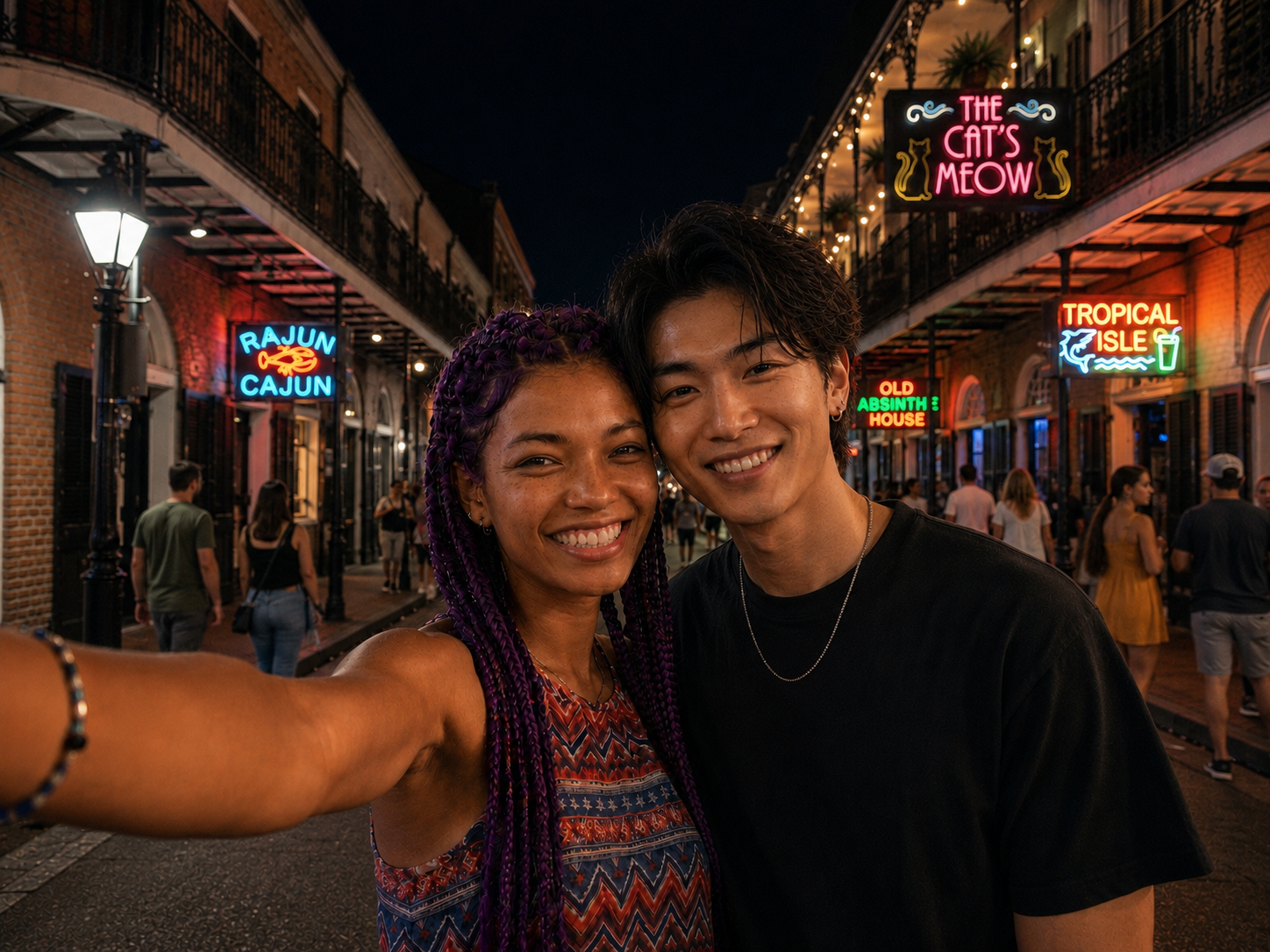
The cameras did not catch Io driving one of the reporting period’s major campus stories. She did however seem to find a boyfriend out of town!
Nineteen readers nevertheless voted for her, suggesting that she retained support without a relationship hard-launch, public confrontation, citation or confession recorded from nearby shrubbery.
Silence did not make her invisible. It does make her difficult to score. A quiet month may be strategic, accidental or simply quiet. The next reporting period will tell us more.
The Vote Was the Easy Part
Popularity tells us who people wanted to watch. Clout asks the considerably more dangerous question of who understood what to do once everybody was looking.
Before anybody starts polishing a crown, arranging a victory parade or sending me a carefully worded complaint about the Observer’s methodology, let us establish something important: clout is not virtue.
It is not intelligence, kindness, beauty or moral correctness. It is not even the same thing as being liked. Plenty of people become famous because the rest of us cannot stop staring at the fucking car crash.
Clout is the ability to attract attention, shape what that attention means and convert it into something that lasts after the camera has moved on. That something might be authority, loyalty, fear, desire, opportunity, a new sorority member, an article, a relationship or a police report.
Hathian is not especially fussy.
Sexy helps, obviously. Anyone pretending otherwise has never watched a room quietly reorganise itself around a woman who knows exactly what her body is doing. A flash of thigh, a dangerous smile and the confidence to hold someone’s gaze can achieve more in ten seconds than a committee manages in an afternoon.
But desire is a spark, not a strategy. It gets eyes onto you. It does not decide what those eyes believe, and it certainly does not guarantee they will still care once somebody hotter walks through the door.
The women who performed best this month were not simply the ones who looked good on camera. Every participant managed that much. They were the ones who gave the attention somewhere to go.
Jizzabelle: The Centre Without Demanding the Centre
Jizzabelle won the public vote, and for once the public has not made a complete bloody mess of things.
Her strongest quality was not volume. She did not need to climb onto a table, remove an item of clothing or manufacture a fight so that the camera would remember she existed. Instead, she hosted. She supplied drinks, sunscreen, conversation and a reason for people to remain in the same place.
That distinction matters. Visibility is the ability to enter a room and be noticed. Influence is the ability to change what the room does after you arrive.
Around Jizzabelle, people talked. They offered opinions, shared experiences and became material for a wider conversation about class, sexuality, shame, parenting and power. She was also publishing rather than merely promising that she might publish something once Mercury stopped being inconvenient.
Her danger is the same one faced by anybody who becomes known as the intelligent voice in a room: analysis can harden into judgement, and judgement can become its own performance. Jizzabelle is very good at identifying Main Character Syndrome in other people. She must remain alert to the possibility that being the campus commentator can become another way of standing beneath the spotlight.
For now, however, she earned first place. She created attention, directed it toward real ideas and made other people more interesting in her presence.
That is difficult to fake, even with SPF 100.
Olly: The Woman Holding the Editing Scissors
Olly did not win the public vote, but she demonstrated the clearest understanding of narrative control.
She recognised that the cameras were not merely watching her life. They were part of it. Jameson was not simply introduced as a boyfriend; he was hard-launched as a recurring character, encouraged to vote and immediately considered as an extension of her online brand.
That sounds cold when written down. It did not necessarily look cold in the moment. Olly was affectionate, excited and visibly pleased to have him near her. The interesting part is that she appears capable of feeling something and packaging it at the same time.
Many people believe sincerity and performance are opposites. They are not. A person can mean the kiss and still check whether the camera caught her best side.
Arthur’s confrontation should have been damaging. He approached with accusations, questioned her authenticity and attempted to position her as shallow, fragile and desperate for attention. Olly’s response was not to prove that she did not care about attention. That would have been obvious bullshit.
She pointed out that he was supplying it.
This was the smartest piece of narrative control recorded during the month. Arthur wanted to reveal the machinery behind the performance. Olly turned the camera toward him and made his obsession part of the machinery.
Her danger is more intimate than Jizzabelle’s. When everything can become content, privacy begins to look like wasted footage. A relationship cannot survive forever as a campaign asset, and neither can every wound be filtered, captioned and converted into engagement.
Olly knows how to invite the audience into her life. The next question is whether she also knows when to lock the bedroom door.
Lucky: Sex, Art and the Problem With Brakes
Lucky may be the most naturally watchable woman in the project. She does not appear to enter scenes so much as alter their blood pressure.
A police costume becomes a confrontation with actual police. Coffee becomes public exposure. A locker-room patrol develops a suddenly enthusiastic civilian volunteer. Even when Lucky asks the camera to remain outside, everybody understands perfectly well that the missing footage is now the most interesting thing in the episode.
She understands sex as theatre, provocation and social leverage. More importantly, she seems to enjoy it. There is a difference between a woman performing sexuality because she thinks the audience demands it and a woman using the audience as one more surface against which to press.
Lucky appears to be the latter.
That makes her compelling, but it does not automatically make her controlled. She can start a scene with a grin and find herself halfway into a citation before anybody has located the handbrake. Chaos Survival is not merely remaining cheerful while everything escalates. It also involves recognising which consequences will still be amusing tomorrow.
The photography submission is therefore crucial to her position. It proves that Lucky can produce attention through observation rather than exposure. Her image was taken seriously. Lila responded to it emotionally, and Lucky showed enough awareness to shield an injured woman from a camera rather than exploit the easy shot.
That moment complicated her in the best possible way.
Lucky is not simply a beautiful menace with a flexible interpretation of police procedure. She has an eye, a conscience and potentially the artistic discipline to build something that lasts.
She does not need less chaos. That would be boring, and I am not running a convent newsletter. She needs to become more selective about which fires deserve her lipstick on the match.
Isla: The Public Vote Undersold Her
Isla finished last in the public ballot and fourth in my review. That is not charity. It is evidence.
Recruiting Juniper for Pi was one of the clearest examples of campus impact recorded during the month. Isla explained what the sorority represented, distinguished it from Sigma without declaring another group morally inferior and turned a conversation into an actual signature.
Influence is often quieter than spectacle. A new member does not produce the immediate thrill of a public argument or an officer requesting backup, but institutions are built through exactly those small conversions.
Isla also has a recognisable identity. Southern, musical, polished, ambitious and traditional enough to appear safe until somebody mistakes that softness for weakness.
The red-tailed hawk line was not merely good theatre. It told us she understands the tension inside her own presentation. She knows people may see the smile, the manners and the pretty packaging and assume there is nothing sharp underneath.
Then came Daytona.
The confession was gloriously disastrous because it broke the polish without destroying it. Isla became flustered, romantic, reckless and painfully sincere. She admitted that she had asked whether they might be together, confessed that she would live in a cardboard box for him and apparently combined this with the minor conversational detail that she might be arrested.
Seduction requires mystery. Isla handed hers over with both hands, added a bow and failed to notice the cameraman crouched in the vegetation.
It was adorable.
It was also useful. Perfect branding creates admiration from a distance. Vulnerability creates investment. The public may have placed Isla fifth, but the footage gave her a stronger narrative than several women above her.
She now needs visibility. Not noise for its own sake, but enough presence that the campus begins associating her with more than Pi recruitment and one extremely handsome reason to abandon conventional housing.
Io: Quiet Is a Position, Not Yet a Performance
Io presents the hardest editorial problem because the honest analysis is that we do not have enough.
Nineteen people voted for her. That is significant. She beat Isla in the public result despite receiving far less prominent footage, suggesting that her existing impression remains strong enough to survive a quieter period.
But this experiment cannot reward absence simply because absence looks elegant in a photograph.
Calm is a brand. Restraint can be a strategy. Refusing to perform every emotion for an audience may even be the healthiest response available to somebody being followed by the Observer.
None of that can be scored without evidence.
Io has not failed. She has simply left the central question unanswered: is she quietly controlling her narrative, or has the narrative moved elsewhere while she was out of frame?
The next month belongs to her if she wants it. She does not need to imitate Lucky’s relationship with public order, Olly’s relationship with the lens or Isla’s relationship with nearby shrubbery.
She needs one moment that could only belong to Io.
The Observer’s Month One Read
The public ballot remains part of the result, but the Observer’s review also considers Visibility, Narrative Control, Campus Impact, Style and Branding, and Chaos Survival.
What the Cameras Watch Next
Nobody is being eliminated. This is a university, not a tropical island, and the Observer’s budget does not extend to ceremonially extinguishing anyone’s torch.
The cameras will remain.
Jizzabelle now has the problem every early leader eventually encounters: remaining interesting after people begin expecting her to be interesting. Publishing creates authority, but authority creates scrutiny. The woman analysing everybody else should assume that everybody else has started analysing her.
Olly must decide how much of Jameson belongs to the relationship and how much belongs to the programme. She also has an escalating rivalry with Arthur, and rivalries are wonderfully useful until one participant forgets they are supposed to remain entertaining rather than genuinely dangerous.
Lucky has the clearest opportunity to change the entire shape of the project. Another scandal will keep her visible. A serious artistic success would make her formidable. The combination of the two would be unfair, which is naturally why I am hoping she manages it.
Isla needs to convert private charm and sorority work into a wider campus presence. The public has now seen beneath the polish. What she does with that intimacy will determine whether the cardboard-box confession becomes a single lovely embarrassment or the beginning of a real emotional storyline.
Io needs a scene.
Not a manufactured scandal. Not a desperate attempt to catch up. Simply one moment in which her calm becomes action rather than description.
The next public question should also become more demanding. “Who do you like?” gave us a useful popularity result, but liking somebody and being influenced by her are not the same thing.
Next time, the campus should be asked:
Who controlled the month?
Affection is useful. Attraction is powerful. A beautiful woman with a microphone can cause an extraordinary amount of trouble before breakfast.
But the real winner is not merely the woman people looked at.
It is the woman who decided what they believed they saw.