Article & photos by: Daiyu Tang.
Thrift does not have to mean poor and I think that’s a statement that people in Hathian should get to grips with more. At 2nd Chance, Rana is trying to make repair, reuse and recycle feel less like something you settle for and more like something worth choosing. As someone who herself upcycles some clothes I can wholeheartedly approve of the idea.
But before we get into everything (like the Stork below) there are certain standards one should maintain as a journalist. Accuracy is useful and of course curiosity helps. So it was that I decided that borrowing the Gallery 1930s car and thus turning up to review a thrift shop in a vehicle assembled from so many donated parts that it could itself have been wheeled inside and given a price tag felt important. I might also add that it had a horn stupid enough that I had already used it on Vanora on the way past, so by the time I pulled up outside 2nd Chance on Bourbon Street I felt I had made an appropriately sustainable entrance, including upcycling Vanora’s eardrums.
Waiting outside were Rana, Romy and Natasha, the latter two providing (as it quickly became apparent) moral support. Usually when I say that I can be a bit sarcastic, perhaps in Hathian that generally consists of heckling somebody until they become confident through sheer necessity. In this case though it was more supportive.
What’s Your Name And Where Do You Come From?
Cliché, I know, but an important opener… Rana told me she had come to Hathian from Decorah, Iowa, which she described as a small place known for its bicycle trail. She admitted that coming to Hathian was partly a matter of resources and partly opportunity. Hathian was larger, had the university.
More importantly for the purpose of standing outside a thrift shop asking somebody why they had opened one, she had learned sewing from a young age and had looked at the building that would become 2nd Chance and seen somewhere she could turn that skill into a second-hand clothing and repair business.
If you (or I) were expecting the traditional entrepreneurial speech at this point, full of personal vision, market opportunities and words like journey (or if you are the drug-ice-cream parlour sultry teasing), Rana is going to disappoint you. She appears to dislike talking about herself and told me this several times, with enough conviction that I began to suspect I could get more biographical information out of one of the chairs. Her friends, naturally, found this hilarious and filled in a few gaps for me.
Thus, fearing that I’d not get too much more I considered that perhaps inside the shop I could at least photograph the items. Luckily, inside, the story became much easier to understand because Rana could stop describing herself and start describing things. She is good at that.
Little Shop of Happiness
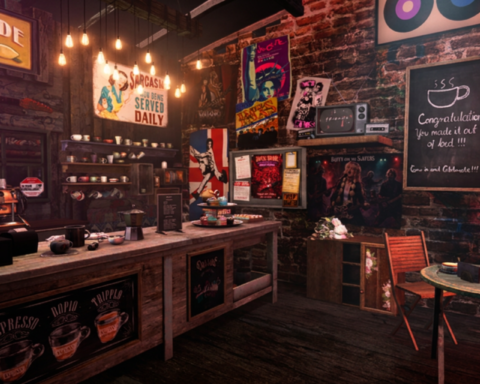
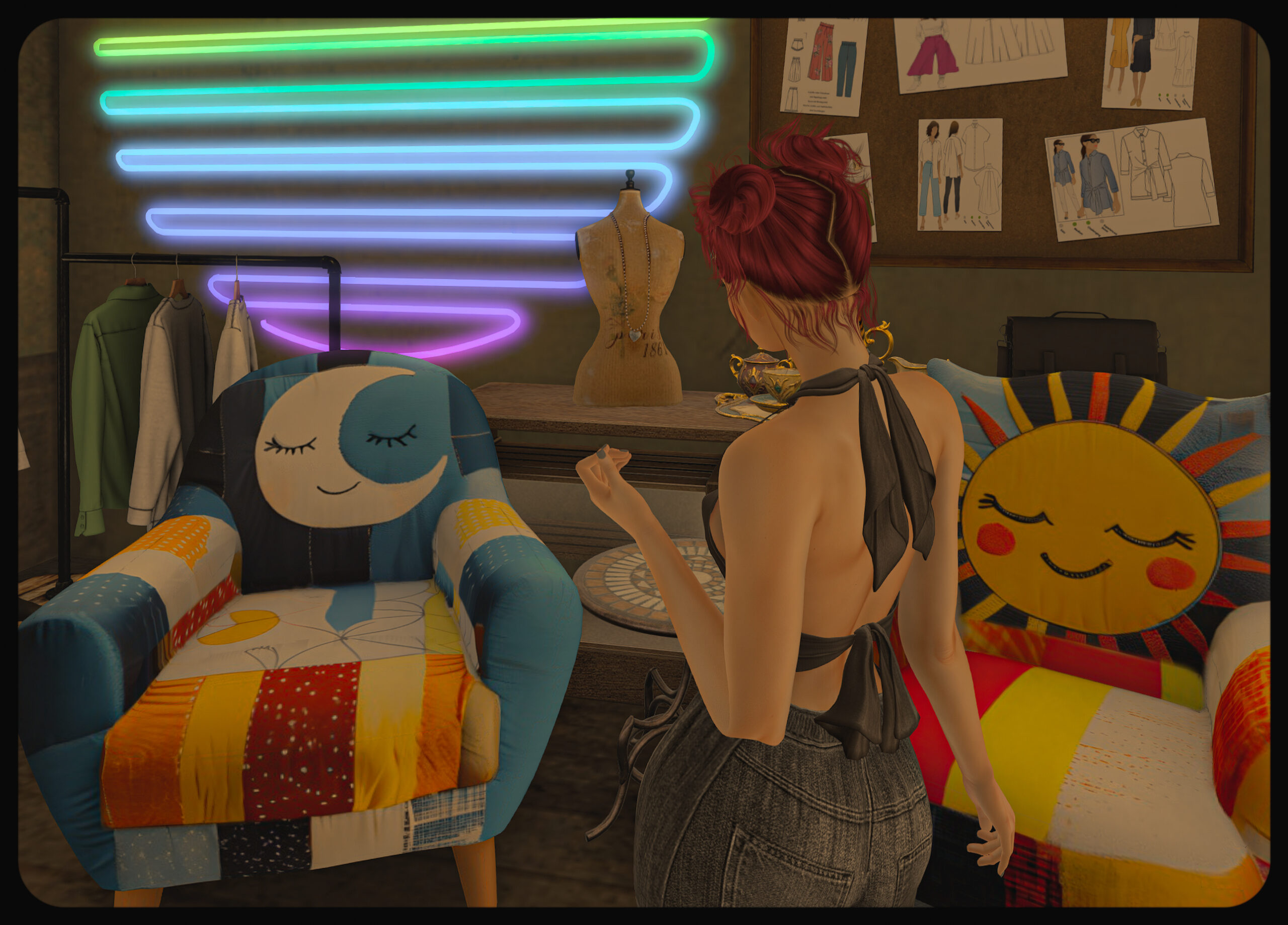
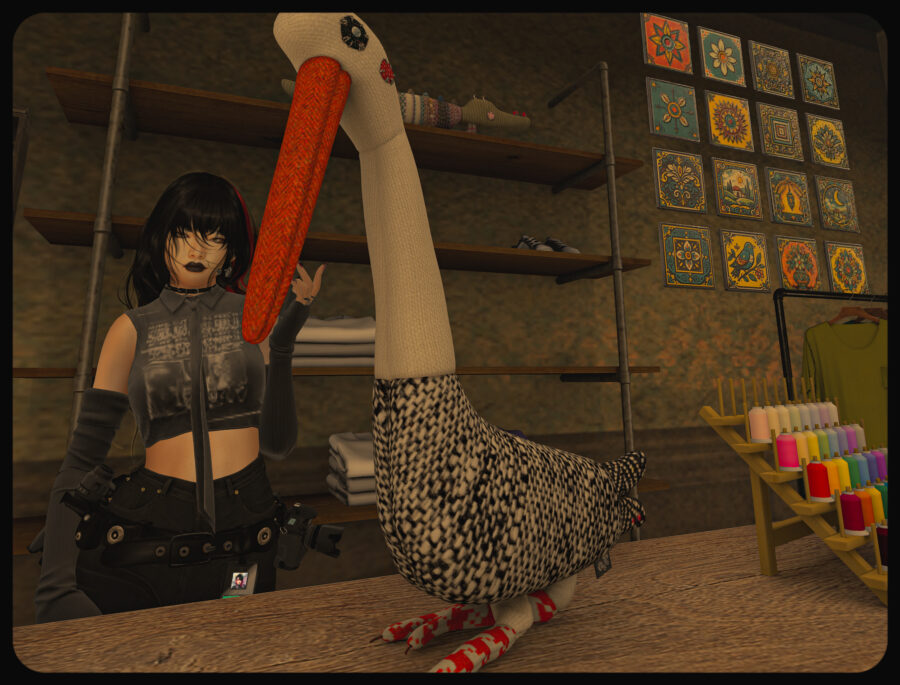
The shop does not feel like a warehouse for somebody else’s discarded wardrobe. Although as I was there someone came to donate some jeans, this wasn’t the main thrust of the store. There are racks and clothes, certainly, but there are also sketches pinned above the work area, thread, fabric, handmade pieces and colourful furniture that looks as though several different childhood memories have been dismantled and stitched back together. One armchair carries a smiling moon, another an enormous sleepy sun (or is it a cat?). There are odd animals around the place, including a stork large enough to make me briefly question whether I had wandered into somebody’s extremely specific fever dream.
This is where, in this editor’s humble view, 2nd Chance becomes more interesting than the simple word thrift suggests. This is not Rag Dollar. Let me make that very clear. Sorry Andy.
Once we were onto things, Rana became more verbal. She told me that she likes using fabric wherever she finds it: old clothing, curtains and other discarded material, sometimes turning it into stuffed animals, sometimes repairing something damaged, sometimes simply starting to fiddle with whatever is in front of her until an idea appears.
“I like to make things that are broken whole again too, and make people happy with that.”
There is something rather appealing about that philosophy in Hathian, a city which has traditionally preferred breaking things and then holding a public argument about whose fault the fragments are.
Thrift, after all, does not have to mean poor. It can mean refusing to throw away something useful because fashion has moved on. It can mean somebody who cannot afford a new wardrobe still leaving with something they actually like. It can mean repairing an old favourite rather than treating everything as disposable. And, if Rana gets her way, it can also mean turning what somebody no longer wants into something another person might value more.
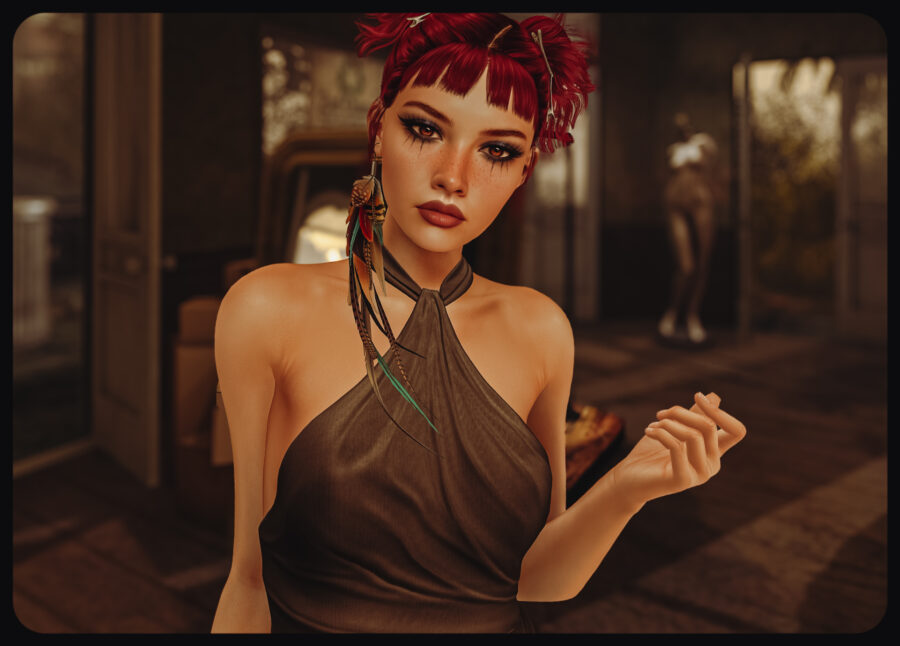
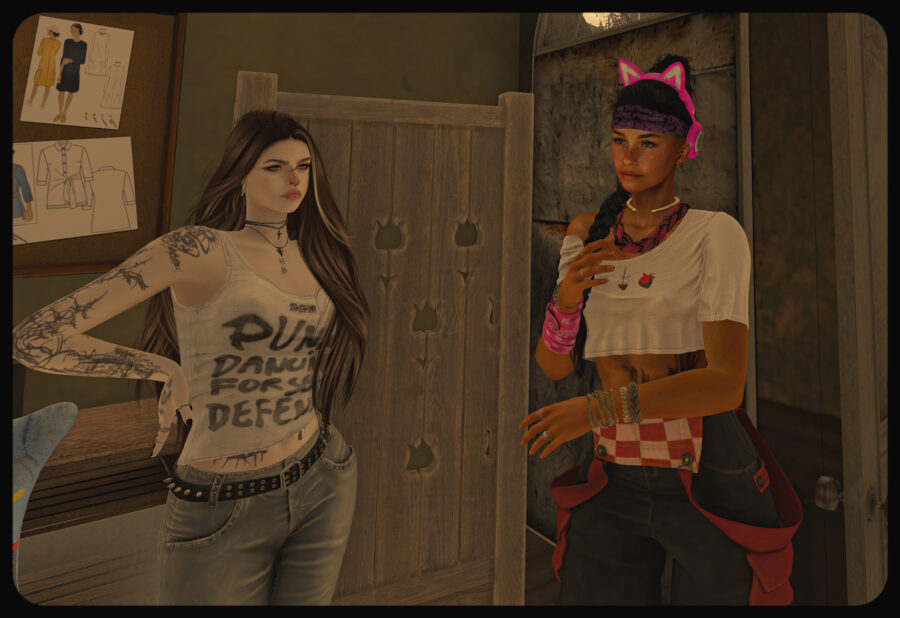
Natasha was considerably less willing than Rana to let this become a story about a shy woman quietly sewing in the corner (which is why interviewing with your friends isn’t always the best idea if you want to control the narrative).
When Rana tried to minimise her place in things, Natasha filled in some of the missing material. She described helping clean up after Jolene, when the property had been left flooded and muddied, and remembered conversations between them about poorer neighbourhoods, thrift and the possibility that a store like this could function as more than somewhere to exchange money for clothes.
In Natasha’s version, Rana talked about a community space and then proceeded to turn the opening into something much larger. “There’s like a heart for the community with this humble shit and stumbling on her tongue,” Natasha said, in a very Hathian endorsement of civic-minded enterprise.
Location, Location, Location
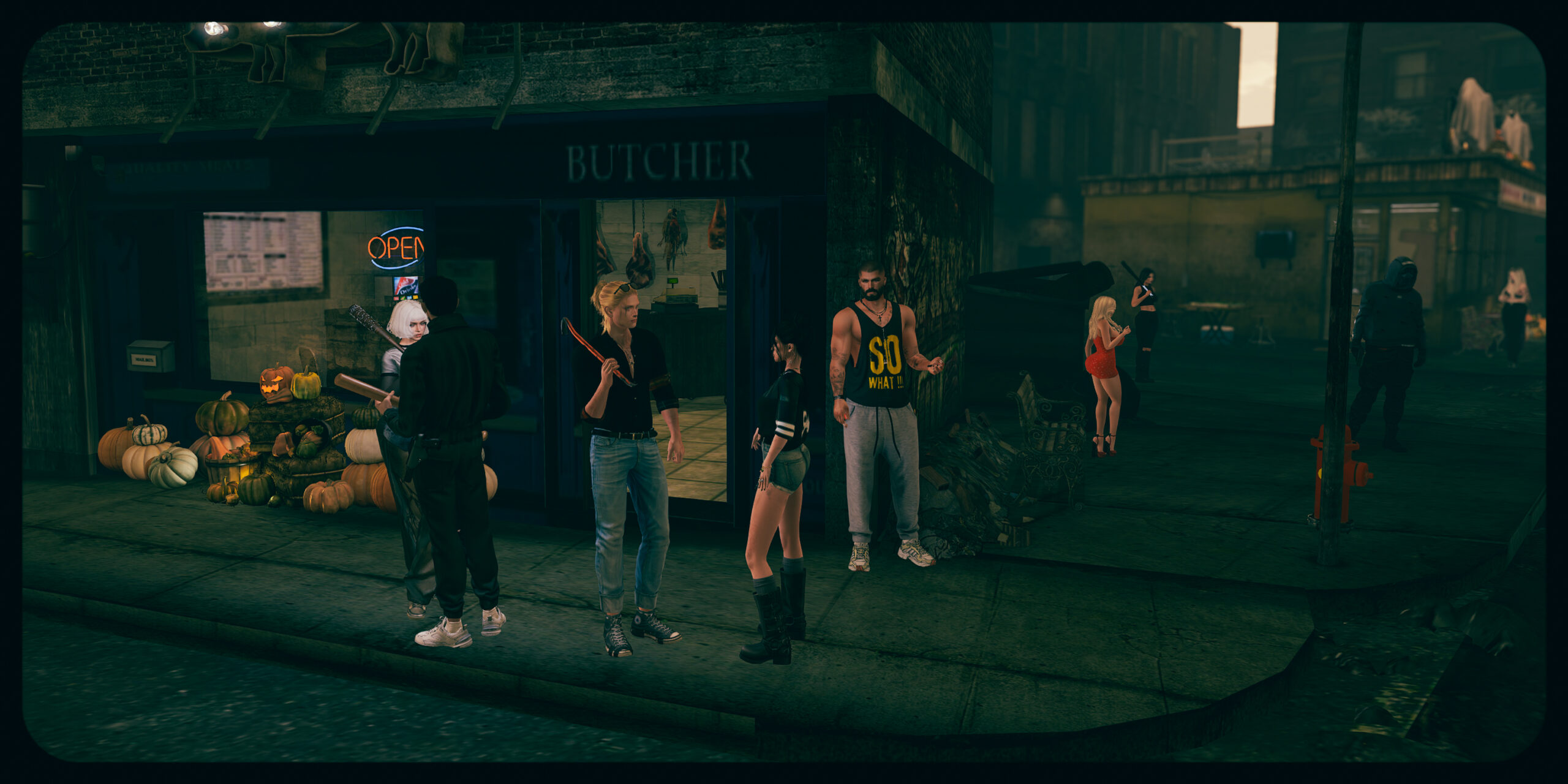
It is probably worth noting that none of this sits in an especially sanitised little corner of town. 2nd Chance is on the back of Bourbon Street, where neighbouring businesses and residents are not always principally associated with sewing circles and responsible textile consumption. When I asked Rana how she fitted into that darker side of the street, her answer was refreshingly uncomplicated.
“Well, to be fair, I don’t fit in. But that is okay, I am used to that feeling.”
There is no shortage of businesses in Hathian willing to fit in. Some fit in so enthusiastically (to the drug dealing, assaulting and pornographic empire style business) that the police eventually arrive with warrants. I slightly worry for Rana that her approach means ‘easy target’, but that’s something that she will need to find out about in this dark corner of America.
What 2nd Chance ultimately has going for it is not polish. Rana herself would probably be horrified if I tried to sell her that way. The appeal is that the shop feels made rather than installed. There are mismatched things. There are repaired things. There are things whose previous purpose appears to have been lost somewhere along the way and replaced with a new one. Even the furniture looks as though it has had a life before you got there.
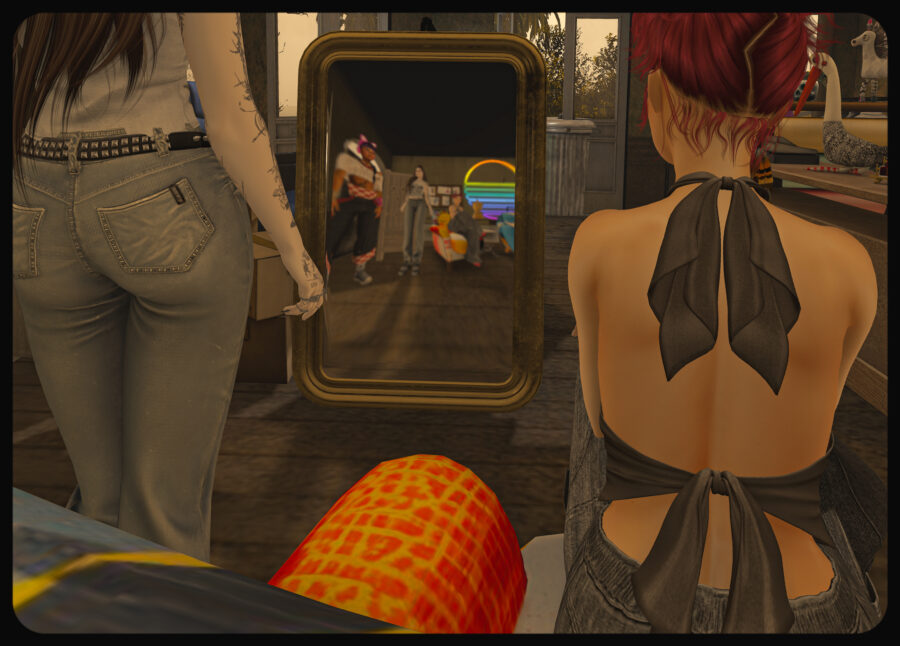
That does, admittedly, mean the proprietor may need outside assistance in informing the public that any of this exists.
Toward the end of the interview, after Rana had repeatedly redirected attention away from herself, Natasha finally looked at her and delivered the review of the shop’s marketing department that I would otherwise have been forced to write myself.
“Dude, I love you, but you are the worst advertiser I have met in my life. Including domestic rabbits and wild rats.”
Rana laughed.
“I know right!”
Fortunately for Rana, she has friends. And now, temporarily, a newspaper.
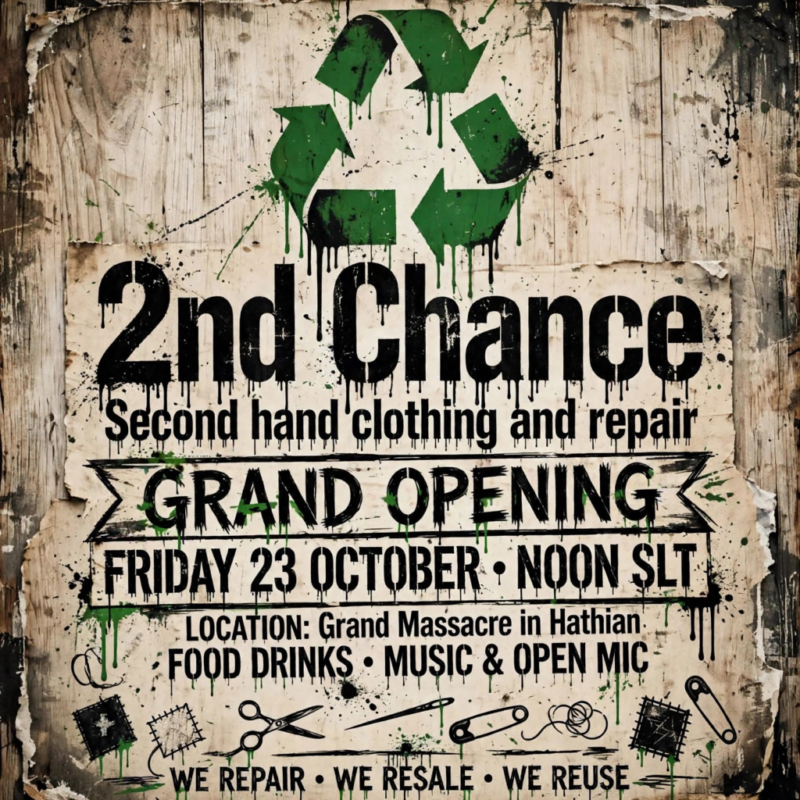
2nd Chance: Second Hand Clothing and Repair holds its Grand Opening on Friday 23 October at noon SLT, at Grand Massacre in Hathian, with food, drinks, music and an open mic. The shop’s own little manifesto is considerably more concise than anything I have written above: We repair. We resale. We reuse.