
By: Daiyu Tang, Hathian Observer Editor.
If Hathian has developed a civic language, it is the language of statements. “We are reviewing.” – “We take allegations seriously.” – “An internal process is underway.” – “The safety of our staff and patients remains our highest priority.” We have printed those sentences so often the ink might as well come pre-dried. It’s no wonder that some of the civic services didn’t bother to replace their media officers.
But there is a particular kind of lie that does not arrive with a raised voice. It arrives in a measured statement, stamped with authority, phrased in passive tense, and delivered after the blood has already dried and the fires have been extinguished. Hathian is, of course, accustomed to violence; it is not accustomed to accountability. So when the HPD greenery caught fire, when live rounds cut into a crowd, when medics bled and officers burned, the city did what it always does: it rushed to write so many fucking stories fast enough in an attempt to suffocate the one that actually happened. The one I witnessed. The one I then went from leader to leader to try and take stock.
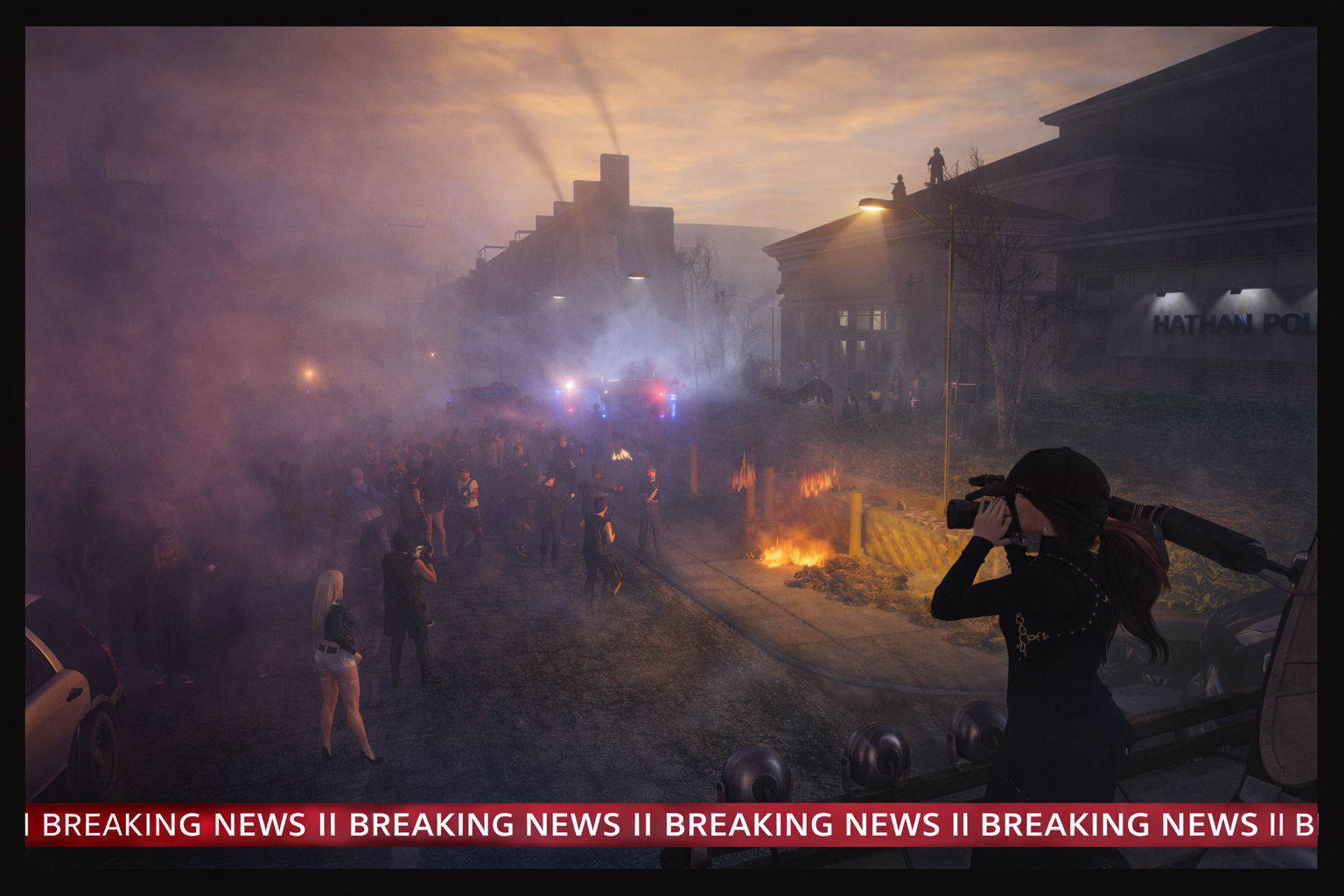
This article is built from three sources that do not agree: the official statements released after the riot, interviews given after the riot, and the riot itself. This was a sequence of actions that did not care what anyone later claimed they meant. I filmed from the roof of the Observer truck for as long as I could stay alive and coherent, and while smoke, bodies, and obstruction meant some moments were partially lost to angle and chaos, the broader chain of escalation is not. I’m afraid it does not paint some in a good light, but equally (and I know you want me to deal in black and white) there are legitimate questions about history, methods and the madness of Hathian.
So my dear reader, the question is not whether Hathian is violent. We know it is. The question is simpler, uglier, and more important for this chain of events. It’s what you ‘pay’ me for – to get out for. To get burned, cut and sometimes shot at for.
Who is telling the truth AND who is trying to murder it?
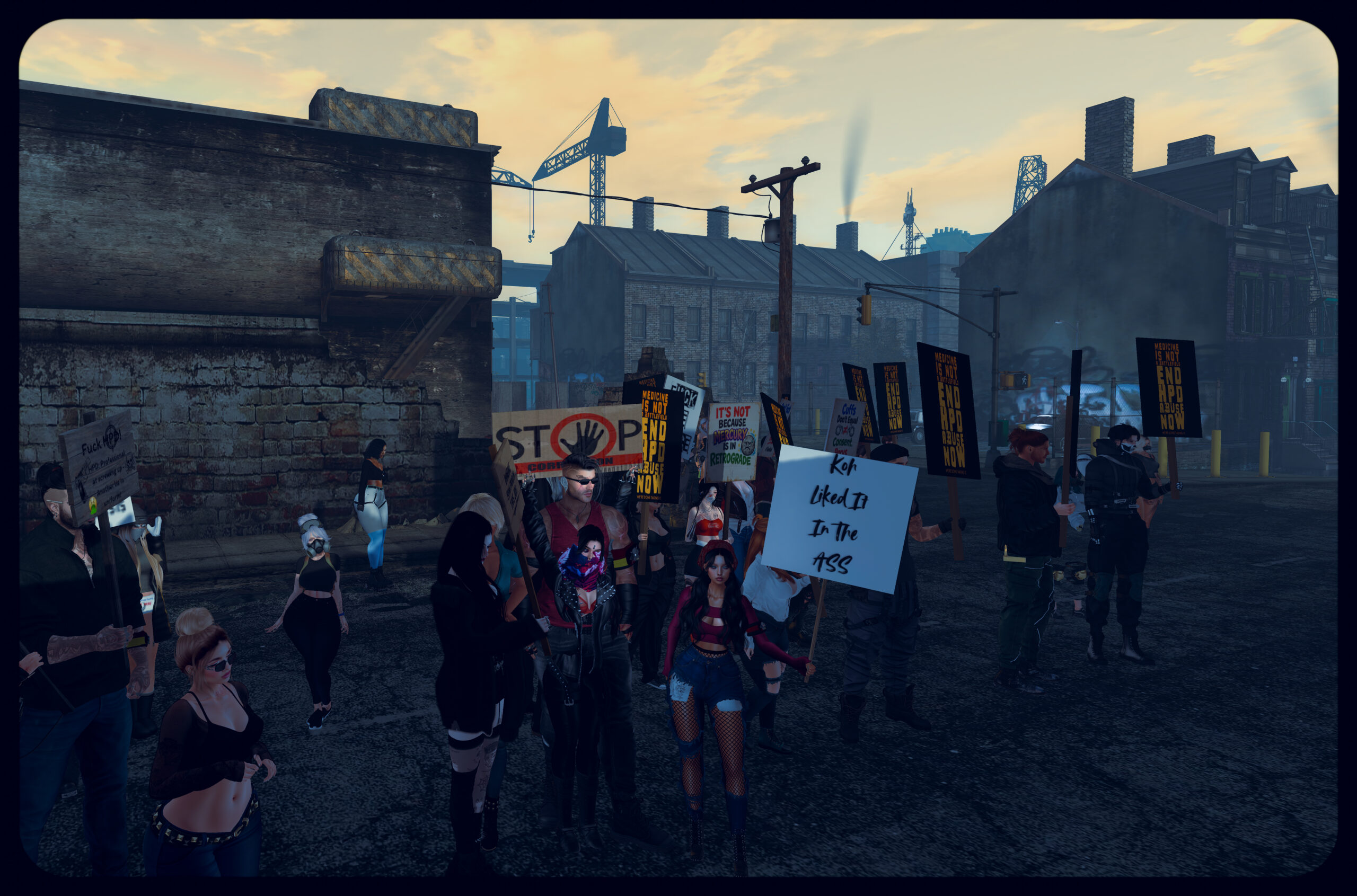
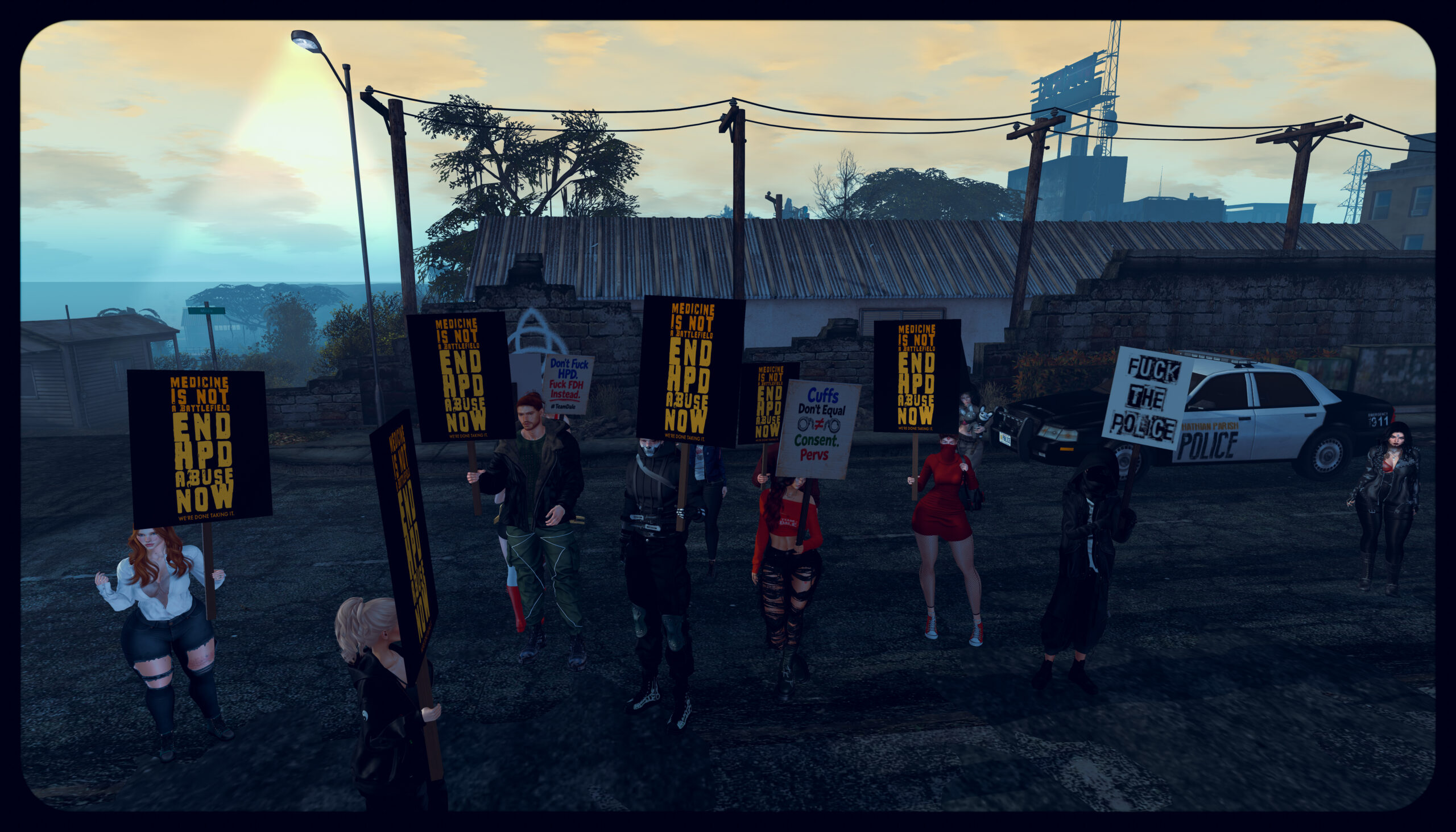
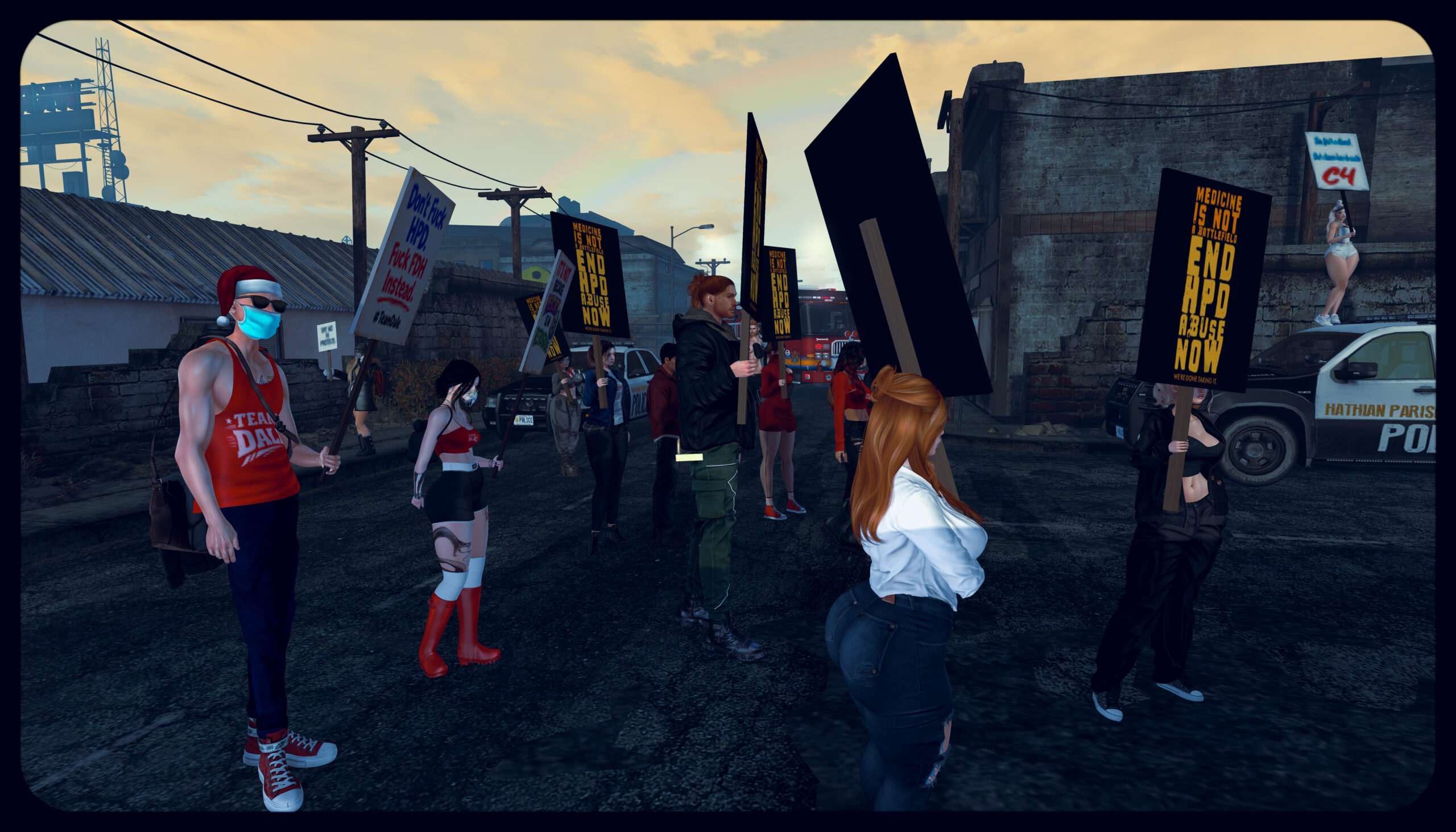
The Riot (Or What Happened Before Anyone Statemented It Away)
A riot is an ugly word, but accuracy matters more than comfort. We can start as one thing and end up another. Protest to Riot. Civilian to Monster…
What gathered outside HPD on the day did not begin as a peaceful protest that was suddenly, inexplicably shattered by police violence. Nor was it a pre-planned terrorist action cynically disguised as civic dissent. It was something far more Hathian than either side’s later statements admit: a mass of grievances, histories, grudges, loyalties and weapons pressed together under visible threat, waiting for a spark and oh boy, does Hathian like fires. Many of you are pyromaniacs, some of you happen to be armed with carbines… Oh and don’t think being firefighter means you may escape that title, it’s just called ‘firefighter arson’ in polite circles and as we know, even Fire Captains can succumb to it.
But dear reader, I get ahead a little. Let’s review the riot as from the roof of the Observer truck, the first thing that was impossible to miss was posture…
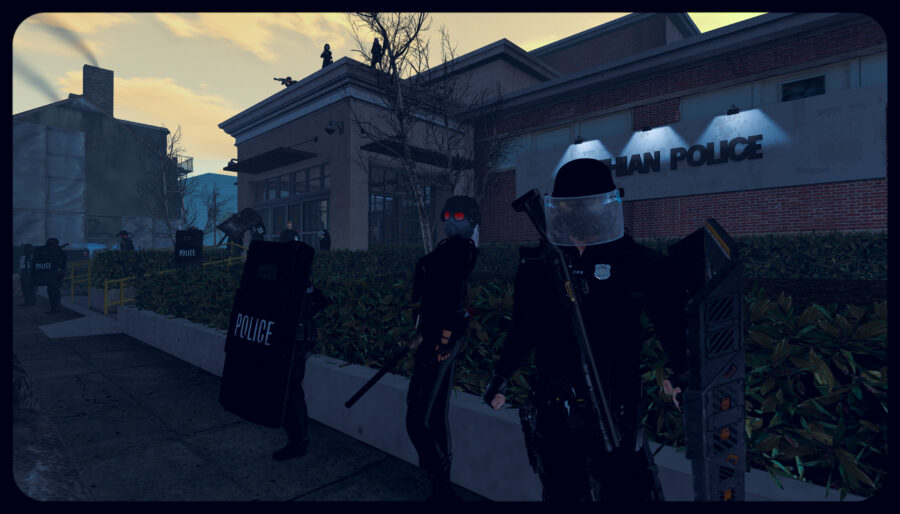
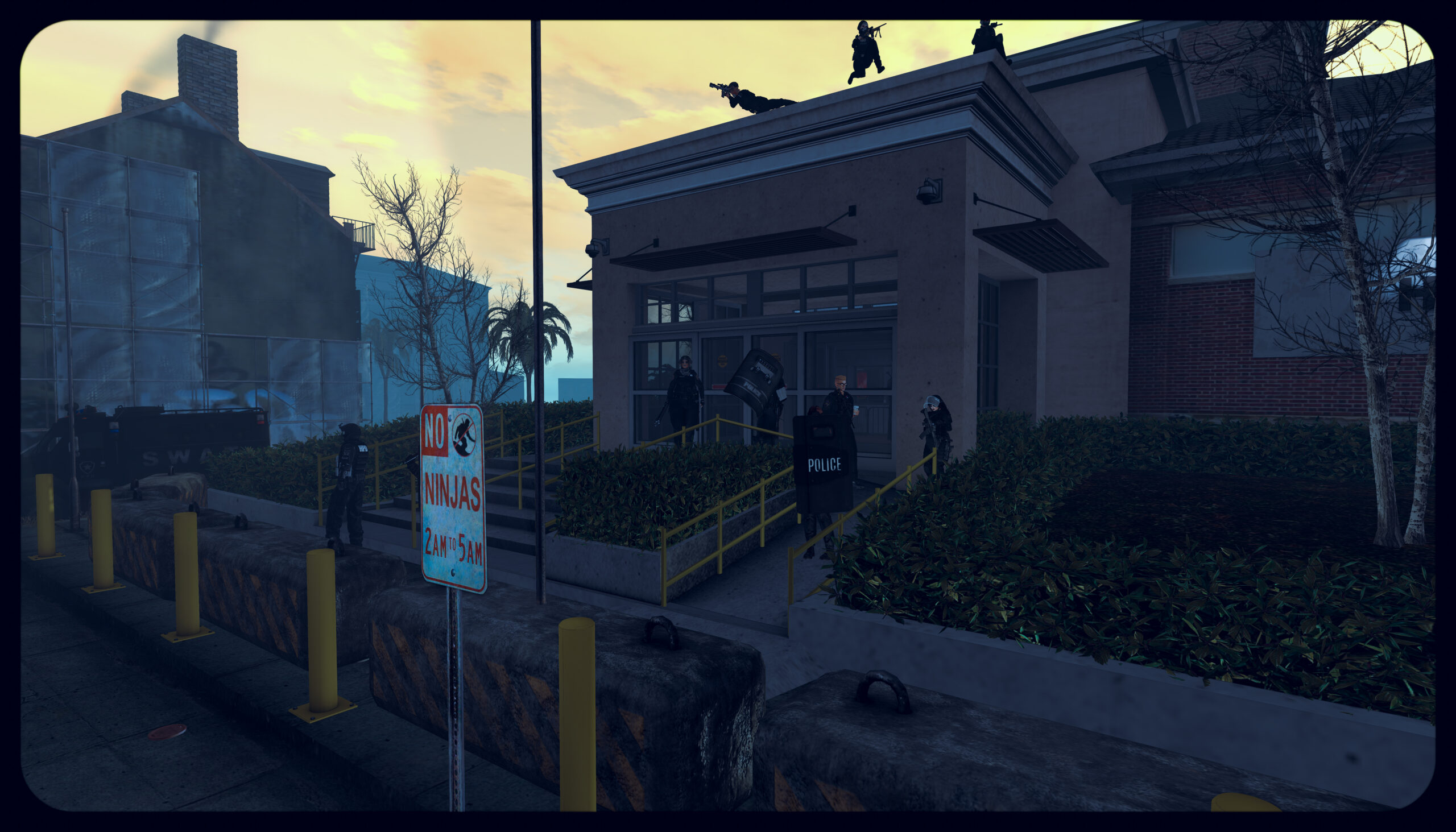
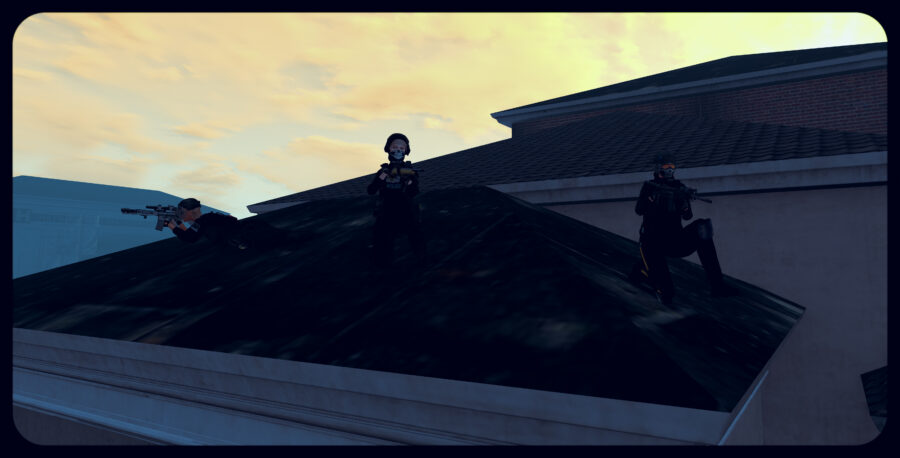
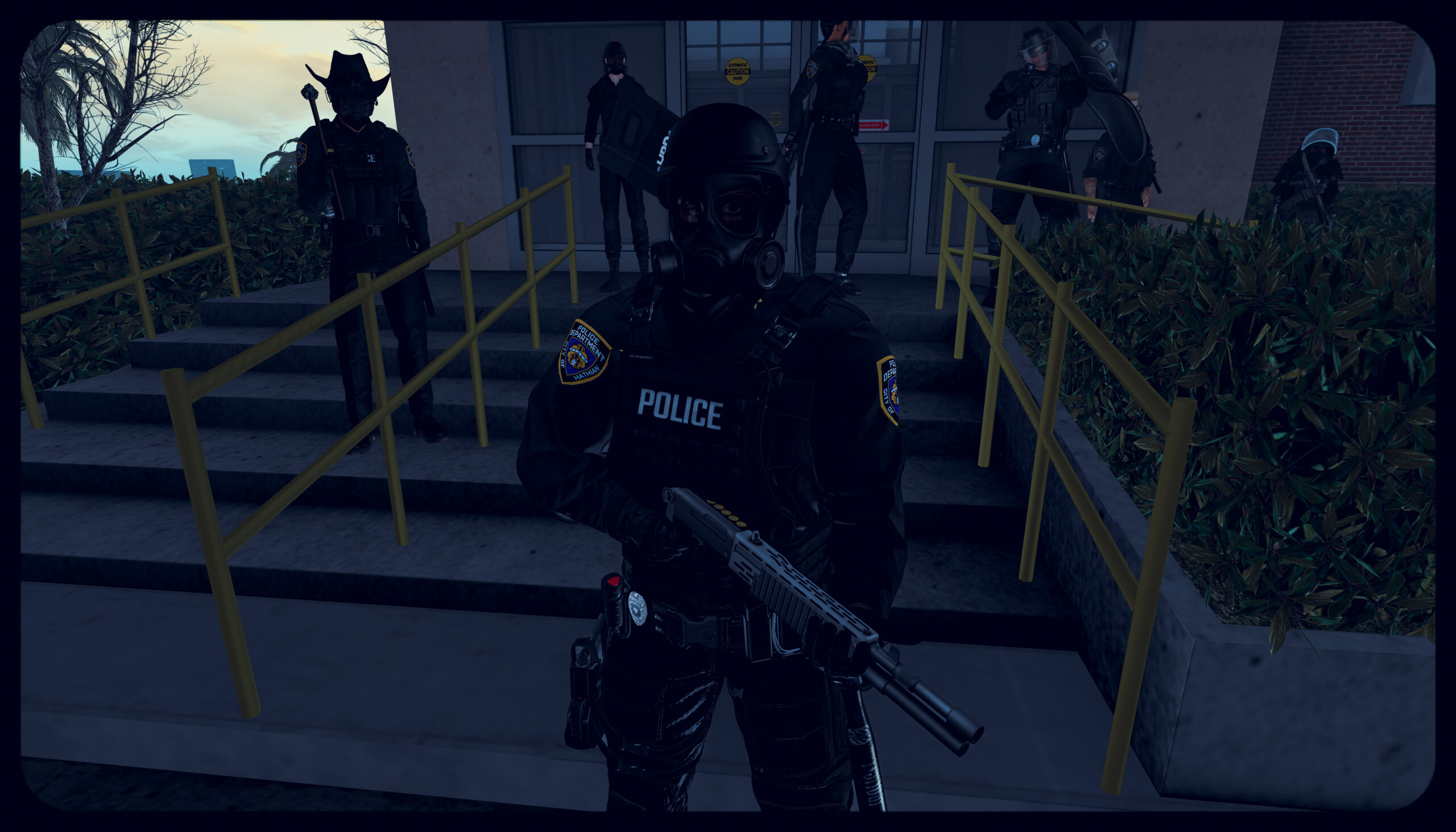
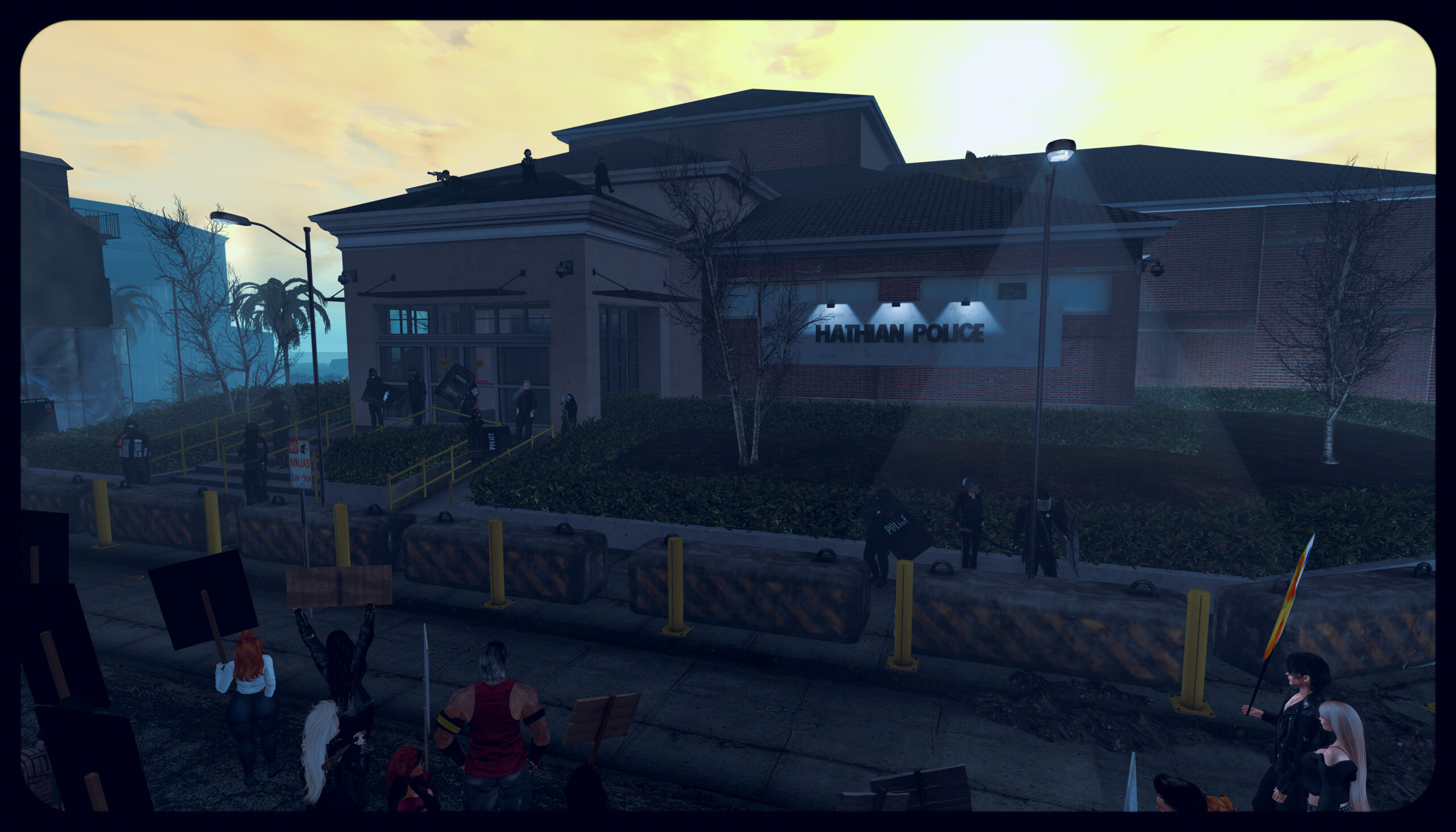
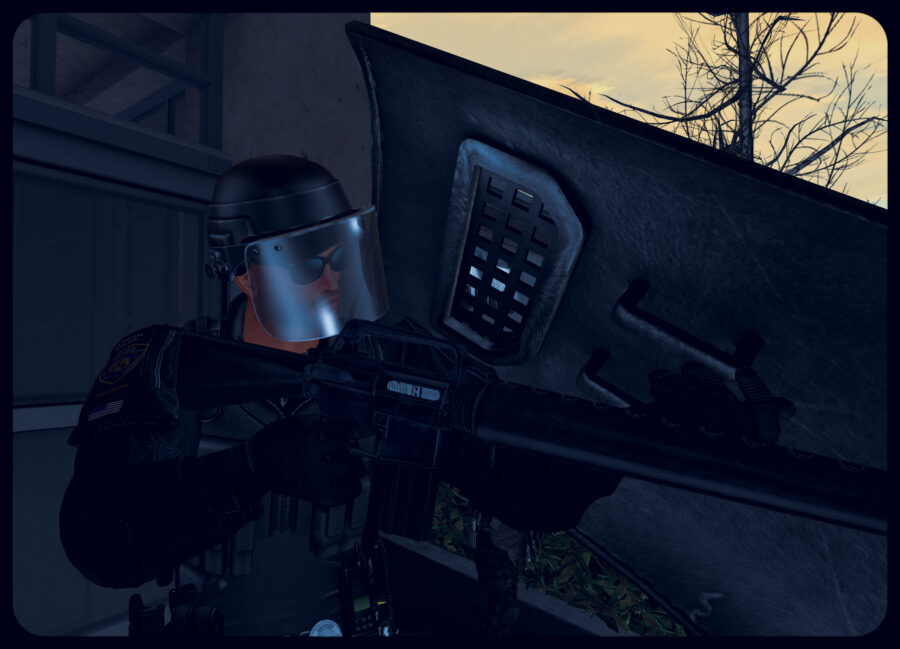
HPD was not arrayed defensively in the way one prepares for crowd control. Officers were in riot gear, rifles visible, shields up. Snipers were posted on the roof and clearly visible to the crowd below. Commands about pepper spray dispersal were voiced early and audibly. This matters, not because it excuses what followed, but because it shaped the emotional physics of the space. You do not calm a crowd by reminding it, repeatedly and visually, how easily it can be killed.
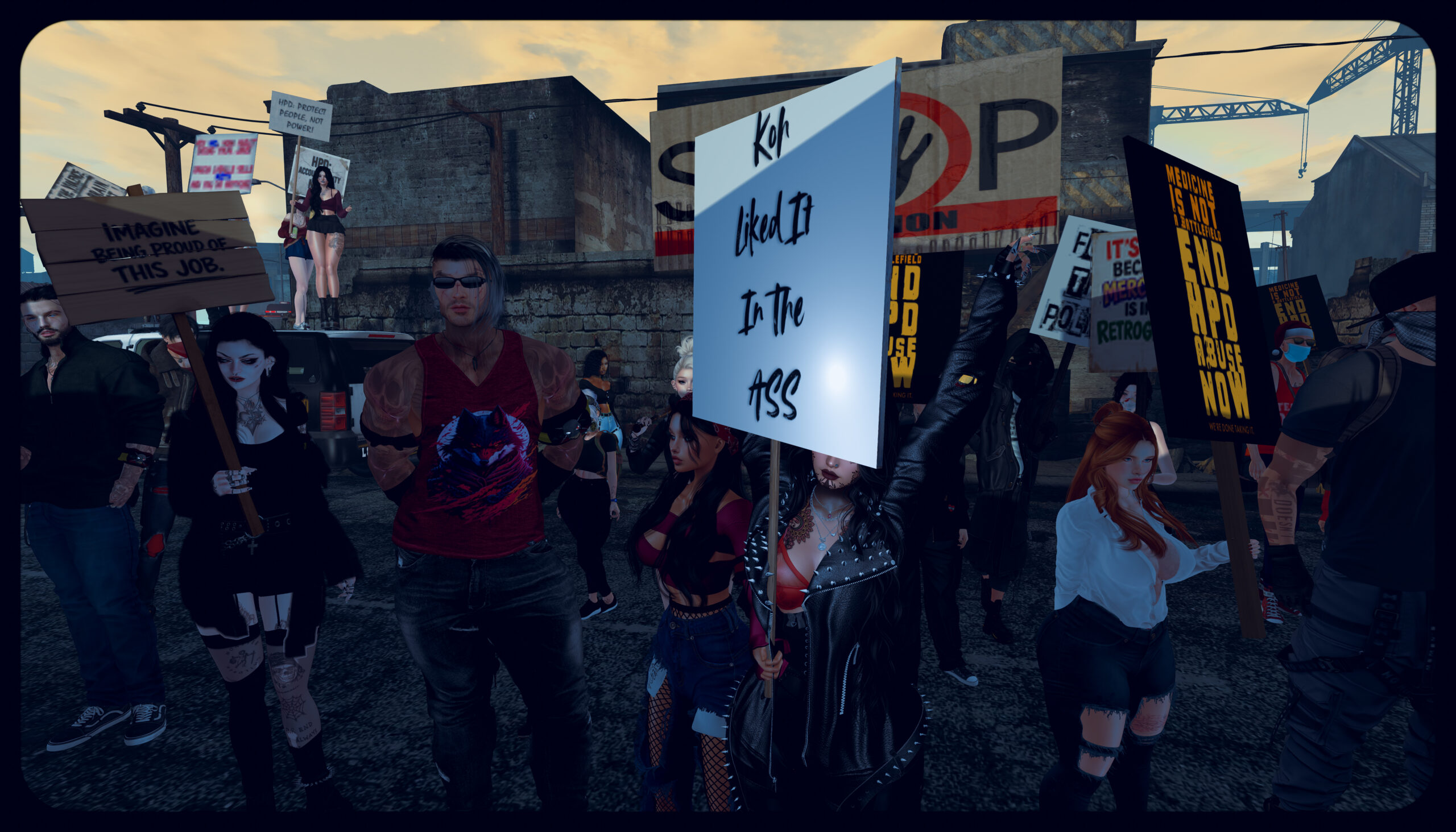
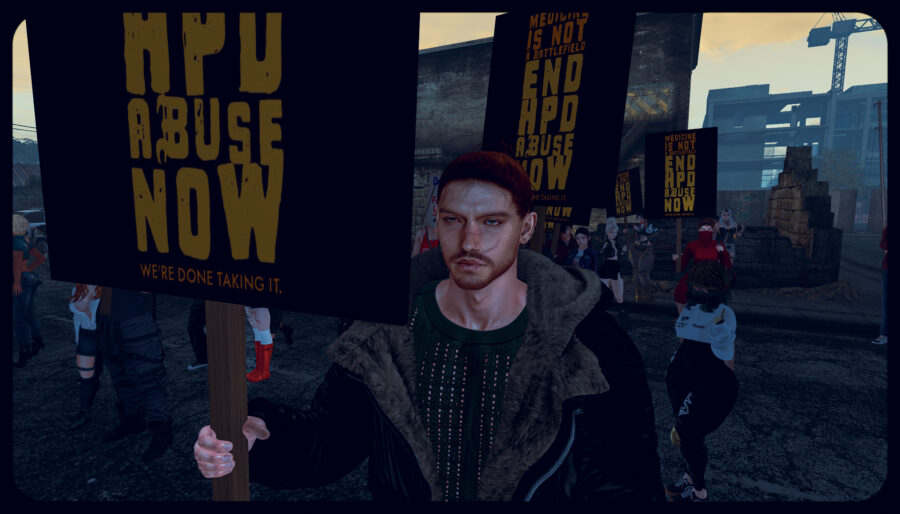
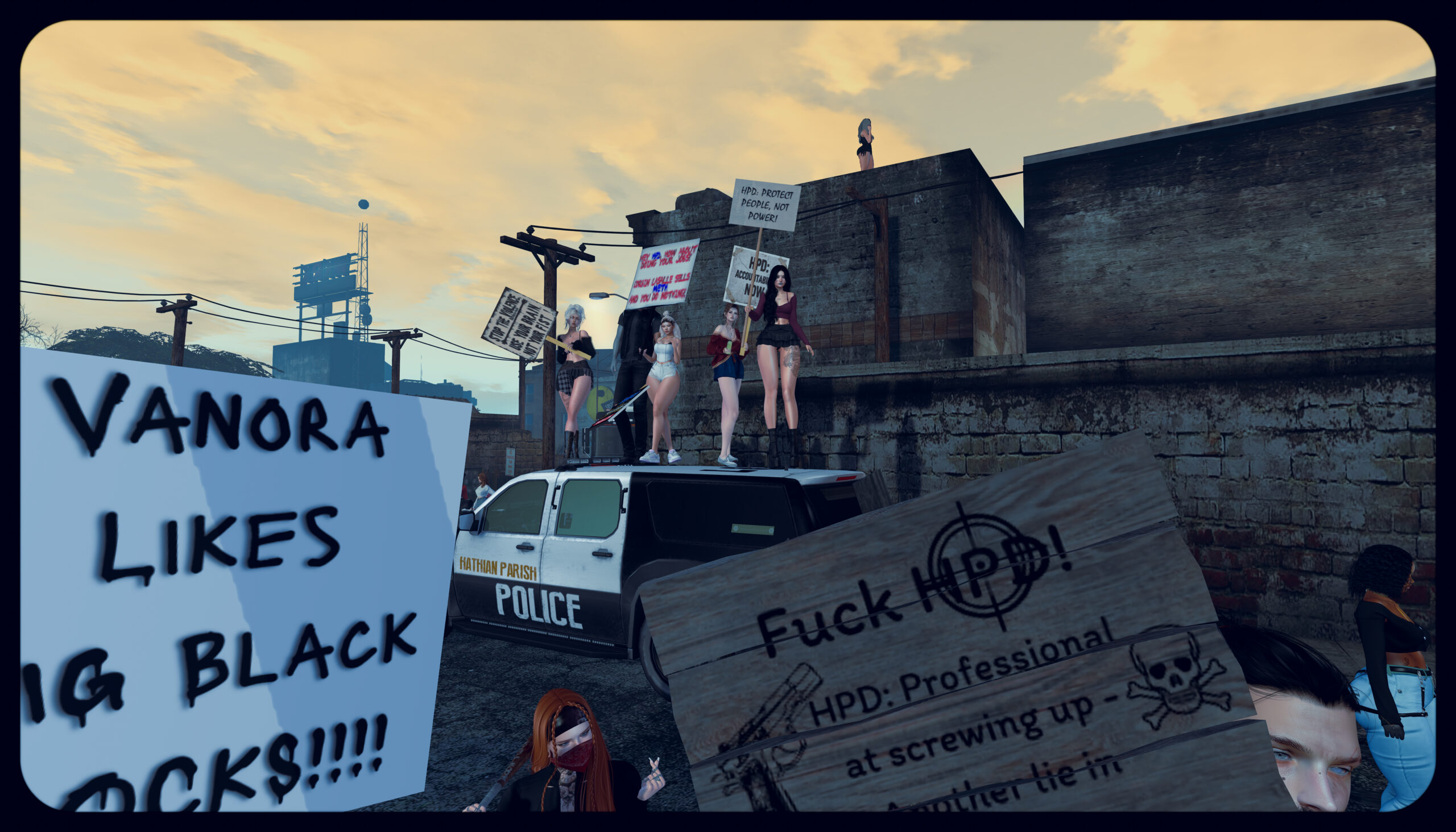
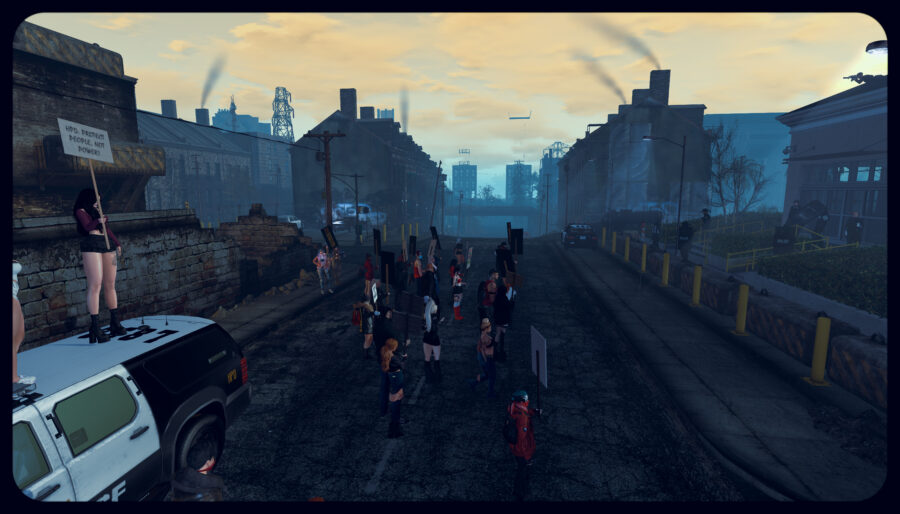
The crowd itself was never unified. There were FDH and HGH staff there to protest specific allegations: obstruction of care, treatment in custody, prior issues, perhaps their own humiliation and fear. There were family members and allies standing close to them, protective and anxious. There were known Rejects who came prepared for confrontation, not dialogue. There were people openly scanning rooftops, and likely commenting on sniper placement as if they were generals positioning their troops. There were signs calling for reform, signs calling for mockery, signs calling for destruction and one sign saying Vanora loved black cocks. Incendiary. There were also visible weapons among protesters, not concealed, not hypothetical, but in hands and on belts and yes Eamon, that includes you and your Axe.
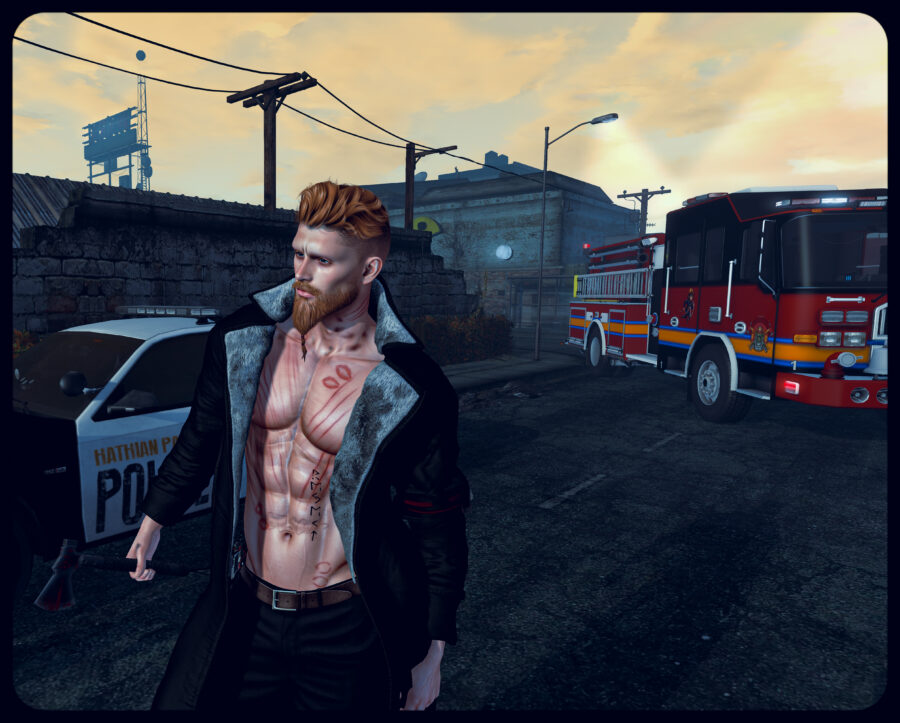
That is not editorial opinion. That is factual observation.
The air thickened quickly. Chants rose. Taunts were exchanged. Several individuals on both sides used language that stripped the other of humanity, “vermin,” – “rodents,” – “pigs.” If you want to understand how riots start, listen for the moment when people stop speaking to each other and start speaking about each other as animals. Or just listen to Lyssandra, an HPD officer who called everyone Commies and started singing the national anthem at the protestors.
The spark however did not come from a police bullet.
The first clear escalation into lethal violence, as I captured on my camera and corroborated by multiple witnesses, was the throwing of an incendiary device from within the protester crowd. A molotov cocktail was thrown toward the HPD, aimed at Captain Julian Heckler. It struck close enough for him to be seen burning, flailing, and diving into the bushes.
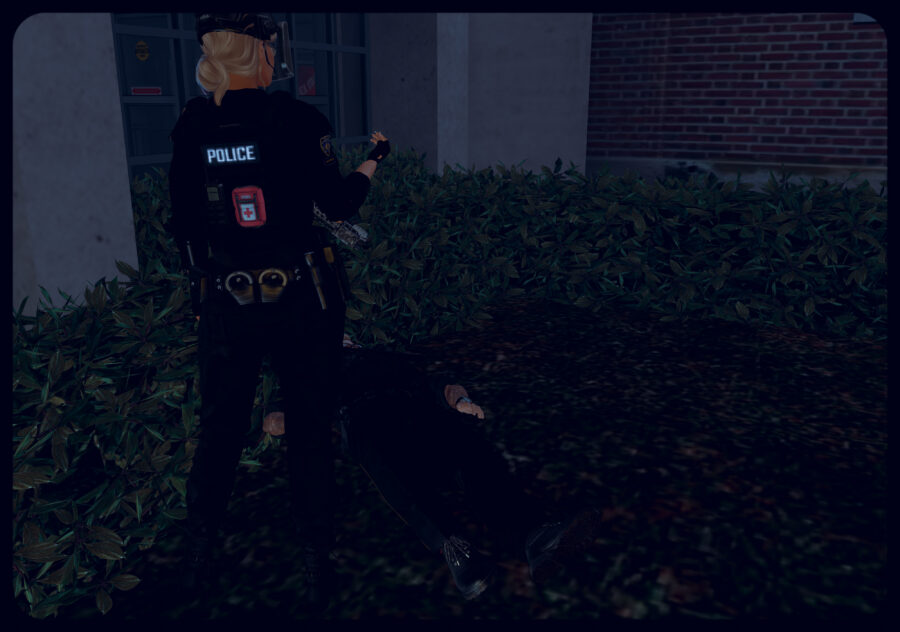
That moment matters, because it kills one lie completely. This was no longer protest. It was attempted immolation.
After that first firebomb, you know the drill dear readers. It went to shit. Additional molotovs were lit and thrown. Bushes ignited. The HPD’s entrance was targeted. People cheered. Others recoiled. Some surged forward. Some froze. One cheerleader from CU flashed her knickers at everyone because hard lessons haven’t reached her yet.
And then live fire entered the scene.
At least one officer screamed to open fire and we think a round grazed a protester. Additional live rounds followed. One protester was struck in the shoulder. Others were hit or narrowly missed. Whether every round came from the same weapon or officer is unclear in the chaos. Dale was hit. Shot hard and bad. It was ugly.
At this point, any remaining boundary between ‘police response’ and ‘Player Unknown Battlegrounds in Hathian’ collapsed.
Weapons came out on both sides. A protester fired toward officers. Beanbag rounds were deployed into the crowd. Tear gas followed later, further obscuring visibility and judgment. Firefighters attempted to deploy hoses and in the thick of it those hoses swung unpredictably and sprayed indiscriminately. Some slipped, some were knocked down. Some fires were extinguished. Medics were hit. Firefighters were hit. Protesters were hit. Officers burned. Officers bled.
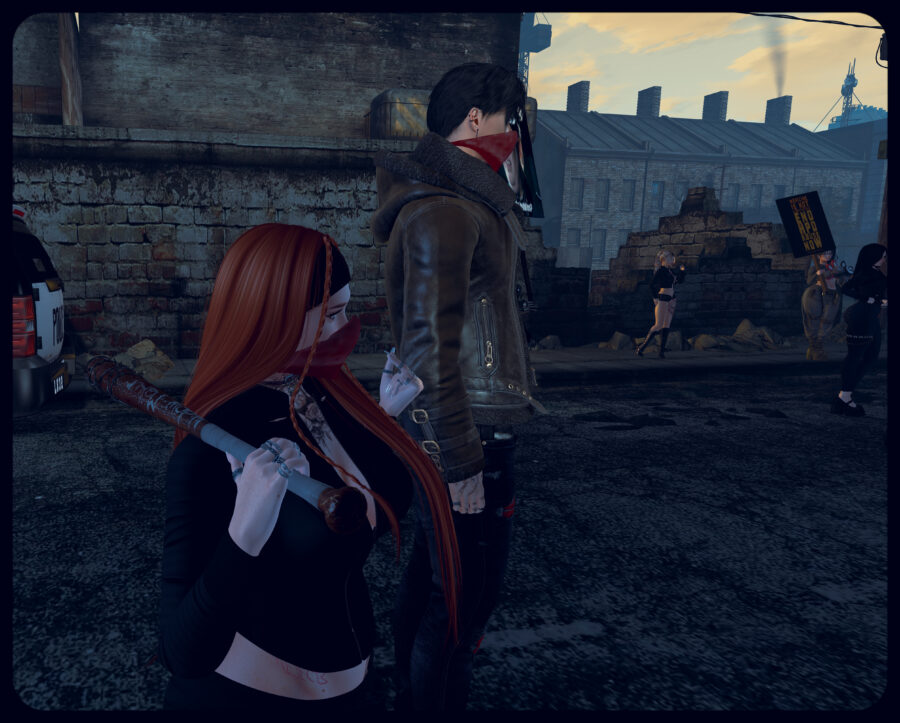
If you are looking for a clean moment where everything definitively went wrong, you will not find one. You will find a cascade. A chain-fucking reaction. A Hathian loop like ‘Deja Vu’, except with no one person or group with the power to change it?
By the time tear gas rolled and people began to flee in earnest, whatever this gathering had been intended to be no longer mattered. It had become what Hathian keeps becoming: a place where grievance, power, fear and spectacle collide until nobody can plausibly claim clean hands.
And only then after the fire burned down, after the wounded were dragged away, after the cameras stopped rolling did the statements begin to arrive…
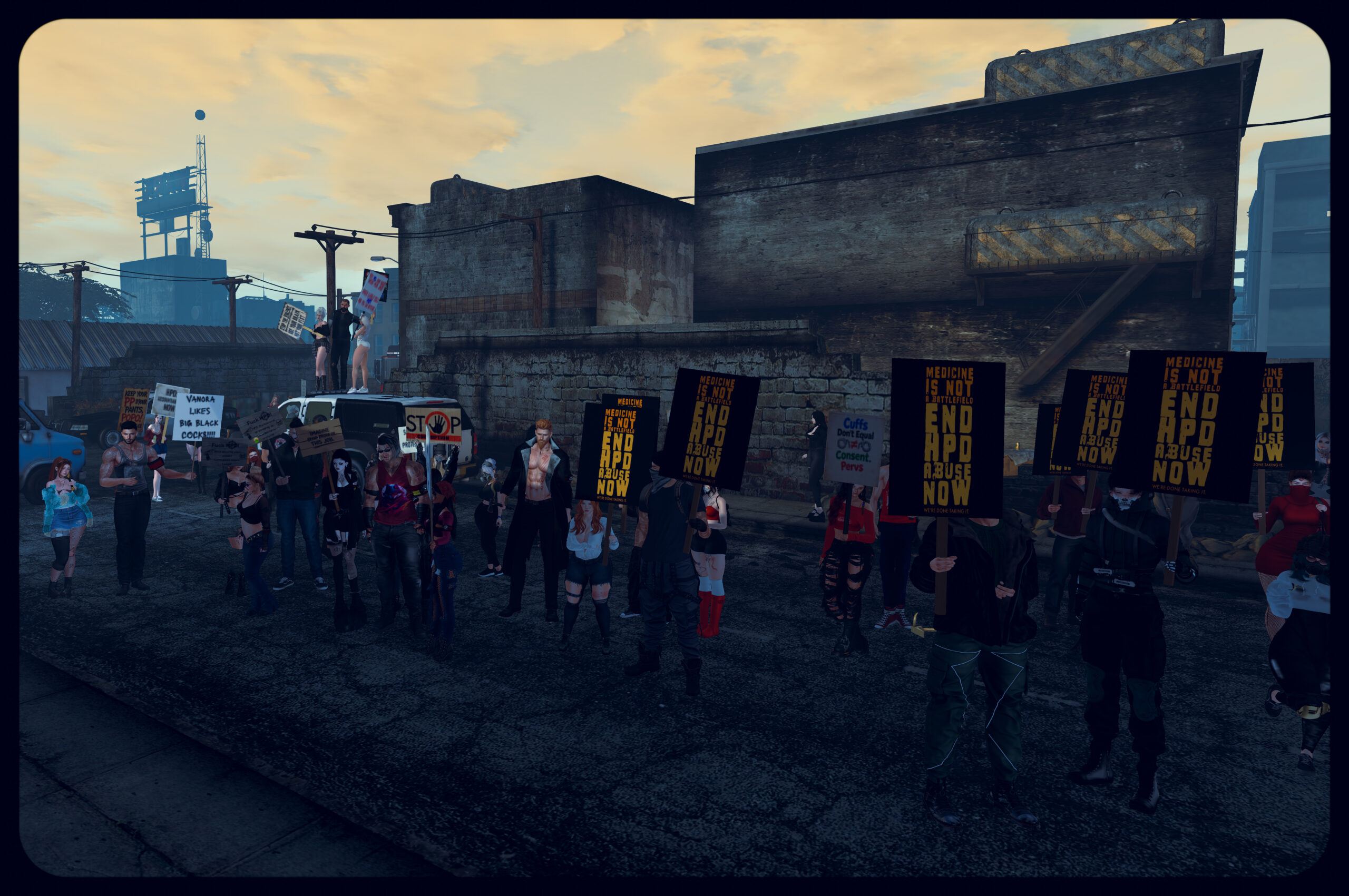
Statements: Speaking After The Smoke
FDH Statement HERE & HPD Statement HERE
By the time the FDH and the HPD (who rushed theirs out first) released their official accounts, the riot was already over. The fires were out. The wounded were in hospital. The footage was circulating. Everyone writing those statements knew, broadly, what had happened, or at least what could no longer be plausibly denied. These statements thus just attempted to frame it and both Dale/Nate and Krystal’s statement ask the reader to believe that what unfolded outside HPD was inevitable, righteous, or entirely the fault of the other side. Both contain truths. Both leave out truths that matter just as much.
HPD’s Statement: Order, Enemies, and the Luxury of Certainty
The HPD statement opens by acknowledging that a peaceful protest was “turned into a riot by instigators wearing Reject and Yuugen colors” On that narrow point, it is not entirely wrong. There were known agitators present. There were Rejects. There were likely Yuugen there. There were individuals who arrived not merely angry, but prepared to escalate.
But the statement does not stop there. It widens its claim from instigators to institutions, asserting that FDH and HGH leadership aided or aligned with terrorism, that their neutrality was fraudulent, and that HPD must now treat them as hostile entities. This is where the statement shifts from description into accusation and where its credibility begins to strain. Although perhaps tonally, considering THIS it is not out of line with what we might expect…
What the HPD statement does not acknowledge is the environment it helped create. It does not mention visible snipers on rooftops before the first incendiary was thrown. It does not mention officers referring to protesters in dehumanizing terms. It does not mention that once fire entered the scene, live rounds were discharged into a crowd that still contained medics, firefighters, and civilians.
Instead, it presents militarization as a reluctant necessity and escalation as something imposed entirely from outside. That framing is incomplete and probably wrong.
HPD faced real threats that day. But the statement’s insistence on inevitability; the idea that there was ‘no other way’, reads less like a conclusion drawn from events and more like a justification prepared in advance under the weight of Hathian’s sordid history and Krystal’s experiences. It collapses a complex, cascading failure into a single story: enemies at the gate, authority under siege, force as the only language left. Really? When a police department publicly entertains declaring other municipal services criminal organizations and demands expanded funding and autonomy in the same breath as it minimizes its own role in escalation, it is no longer merely responding to violence. It is attempting to consolidate narrative control.
FDH’s Statement: Victimhood, Duty, and the Things Left Unsaid
The FDH statement moves in the opposite direction, but it performs a similar narrowing. It centers on allegations of police misconduct, obstruction of care, threats of arrest for providing medical assistance, and prior incidents that feed directly into the anger on display at the protest. These grievances are not invented. They have histories. They have names. They have consequences that do not disappear simply because the street later caught fire. We’ve covered them in the Observer for example…
The statement also describes FDH personnel as peaceful and unarmed, and asserts that live fire from HPD marked the decisive escalation. This is where the statement seems to become selective. Truly, FDH personnel were not the ones distributing incendiaries. But they were present in a crowd that included armed individuals, some of whom might be considered, sometimes associates. And these ‘friends and relations’ and widen citizenry arrived visibly prepared for violence. Fire apparatus was deployed in a hostile environment, and while hoses were primarily aimed at the ground, the chaos that followed made unintended impact inevitable, although I personally did not see anything deliberate.
Most critically, the statement does not meaningfully address the presence or actions of protesters who escalated first with fire. It frames the riot as something that happened to FDH, rather than something that unfolded around and among them. That framing is emotionally understandable. It is also incomplete. It at once calls on our history of issues, events and problems, without the narrative body of all the protests (we’ve been here with the defund series remember dear reader) that should have informed the deployment of equipment and the sense in ‘going to face’ the HPD. If you’re a responsible leader, do you encourage your people to attend a protest where any reasonable person would expect it to go to shit? I am not sure you do.
FDH members were injured. Their Chief was shot. Their equipment was damaged. None of that is trivial, and none of it should be minimized. But a statement that asks the public to see only victimhood, without acknowledging the combustible context in which FDH chose to stand shoulder to shoulder with far more volatile actors, asks the reader to suspend too much of what was plainly visible and most important, for me as your collector of stories, entirely probable.
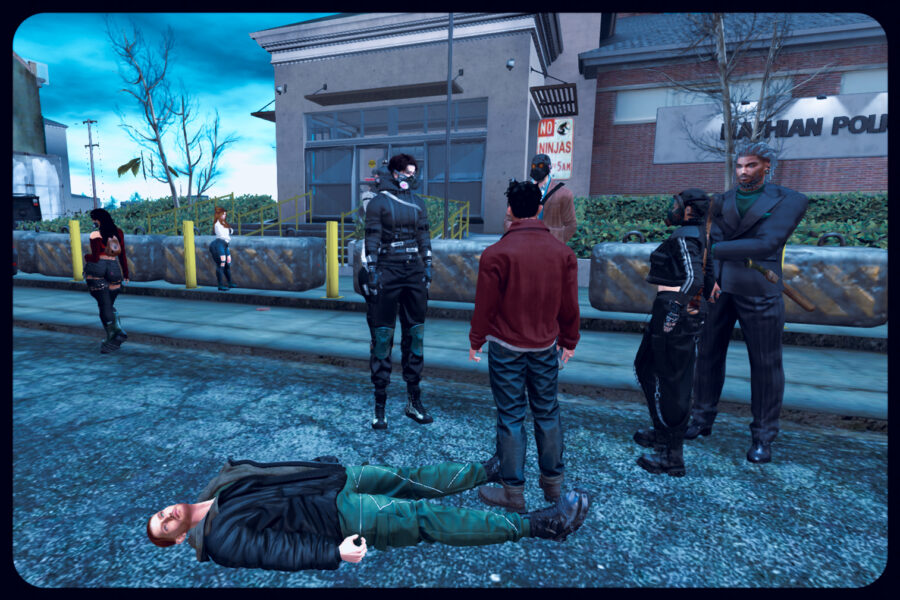
The Interviews – “Or Daiyu – Please Believe Me. Honest.”
Statements are authored. Interviews are inhabited and in a way they are the final nail in the narrative. While I cannot claim to have had all the threads spinning all at once, and because I met Krystal first, then Shelby and didn’t get (due to injury) time with Dale, the ordering and content is not ‘fully complete’, I already think most of you (Hoppers especially) will have already given up reading and skipped to the end to see who I blame (hint: blame is never black and white).
Anyway, interviews are where posture slips, where fatigue shows, where conviction hardens or fractures under its own weight. Both interviews were conducted after the riot. Shelby and Krystal painted good stories. Different stories. Each speaker had a different view of what the riot meant, and what they believed should happen next. Some of it, shit, even I agree with my dears.
Shelby from HGH: Battlefield Medicine
Shelby did not speak like someone trying to win an argument. She spoke like someone trying to keep a system alive. The first thing that was obvious in person was exhaustion. Not Hathian ‘normal’ weariness but the physical, grinding exhaustion of someone who has spent too many nights triaging the consequences of other people’s (bad?) decisions. Bloodshot eyes, chipped nails that I refrained from commenting on and clutching coffee that might as well have been life support. She did not posture as a power broker. She rejected the idea outright.
“I don’t look at this as power,” she said. “It’s duty.“
That framing matters, because it perhaps shaped everything else she says. Shelby does not deny violence. She does not deny that riots turn people into weapons, or that anger feeds on itself. What she refuses is the idea that medicine should ever become a bargaining chip.
From her perspective, the riot was not a sudden rupture but the latest failure in a long series of breakdowns between municipal services breakdowns that consistently leave HGH cleaning up damage it did not cause, while being blamed for not doing enough, fast enough, or obediently enough.
She was blunt about what she saw as HPD’s central failure: not corruption in the abstract, but an inability to share space without asserting dominance. In her view, cooperation collapses the moment policing becomes about control rather than protection. That collapse, she argued, long predates the riot itself.
Shelby did not deny that the crowd escalated. She did not deny that molotovs were thrown. She did not pretend the protest remained peaceful. What she kept returning to was proportionality and consequence.
“If Hathian wants fewer riots, it needs fewer situations where emergency staff are treated as assets to be controlled instead of partners to be trusted. You cannot keep breaking the same systems and then act surprised when they stop absorbing the damage.”
Shelby
When asked about treating injured officers, including those responsible for violence against FDH or HGH personnel, her answer was immediate and unwavering. They were treated. All of them. Without conditions. Because that is the line she will not cross and so far, the Observer has seen no evidence from the riots that it was crossed. Whether HPD trusts that treatment (or not), is another question, one only individual HPD officers can answer. Previous heads of HGH have had a dark side. No service is squeaky clean.
The way I read it, the way I heard her, in her own telling, while sitting in that office (stripped of Simon’s more opulent furnishings) is that the most dangerous thing about Hathian is not gangs, or riots, or even corruption. It is normalization. The slow acceptance that emergency services should expect to be threatened, obstructed, or politicized as a matter of course.
Krystal O’Neil: Order, Escalation, and the Refusal to Apologize
Let’s be real Hathian. Let’s tell it like it is. Krystal did not speak like someone looking for common ground. She spoke like someone drawing lines. Firm Lines. Battle Lines. The very lines that might cause Shelby to practice battlefield medicine.
Where Shelby framed the riot as a systemic failure, Krystal viewed it as exposure the moment when hidden alliances, long suspected, finally stepped into the open. In her view, the riot did not represent a breakdown of order, but proof that order had already been compromised. The fact she did not have substantive proof for me of Yuugen embedded with the HGH seemed to matter less than the fact she believed it (and yes, who Shelby has coffee with is important). I get it. There’s some righteous anger – how dare people who blew up the HGH, or who murdered cops, work with those who are now preaching at her… but, without hard evidence, it becomes difficult to call that police work, rather than political work.

Krystal was however unequivocal about several points: there were known agitators present; incendiary devices were distributed; officers were set on fire; and no police force can be expected to absorb that without responding with force. On those facts, she did not hedge. Force was legitimate.
She also rejected the idea that HPD bore responsibility for the atmosphere preceding the riot. Snipers, she argued, were preventative. Militarization was reactive. Escalation was forced and good planning meant resources were ready to be used.
Where Shelby spoke about systems, Krystal spoke about enemies.
She repeatedly returned to the presence of Rejects and Yuugen figures in the crowd, treating that presence not as one factor among many, but as the defining truth of the event. From that premise flowed everything else: FDH leadership as compromised, HGH leadership as unreliable, neutrality as fiction.
“I’m not interested in rewriting what happened to make people feel better. Officers were attacked. Officers were set on fire. Incendiaries were thrown. At that point, the conversation about tone and optics is over. You don’t de-escalate a riot by pretending it’s a misunderstanding.”
Krystal
It is important to say this plainly: Krystal does not speak like someone unaware of how her words land. She understands the weight of accusation. She uses it deliberately. She stirs for an end. A good end, a bad end? Maybe just a Krystal end.
What Krystal did not do, and did not appear inclined to do, was entertain the possibility that HPD’s own posture contributed to the inevitability she now describes. There was no concession to optics, no acknowledgment of how visible snipers and dehumanizing language might have shaped the crowd’s psychology. Krystal#s interview presents a philosophy of policing that does not apologize for escalation; it justifies it. In that philosophy, order is preserved not by trust, but by deterrence. Cooperation is conditional. Dissent is suspect. And once a line is crossed, there is no obligation to rebuild the bridge that burned.
Many Voices, One City Pulled Apart
I sat across from both of them after the fires were out. I read what Dale and Nate put together. I reviewed my tapes. I fucking sighed readers. It all felt so, wrong. So inevitable, and what unsettled me most was not that they disagreed, Hathian is built on disagreement, but that they were both, in their own frames, telling the truth.
Shelby spoke like someone who lives inside consequences. Every sentence bent toward aftermath, toward what happens when systems fail and people bleed into her wards anyway. She talked about duty the way exhausted people do: without romance, without anger, without the expectation that anyone would thank her for it. There was no appetite in her voice for victory, only a weary insistence that hospitals cannot keep absorbing the city’s sins and being told that this counts as neutrality.
Krystal, by contrast, spoke from inside the moment of impact. From the split-second calculus where threat outruns theory and hesitation gets people killed. She did not flinch from the language of force, nor did she soften it for public consumption. Officers were burned. Weapons were present. The line was crossed. In her account, the riot did not emerge, it detonated. And once it did, there was no longer space for ambiguity, only response. Hard response.
What tears at me is that these two accounts do not cancel each other out. They coexist, grinding against one another like fault lines. One voice speaks for restraint and inevitability; the other for escalation and survival. Both claim to be responding to reality. One denies the FDH, one supports. Shelby had the best of it, she suggested that a council of civic leaders meets and is empowered to lead us forward. Her. Dale. Krystal and Julian. She found Julian the easier of the two, but said both should be included. Such a thing is not a bad idea. There are gangs to fight, more than each other. Will they agree to it? Shelby thought not – Krystal was the blocker. Perhaps it’s time for her to try jaw-jaw, instead of war-war?
I want, desperately, for one of them to be lying. It would make this easier. It would let me draw a clean line and tell you who to blame. But the truth? The kind that does not make for good posters or righteous chant? Is that Hathian keeps building situations where everyone is right just long enough to become wrong. Where duty and force stop speaking the same language. Where by the time anyone asks who should have slowed this down, the answer is already on fire and those who appoint those arsonists (yes, I link all the way back to what I wrote at the start) take no accountability for any of it. They just weigh the powder and count the dollars and fuck us all in every way. Dale, Shelby, even Krystal. We’re all being fucked bad by the system that profits of us. I remember watching Batman (the remakes), Bruce was asked ‘Why do we fall?’ and the answer is meant to be ‘So we can learn to get up’. Here in Hathian, it’s so that some people can take pleasure from us writhing in the filth of conflict. They are your real villains and my dear readers… How long until the barricades arise against the few, not each other?
And on Militarisation?
There is one proposal in the aftermath of this riot that I cannot treat as just another position in a civic argument: the call to further militarise the HPD, using scarce funding from a mayor whose relationship with power has always been more performative (and sexual) than protective of this city. Hathian does not suffer from a shortage of weapons. It suffers from a shortage of care. Violence did not fail only because it was not expensive enough and even if the Mayor made the money tree shake for a tank, pretty sure them out in Backwaters could build (or buy) their own. There’s drug money in this place. There’s bad things that could happen when the balance of power shifts.
So in my mind, the problem is not that the police lack strength. It is that the people lack stability. Every dollar diverted toward militarisation is a dollar not spent on the quiet work that prevents riots from happening in the first place. On housing that keeps people from freezing or overdosing alone. On addiction services that treat relapse as illness instead of criminal failure. On clinics that do not have to choose which bleeding body gets a bed. On wages for the workers who keep this city functional while being told they are expendable. On the coffee shop staff, the night-shift cleaners, the delivery drivers, the people who never riot because they are too tired to. Like me.
I do not believe this request is about safety. I believe it is about control. Krystal’s control. And control, in Hathian, has always been the language of those least willing to live with the consequences of their own decisions. If there is money, and that remains a significant ‘if’ it should go where it has always been most needed and least glamorised: downward. Into the cracks this city pretends are inevitable. Into the lives we only mention when they burn or break or riot loudly enough to become inconvenient.
Not into the Yuugen or the Rejects
Not into gang-linked officials with dubious dark pasts.
Not into a militarised takeover masquerading as public order.
Hathian does not need more guns pointed inward. It needs fewer reasons for people to believe that no one is listening until they are on fire. Fucking Hathian.
With love, your editor.